Urban Flare & Urban Merging Driver Behaviour
Carrying on PJA’s series of technical blogs for microsimulation modelling, our next topic focuses on the modelling of flares and merges in urban areas.
As with all of our technical posts, we acknowledge that these are not ‘set-in-stone’ methodologies and other techniques and processes may exist. However, we want to share our current processes to encourage feedback and improvement, as well as providing some guidance for those looking for a starting point on specific modelling methodologies.
It should also be noted that these behaviours were first developed using VISSIM version 10. If you are developing these behaviours in later versions of VISSIM, the dynamic assignment tab layouts may be slightly different to those in this post. However, the parmeters to change to replicate this behaviour remains the same.
For VISSIM models developed in urban environments, there is a need to use additional driving behaviour profiles for locations where flares and merges exist (see Figures 1 and 2 below).

Figure 1 - Flare Example Replicated in VISSIM
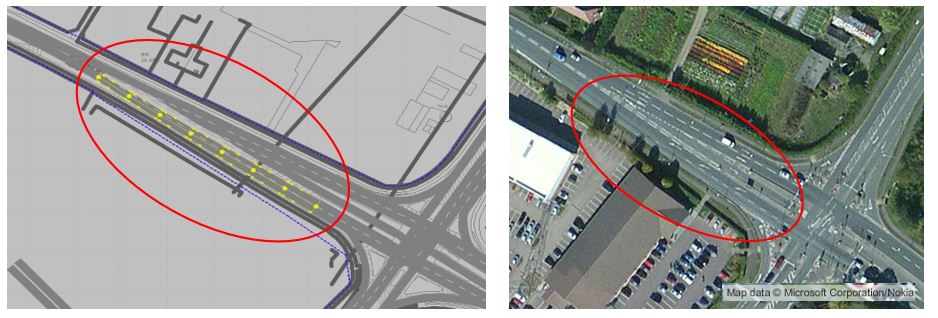
Figure 2 - Merge Example in VISSIM
The additional behaviours allow for more realistic vehicle interaction and more representative modelled outputs in terms of queuing on approaches to junctions and junction exit capacity.
Additional Driving Behaviour – ‘Urban (flare)’
This behaviour is used on the approach to and around various junctions in an urban environment, with the purpose of the behaviour being able to prevent artificial capacity from vehicles moving into the flaring lane too early.
To create this behaviour, a duplication of the ‘Urban (motorised)’ behaviour was made, with the parameters changed within the Following, Lane change and Lateral tabs to ensure vehicles only moved into the second lane when there was space to do so. The behaviour configuration is shown in more detail in Figure 3 and the changes highlighted in red.
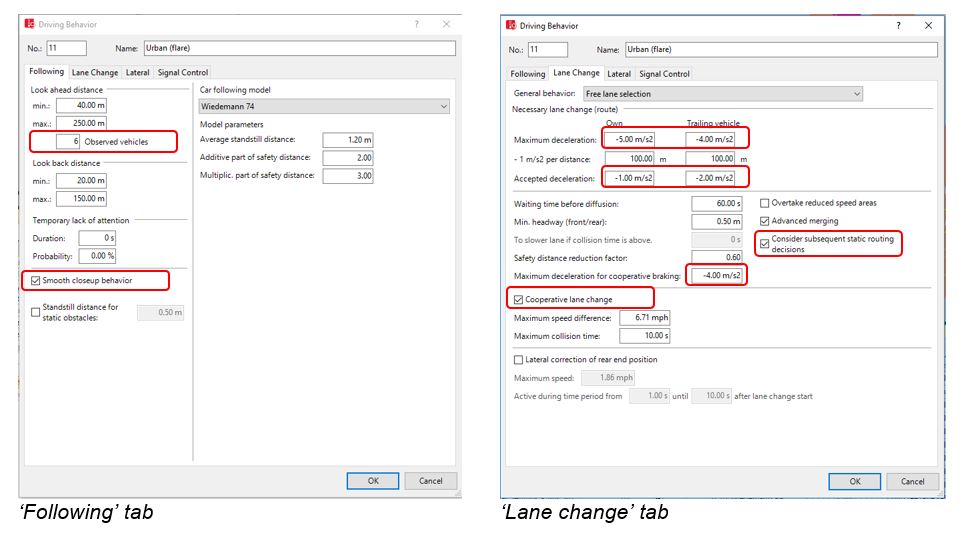
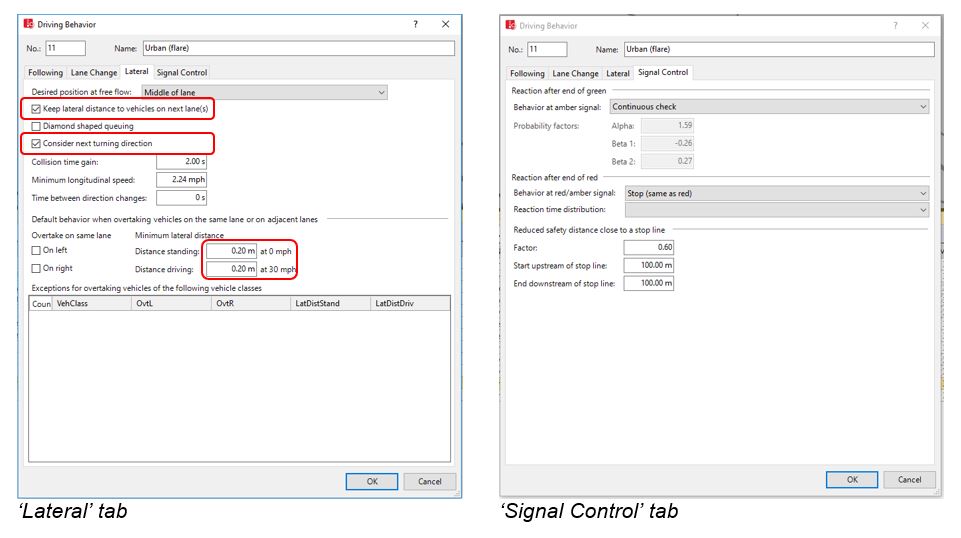
Figure 3 - Urban (flare) - Driver Behaviour Parameters
Figure 4 shows the result of using the new behaviour against the default Urban (motorised) settings.
Additional Driving Behaviour – ‘Urban (merging)’
‘Urban (merging)’ behaviour has been created to replicate more aggressive merging in sections where the carriageway merges from two lanes to one. This behaviour also encourages vehicles to change lanes earlier, preventing large numbers of queuing vehicles which do not change lanes until the emergency stop distance of the downstream connector. An example of this is shown in Figure 5.
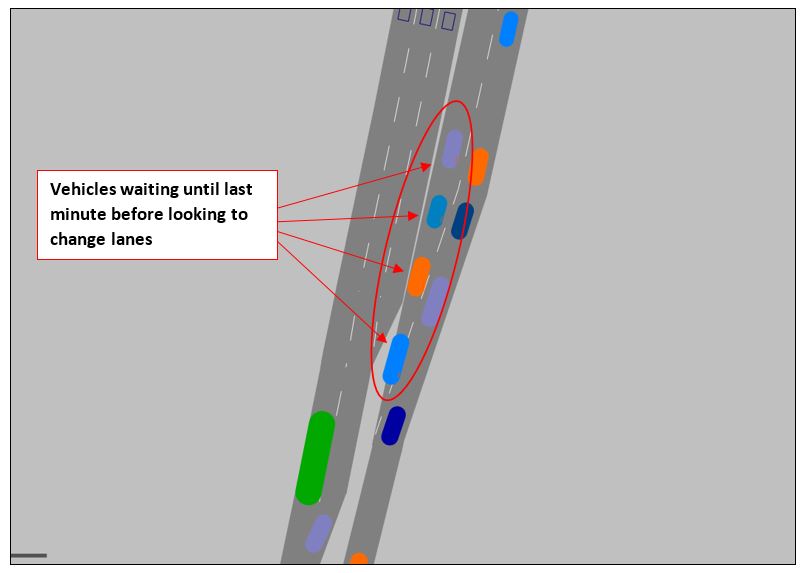
Figure 5 - Merging Behaviour using Urban (motorised)
To create this behaviour, a duplication of the ‘Urban (flare)’ behaviour was made, with the parameters changed within the lane change and lateral tabs to make vehicles change lanes more co-operatively and cause vehicles in the nearside lane to give-way and let merging traffic into the main traffic flow.
The parameter changes have been made from reviewing PTV’s VISSIM Examples within the ‘Help’ file, with the ‘Inside Merge’ model a particular reference.
The behaviour configuration is shown in Figure 6 and the changes highlighted in red.
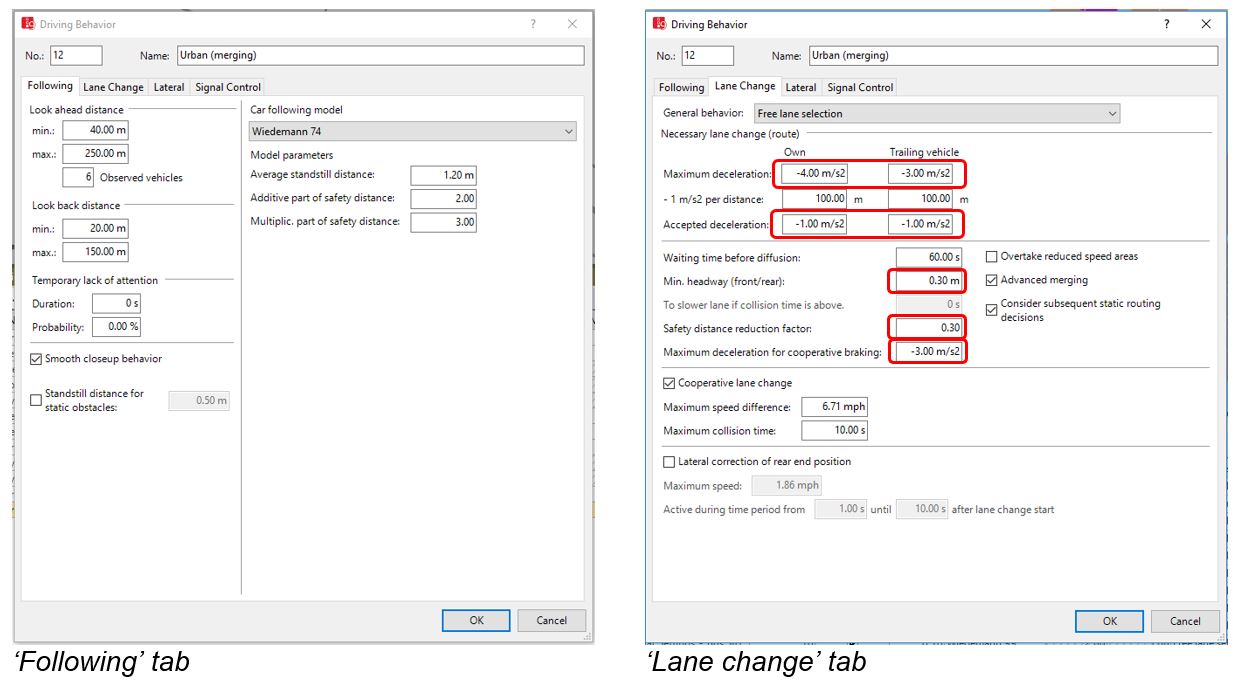

Figure 6 - Urban (merging) - Driver Behaviour Parameters
Figure 7 shows the result of using the new behaviour against the default Urban (motorised) settings.
Final Comments
The use of the Urban (flare) and Urban (merging) driver behaviour has allowed PJA to develop urban microsimulation models which take into account flare and merge areas and the capacity constraints associated with them.
It is acknowledged that this is not the only methodology for modelling these road layout elements, but we feel it does provide a useful starting point in developing a base model for calibration and validation.
As with other modelling elements, if local, site specific data is available to evidence and justify adjustments to the parameters, then these should be considered and documented as part of the model development exercise.