It’s July 2020 and we’ve just experienced the warmest and driest Spring on record. Exercise is restricted to local areas to reduce the spread of the virus and traffic levels are at their lowest in decades. Walking and cycling levels go stratospheric.

Buoyed by the public’s newfound enthusiasm for active travel a raft of funding, policy (Gear Change) and technical guidance for infrastructure (LTN1/20) was announced to rebalance streets from conduits for cars to streets for people.

One year on, the government has marked its own homework with the Gear Change: One Year on document but does the hype match the reality and do the new funding and legislative announcements go far enough? Or is the can being kicked down the road on some of the more difficult issues?

Our new Manchester consultant Harriet Haldenby and PJA active travel lead Chris Sibthorpe give their verdict.

Emphasis
The Gear Change One Year on document rightly showcases the progress that has made over the year – after all, it is designed to inspire. Many of the case study examples of success are from our cities and large towns focusing on commuter travel. However, if active travel is to be a mode of choice for short trips then it needs to reflect the diverse nature of our geography and our journey purposes. It needs to reflect that 65% of trips are everyday trips such as to see friends, go to the doctors or stock up on groceries. It also needs to recognise that market towns need to be better connected with their surrounding rural hinterlands against a backdrop of reduced bus services and that protected cycling infrastructure might not be an option in historical centres. This is essential if the vision is to benefit all areas and move forward with both scale and conviction.

Removal of schemes
How many times have we seen well intentioned schemes watered down or removed completely as a result of opposition from vocal minorities? The strengthening of funding sanctions against local authorities that remove a scheme before it’s had time to bed in is welcome. This not only reinforces the need for objective scheme monitoring but also places renewed emphasis on getting the basics right first time round such as robust data collection and thorough stakeholder engagement focusing on a basket of issues rather than just those relating to transport. We owe it to the quiet and often supportive majority.

Active Travel England
The formation of Active Travel England was perhaps the most eye catching of all the announcements made in Gear Change as it will be a statutory consultee. This will alert all those engaged in development that they will no longer be able to pay lip service to active travel provision. But will the proposed thresholds for Active Travel England involvement run the risk of creating a two-tier system where the larger sites embrace the new standards but smaller developments default to the current modus operandi aided but not necessarily abetted by under-resourced local authorities?

And what about those local authority officers who are still wedded to the notion that the most important factor is highway capacity? Will this stifle ambition? We eagerly await the detail but the involvement of Active travel England might just be the catalyst for organisational change and the removal of siloed thinking.

Pavement Parking
We’ve also spotted the passing reference to pavement parking, confirming the Government’s intention to act on this thorny subject. No announcement has yet been made, but one of the options being considered is to give local authorities the power to enforce against obstruction of the pavement. This is the way the Welsh Government is going, and we’re working on drafting the detailed guidance to local authorities for them at the moment (read about that here). It’s likely that the Department for Transport is watching very closely.


The policy and funding is now finally catching up with the rhetoric. It but it will be incumbent on us as professionals to deliver a walking and cycling legacy that our children and grandchildren can be proud of.


Chris Sibthorpe, Director

Chris has over 20 years’ experience in development planning, sustainable transport and transport strategy development. Chris specialises in the provision of walking and cycling advice for both public and private sector clients and has also appeared as an expert witness at examinations and appeals.

Get in touch with Chris: [email protected]


Harriet Haldenby, Consultant

Harriet is an urban designer based in our Manchester Officer. She has 3 years’ experience working in planning and design, most recently working as part of a collaborative design team on health and travel-focussed projects. Having been particularly focussed on the role of the community in design projects, Harriet has developed an interest in how the spaces and places we design interlink with the way we travel, and its impact on our quality of life.

Get in touch with Harriet: [email protected]


Find out more on our active travel services here

Sign up for more news from PJA here

In celebration of Cycle to Work Day (5th August 2021) we hear from Julia Coonan, Transport Consultant in our Cambridge office who talks through her fledgling cycle commute experiences and her top tips for anyone thinking about giving it a go:

Prior to moving to Cambridge, cycling for transport purposes or even just for fun wasn’t something I ever considered doing. However, as I was moving to the cycling capital of the UK, I thought I had better bring a bike with me; so I got my dad to dig out a bike from the shed, probably last used circa 2004, and he kindly plastered it with a lot of hi-vis stickers to ensure I would be seen.

On day 1 of work I walked my route because I was too nervous to cycle and it took me an hour. On day 2 I cycled but it took me 45 minutes because I kept getting off at junctions to cross on foot or walk around obstacles I deemed too scary to cycle past (bizarrely Cambridge has cows roaming on all city centre green spaces). I stuck with it and after a few weeks it only took me 15 minutes, straight through the city centre on the roads I previously thought were too scary to cycle.

Three years later I have now cycled probably around 5000 miles on that trusty old bike and a further 4000 miles on the road bike I have since acquired.

So these are my top tips for getting into cycling to work from someone who is now aspiring to never own a car again:

  • Don’t be afraid to turn into a pedestrian if you are unsure of any junctions – it can take time to work out your placement on the road and be confident around cars.
  • There are lots of adult beginner cycle events to take part in and get more confident cycling – you can find these via your local council website or from Google/social media.
  • Plan your route to take in any quiet roads/segregated cycle routes/low traffic neighbourhoods to reduce conflict with cars and minimise difficult junctions – there are some great websites/apps (such as Cycle Streets) which can show you the best routes or ask colleagues/friends who already cycle.
  • Get your bike serviced annually. I found this out the hard way soon after moving to Cambridge as I went down the city’s one hill and realised my brakes weren’t working – thankfully the light was green when I reached the bottom! The government are periodically releasing free £50 fix your bike vouchers for this purpose – check out https://fixyourbikevoucherscheme.est.org.uk/ to see when the next drop might be or enquire at your local bike shop about a service.
  • Wear what you feel comfortable in – you don’t necessarily need padded shorts and hi vis, but you can buy them quite cheaply if it improves your journey to work.
  • Don’t be scared to try cycling in the dark come winter – I bought some really powerful lights (it’s actually illegal to not have lights in the dark) and adjusted my route which was longer but was more segregated from traffic.
  • See if your bike can fit a pannier rack and get a waterproof pannier bag to carry your work stuff and avoid a sweaty back.
  • Investigate other bike options which might make cycling more suitable to you – foldable bikes are great for taking the train at peak hours and electric bikes can give you that boost you need to get up hills or just enjoy a less sweaty cycle to work. In Cambridge it’s not uncommon to see electric folding bikes, adults on tricycles, cargo bikes with kids in the front, bikes with kids in a trailer on the back, tandems and even recumbent bikes on a daily basis.
  • You don’t need a fancy new bike but if you want one, lots of companies, including PJA, are signed up to a Cycle to Work Scheme where you can purchase a new bike without spending a lot of money up front – see https://www.cyclescheme.co.uk/ for more details.


Julia Coonan, Transport Consultant

Julia is a Transport Planner with nearly 3 years’ experience in developing Transport Assessments and Travel Plans, primarily for projects based in Cambridge, all of which focus on delivering high-quality, sustainable and low car developments. Julia also has experience working on planning applications and masterplans for larger scale public transport projects, including contributing to business cases, public realm improvements and active travel planning.

Get in touch with Julia: [email protected]


Find out more on our active travel services here

Sign up for more news from PJA here

Our wonderful team are our greatest asset. Not only experts in transport, engineering and placemaking but also committed to delivering better places for people through high-level-service client experiences.

We’re very proud to continue to celebrate the faces behind the fast-growing international consultancy that we are today in our monthly feature ‘PJA People’.

Next up in our series is Senior Civil Engineer in our Water Resources team, Paul Bacchus, based in our Reading office:


Tell us what you do at PJA

I’m a Senior Civil Engineer working for the Water Resources team. As a team we’re principally concerned with anything to do with the water environment. Personally, my day to day work is usually spent working on Flood Risk Assessments and Drainage Strategies, carrying out Surface Water Drainage/SuDS design, Flood Risk mitigation, etc.


What’s your career path so far?

Went to University at Plymouth and obtained my MEng Degree. I then got a Graduate Role at CH2M before progressing as a Civil Engineer at Jacobs. Finally made the move to join PJA and haven’t looked back.


What do you enjoy when you’re not working?

The usual – music, tv, games, films, sports, art, reading. Recently taken up gardening which has been surprisingly enjoyable and therapeutic.


Are you a dog or cat person?

Allergic to both, but I like big dogs and ragdoll cats.


What are you currently reading or listening to?

The English and their History by Robert Tombs (trying to address some historical blind spots).


Claim to fame?

I once had dinner at Buckingham Palace for an ICE event (I was a +1 before you’re all too impressed).


Paul Baccus, Senior Engineer

Paul is a senior civil engineer with over 5 years’ experience working in flood risk and surface water drainage design.

Paul has experience working on flood risk analysis, flood modelling and the creation of sustainable and traditional surface water drainage solutions for a variety of clients in both the private sector and local government.

Get in touch with Paul: [email protected]


To find out more about our water resource services here

Read more in our PJA People series here

Sign up for more news from PJA here

On Friday 30th July, Transport Secretary Grant Shapps announced a £338m package to boost cycling and walking across the country.

The package, which includes funding to build hundreds of miles of high-quality cycle lanes and deliver walking schemes as well as changes to The Highway Code, is part of Government’s commitment to build back greener from pandemic.

PJA Chairman, Phil Jones, was instrumental in guiding the ‘Hierarchy of Road Users’ change to the highway code. The change will outline how responsibility rests with the road users who could potentially cause the most harm to others. For example, car drivers will be responsible for ensuring cyclists are safe, while cyclists will be responsible for looking out for pedestrians. Here Phil talks about the research behind the change, how it happened and what happens next:

This journey started for PJA with a trip to Copenhagen in 2015 with the then Transport Minister, Robert Goodwill, various people from DfT, Highways England and Sustrans, plus Chris Boardman of British Cycling.

One of the things that struck us all was the way in which drivers turning off a main road would stop and wait for a gap in the flow of cyclists across the mouth of a side road, before completing their manoeuvre.

On return Adrian Lord (Associate Director, PJA) and I put to British Cycling the idea of commissioning a study into why drivers did this – what were the laws and regulations, and how were they trained? British Cycling funded the study and we began by reviewing the law in Denmark, Sweden and the Netherlands. We found that this principle was clearly set out in law and formed part of the syllabus and test for new drivers.

We then went on to craft a series of steps by which such behaviour could become a requirement in the UK. This is a really important problem to tackle, as more cyclists are injured at junctions than anywhere else and the so-called ‘left hook’ and ‘right hook’, where drivers turn across a cyclist going ahead, are a particular cause of casualties. We also found that there was no clear official view on who had right of way at a set of traffic signals between an HGV turning left and a cyclist going straight on – a conflict that has led to numerous fatalities, particularly of female cyclists.

Our report, ‘Turning the Corner’ was published in December 2016 and recommended three stages of intervention:

  • Stage 1 – change the Highway Code to clearly state what the expected behaviour is at junctions; that the cyclist going ahead always has the right of way (just like any other vehicle).

But the Highway Code is only advisory, so further steps are needed:

  • Stage 2 – change the traffic signs regulations to allow a simple road marking to show a cycle route continuing across a side road, establishing a legal obligation for the driver to give way
  • Stage 3 – bring the UK in line with other countries by introducing a ‘universal duty to give way’ on turning so that this behaviour is legally required at every junction.

The report received substantial publicity and British Cycling organised a petition supporting the changes. This attracted over 27,000 signatures and led 5000 people to email their MP asking for the Highway Code to be updated.

This all paid off in 2018 when the then Transport Minister Jesse Norman announced a review of the Highway Code in relation to cyclists and pedestrians. Not surprisingly British Cycling welcomed the announcement.

DfT’s document setting out the possible changes didn’t just include clarifying rules at junctions – it also talked about a ‘Hierarchy of Users’ where more vulnerable travellers would be given some kind of overall protection by the Code.

The various stakeholder groups promoting active travel decided to form WACA (the Walking and Cycling Alliance) to establish a common voice responding to this significant opportunity. I was invited to work on a pro-bono basis with Roger Geffen of Cycling UK and Joe Irvin of Living Streets to develop detailed proposals for the changes to the Highway Code. DfT very much welcomed this initiative and pledged to work with us.

All three of us contributed to the draft changes; mine were based on the junction priority principles recommended in the Turning the Corner report.

In addition, I felt that the Hierarchy of Users envisaged by DfT was too imprecise – what was needed was a clear overarching statement of the behaviour needed to protect vulnerable users on the public highway. I therefore developed the ‘Hierarchy of Responsibility’, which as the final proposed wording in the Code says:

“…those in charge of vehicles that can cause the greatest harm in the event of a collision bear the greatest responsibility to take care and reduce the danger they pose to others”.

This to me is the biggest change in the new Highway Code, and it was very gratifying to hear Grant Shapps, the Secretary of State for Transport, explaining it on the radio.

It took several months for the WACA team to develop the detailed content, during which time we spoke to numerous organisations to get their views – the RAC, AA, Freight Transport Association, disabled groups etc. By the time we took the final draft text to DfT in 2019 we had thoroughly road tested it, and it meant DfT were able to take it to formal consultation in July 2020 with only minor changes.

DfT received nearly 21,000 comments on the draft and it took them a year to consider them. Nearly 80% of respondents agreed with the new rule on the Hierarchy of Road Users.

DfT has continued to work very closely with Joe, Roger and I in finalising the wording of the Code to reflect the comments received, and I’m very pleased that the final document is largely the same as the one we took to them in 2019.

From here DfT’s plan is to lay the changes before Parliament towards the end of 2021, which means the new Code will come into force in early 2022. DfT is also planning a major communications campaign to inform road users – particularly drivers – of the new and changed rules. I’m continuing to represent WACA on the DfT working group.

The new Highway Code won’t be a magic bullet, and as we set out in Turning the Corner, more changes are needed. But it does represent a significant change in the way in which our roads should be used, and that can only make it safer and more pleasant to walk and cycle.

Find out more on our active travel services here

Sign up for more news from PJA here


Find out more

For more information please contact

The publication of the new National Planning Policy Framework and National Model Design Code brings forward an increased focus on the importance of design in developments.

Annabel Keegan, Associate in our placemaking team, highlights the key proposals affecting local authorities and developers.

National Model Design Code (NMDC)
Published on 20th July 2021 by the Ministry for Housing, Communities and Local Government (MHCLG), this code sets out new standards of beauty, quality and design for all new developments.

Building on the 2019 National Design Guide, it is intended to inform local design guides and codes or, in the absence of local guidance, act in their stead. It places local communities at the heart of plans to make sure that new developments reflect the history and unique character of their areas and are beautiful and well-designed.

The code places great weight on Manual for Streets and Manual for Streets 2, which continue to represent good practice on street design and which our own Phil Jones co-produced. Government has recently commissioned an updated version of Manual for Streets, which will replace both documents. Phil is a member of the CIHT Project Board for the update and we will keep clients informed on progress over the coming months.
Street trees are “a core part of [the government’s] vision for enhancing the quality of urban development”. NMDC provides guidance on incorporating trees into new development, while revisions to the National Planning Policy Framework also require new streets to be tree-lined (more on the National Planning Policy Framework below).

Updated National Planning Policy Framework (NPPF)
The NPPF has been revised to implement policy changes in response to the Building Better Building Beautiful Commission “Living with Beauty” report and incorporate the increased focus on design. Paragraph 110 is of particular relevance requiring the design of streets, parking areas, other transport elements and the content of associated standards reflects current national guidance, including the National Design Guide and the National Model Design Code. This has long been an approach pioneered by PJA where the importance of achieving quality design has always held equal importance to delivering engineering solutions to meet client needs.

Another key update to the NPPF is in Paragraph 131 which requires that planning policies and decisions should ensure that new streets are tree lined unless there are clear, justifiable and compelling reasons why this would be inappropriate. The focus on the integration of trees into the street scene is to be strongly welcomed and provides opportunities for enhanced green infrastructure and more innovative drainage solutions however will require careful design and stakeholder engagement to ensure solutions that are compatible with highway requirements and do not result in overly onerous commuted sums placed on developers.

If you need more advice on how these proposals will affect your developments, then please get in touch. PJA not only helps shape national design policy, but is also behind some of the UK’s best design-led places which enhance local character, provide a sense of place and put people first.

Made up of some of the UK’s leading engineers, transport planners, urban designers and landscape architects, we work together to achieve the best results.

Find out more about our services here

Sign up for more news from PJA here

Find out more

For more information please contact
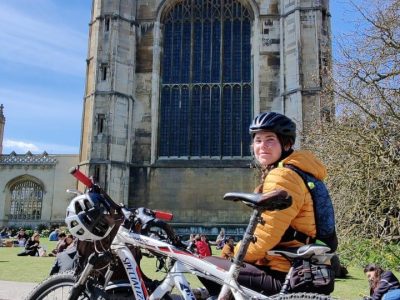
We’re thrilled to be involved in setting regional transport strategy and policy with Transport for West Midlands (TfWM)

TfWM invited PJA to engage with the development of their new Local Transport Plan (LTP) through attendance at a key stakeholder workshop. With a huge amount of change happening since the last LTP, the new strategy needs to be ready to respond to some critical challenges such as the climate emergency and recovery from the impacts of the pandemic.

TfWM appreciate that planning the West Midlands Transport System requires compromise and balance to meet the needs of the region and so to support the development of the new LTP they have published a Green Paper to help build awareness of the role of transport in addressing some of the big issues facing them and start a conversation about change.

Within the Green Paper there are ideas to explore with local authorities, the public, regional businesses and other key stakeholders on what the future could look like and how and why we might plan and manage our transport system differently.

The full Green Paper Document and summary document have been published on the TfWM website here.

TfWM are asking for people to complete their survey on the Green Paper to give them thoughts and views on the issues raised. If you’d like to complete the survey, you can find it here.

The engagement will run until Friday 27th August, 2021.

Find out more on our transport services here

Sign up for more news from PJA here


Find out more

For more information please contact
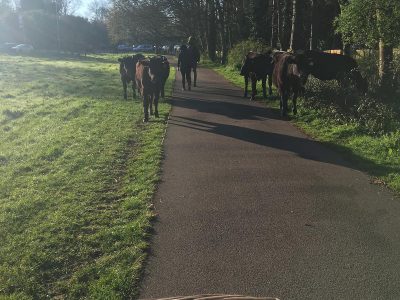
Ahead of the Olympic Games, Jack Gray, Senior Transport Consultant in our Cambridge office, shares his experiences of running at an international level, and explains how he uses his mental and physical training to deliver for PJA.

“Despite my (relatively) youthful looks and abundance of (somewhat greying) hair, I have been running competitively for 15 years.

As a long-distance runner, I favour distances from 5km to half-marathon and cross country. I have earned numerous England caps on the road, track and over cross country; however, my proudest achievement was representing Great Britain at the European 10,000m Championships in London, where we won team silver.

As a sport that is often defined for its attrition and suffering, people often ask me why I run?

It’s a simple, yet stimulating, question that is difficult to answer with a punchy response.

I primarily run because I love the thrill of competitive sport, and the sense of camaraderie and sportsmanship that the running community is blessed with. Yet running competitively also breeds behaviours and routines that I apply, and rely on, in professional life.

As a transport planner and business case practitioner, my work requires me to strategise, programme, holistically analyse data and broader socioeconomic trends, innovate and ultimately deliver projects to time and budget.

But how does this relate to competitive running?

This summer we will witness finely tuned athletes step onto the hallowed Olympic stage. Here, they will have minutes, or even seconds, to execute four years of mental and physical training that has been meticulously structured and adapted to enable them to ‘peak’ for their moment in the spotlight.

Competitive sport thus demands us to programme and structure our training, to innovate to find those marginal gains, and, after all that, it requires us to be composed enough to deliver our end product in pressurised situations.

Having the time to train flexibly around work not only releases stress and improves my mood and confidence, but it also builds qualities and behaviours, such as time management and reflexivity, that we hold at the core of our ethos at PJA

To run is to be free, and from free minds innovation is born.”


Jack Gray, BSc (Hons) MRes

Jack is a Senior Transport Planner and an accredited Better Business Cases Practitioner based in our Cambridge office.

He has a wealth of experience advising public and private sector clients across a wide range of transport planning and traffic engineering projects.

Jack’s technical experience ranges from initial site feasibility assessments through to the delivery of business cases for major transport schemes.


Find out more on our transport services, including transport planning and business case development, here

Sign up for more news from PJA here


Find out more

For more information please contact

A planning application for a Gigafactory at Coventry Airport has been submitted by joint venture partners, Coventry City Council and Coventry Airport Ltd. The proposals, which were first announced in February this year, are set to be determined by Warwick District Council and Coventry City Council later in 2021.

The Joint Venture Partnership was formed earlier this year to bring forward proposals for a Gigafactory at Coventry Airport, to ensure the site is ready for investment and can become operational quickly – making it significantly more attractive to potential investors.

The submitted plans provide an updated analysis of the economic benefits of a Gigafactory to the West Midlands. The proposals would deliver 5.7m sq ft of space for both battery production and recycling, would add £434m in GVA to the regional economy each year, as well as create 6,000 new jobs and tens of thousands more in the supply chain.

The proposals also confirm that the Gigafactory will be powered by 100% green energy, using a combination of sources including solar and wind power, as well as grid supplied renewables, and will be able to recycle used batteries as well as build new ones in an industry-leading approach known as ‘cradle to cradle’.

The West Midlands offers one of the most competitive sites for a Gigafactory in the UK. A third of all cars produced in the UK come from the region which has unique access to existing supply chains. The region is home to Jaguar Land Rover, Aston Martin Lagonda, and BMW, whilst Coventry Airport is adjacent to the UK’s largest battery research centre, the UK Battery Industrialisation Centre (UKBIC).

In the last month, the UK Government has faced increasing pressure from the industry to back more gigafactories. In June, both the CBI and SMMT published reports calling for the UK Government to increase its support for UK battery manufacturing facilities to keep up with European competitors.

In recent weeks, the Prime Minister Boris Johnson stated in Parliament that a Gigafactory in the West Midlands would contribute to ensuring the region “lead(s) in building new electric vehicles for this country and for the world”. The UK Government has made up to £500m funding available for gigafactories, which the West Midlands will be bidding for in due course.

Cllr George Duggins, Leader of Coventry City Council, said: “The submission of a planning application for a Gigafactory is the important next step as we seek to deliver battery production for the West Midlands. We have worked with regional partners and industry experts at pace to deliver outline proposals for a world-leading facility, powered by green energy, and ready for investment.

“There is increasing pressure to ensure the UK is ready to take advantage of electrification and together the West Midlands is seizing the initiative to deliver for UK PLC as part of a Green Industrial Revolution. We are the ideal location for a Gigafactory as the home of the UK automotive sector, alongside world-leading research in battery technology.”

Andy Street, the Mayor of the West Midlands, said: “It is mission critical that the West Midlands secures a Gigafactory, both for the future of our region’s automotive industry and the huge economic and job benefits it would bring, as well as the future of our planet. I am therefore delighted that after years of collaborative work, we have now been able to reach this milestone moment of formally submitting a planning application for our preferred site.

“By driving forward with our plans and going through the planning process now, we are trying to get everything in place for when a commercial negotiation between supplier and customer concludes, meaning we can move quickly to get the site operational as soon as possible.

“The West Midlands is already home to the country’s biggest car manufacturer, Europe’s largest research centre of its kind, the UK’s only battery industrialisation centre, and a world-leading supply chain. A Gigafactory therefore is the natural next step for the UK’s automotive heartland, and I will not rest until we have secured one.”

Sarah Windrum, chair of the Coventry and Warwickshire Local Enterprise Partnership (CWLEP), said: “This is a major step forward in attracting a West Midlands Gigafactory to Coventry to further cement our area’s world-wide reputation in the automotive and transport technology sector.

“There has been great partnership working between all the parties involved and this would have a fundamental role to play in promoting Coventry and Warwickshire’s profile as a centre of excellence in this increasingly important industry while providing a huge boost to UK industry.

“Providing the right conditions for enterprise and innovation to flourish is at the heart of the CWLEP’s Strategic Reset Framework and we believe this is the perfect location in the heart of the UK for a Gigafactory which would provide critical capacity for electrification in future mobility and that is crucial to delivering our national net zero ambitions.”

Plans for a Gigafactory have been brought forward by Coventry City Council and Coventry Airport Ltd as joint venture partners. A Gigafactory has been backed by local MPs, Warwick District Council, Warwickshire County Council, the West Midlands Combined Authority, Coventry & Warwickshire LEP, and the West Midlands Mayor Andy Street.

Find out more on our services here

Sign up for more news from PJA here

Find out more

We’re super proud of Jane Overton, Senior Consultant in our Birmingham office, who has completed the Transport Planning Society (TPS) Professional Development Scheme (PDS).

The PDS offers a structured personal development plan with the aim to guide younger staff in obtaining the breadth and depth of competence in both the technical and generic skills expected of a true professional.

Jane said “I’m really proud to have completed the TPS Professional Development Scheme. By completing the scheme, I am able to demonstrate the breadth and depth of knowledge and experience I’ve built up over my career so far, and my commitment to personal professional development. I’ve thoroughly enjoyed developing a broad range of transport planning skills, and look forward to developing these further whilst working towards achieving the TPP over the next few years. Many thanks to my mentor, managers and colleagues who have continued to supported me throughout the process.”

Keith Buchan, TPS Skills Director added:

“Congratulations to Jane for her achievement, we welcome her to the growing community of transport planners who have completed PDS and can now also use the title Incorporated Transport Planner: IncTP. Despite the many personal and working challenges caused by Covid the TPS skills team has continued to do what it can to retain and develop skills throughout this difficult time and now as lockdown comes to an end. In 2021 we have already seen a strong demand for first and final reviews and we hope this will continue now that we have revised and updated the PDS. With the launch of Version 4 in June we look forward to many more trainees following Jane’s example and coming forward in the next few months. We are always ready to provide advice and support. Please get in touch!”


Jane Overton, BA (Hons) IncTP

Jane is a Senior Consultant, who joined the team in 2019. She has over 5 years’ experience working for a range of public and private sector clients primarily in development planning, but also in scheme appraisal, travel planning and transport modelling.

Jane’s key skills include junction modelling, accessibility analysis and travel demand forecasting to support the preparation of Transport Assessments and other technical documents for a range of developments including residential, education and employment land uses.


Find out more about the TPS PDS

Find out more about our transport services here

Sign up for more news from PJA here

Find out more

For more information please contact

Our wonderful team of nearly 100 people in the UK and Australia are our greatest asset. Not only experts in transport, engineering and placemaking but also committed to delivering better places for people through high-level-service client experiences.

To show off our team we’re very proud to launch our new quickfire ‘PJA People’ series, to celebrate the faces behind the fast-growing international consultancy that we are today.

But PJA People doesn’t just have a professional focus, our 5-minute read tells you what you really want to know: hobbies and claims to fame – and asks the age old, socially unacceptable question: Are you a cat or dog person?

First up is Senior Consultant, Lianne Brook, based in our Birmingham office:


Tell us what you do at PJA
I am a Transport Planner, predominantly working within the development sector. I’ve recently got more involved with cycle infrastructure design and enjoy building active travel into development schemes.


What’s your career path so far?
I graduated from Sheffield Hallam University in 2013 with a geography degree and took my graduate job in London before moving up to Birmingham in 2017.


What do you enjoy when you’re not working?
I am a competitive powerlifter and spend most of my spare time in the gym! I can squat 147.5 kg (over two times my bodyweight), bench 80kg and deadlift 175kg.


Are you a dog or cat person?
Dog! We recently picked up Haru, our Miniature Schnauzer. She certainly keeps us on our toes.


What are you currently reading or listening to?
Currently reading a puppy training guide book, although not sure if it’s helping much….


Claim to fame?
I met the England cricket team in Australia after the ashes.


Lianne Brook, Senior Consultant

Lianne is a Transport Planner with over 7 years’ experience in a range of technical work from both the public and the private sector. Lianne has developed a key focus in strategic development and built a specialism in assisting clients with land promotion by undertaking feasibility studies and delivering access strategies for strategic sites.

Get in touch with Lianne: [email protected]


To find out more about our transport planning services here

Sign up for more news from PJA here


Find out more

For more information please contact