A feasibility study to potentially redesign three key parts of Stratford town centre to create a better balance of pedestrians, cyclists and vehicles is now underway.

Stratford-upon-Avon Town Council, working as part of the Town Centre Strategic Partnership (TCSP), has appointed placemaking consultants PJA to look into the best way of transforming Bridge Street, its roundabout with Wood Street, and High Street to improve access and movement in those areas.

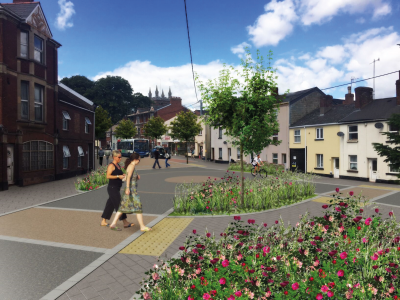
While no detailed plans have been formed, the initial ideas are for Bridge Street to have its pavements widened and its carriageway narrowed to encourage more people to pass through, with improved public realm to go with it.

The roundabout at the top of Bridge Street with Wood Street would also be redesigned to create more space for pedestrians.

Additionally, High Street could have a six-month temporary closure to all traffic (except emergency vehicles, taxis and blue badge holders) from 11am to 4pm, completely prioritising pedestrians. A 20mph speed limit to traffic could also be introduced around the whole of the town centre.

Although nothing has been finalised at this stage, having a feasibility study around improving Bridge Street and High Street is part of the Stratford Neighbourhood Plan, which was approved by 91 per cent of Stratford voters in 2018.

The TCSP, made up of various organisations related to Stratford, was formed in 2020 to oversee the implementation of the Neighbourhood Plan.

PJA will now create a more detailed concept design based on the vision in the Neighbourhood Plan, which will then be scrutinised by the TCSP to see if it is feasible. If so, public and stakeholder feedback will be invited on the proposals, hopefully in June.

PJA technical director David Moores, project manager Annabel Keegan and specialist advisor Karl Kropf explained to stakeholders how the design would be created at a Town Centre Strategic Partnership meeting.

David said: “The key thing for us is to strike a balance between creating a space at Bridge Street and High Street that is attractive to pedestrians, allowing traffic flow to continue to a certain extent, and to respect the unique character of Stratford-upon-Avon.

“We want to make sure our proposals are realistically deliverable, so will work closely with various stakeholders such as local authorities, destination management organisations like Shakespeare’s England, and business groups like Stratforward, and listen to their advice when drawing up our design.

“At this stage, we’d like to be advised as much as possible by those who know Stratford-upon-Avon inside-out so we can make a sensitive yet effective design.”

Sarah Summers, Stratford-upon-Avon Town Clerk and a member of the TCSP, said: “It was great to hear from PJA about their plans and how we as a Town Council and our partners have the opportunity at the outset to contribute to the initial design.

“Plenty of those at the meeting were very keen to give advice to PJA on their plans, so their design is certain to be well-informed.

“We look forward to seeing the design, and we will continue to update the public of any further developments of these plans.”

For further information, please contact [email protected]

Sign up for more news from PJA here

We’ve long known about the benefits of exercise on both our physical and mental wellbeing and, conversely, the damage that sedentary lifestyles cause. However, according to NHS data, over 4 in 10 women (42%) and 1 in 3 men (34%) in England are not getting the recommended levels of physical activity. In fact, physical inactivity costs the NHS up to £1bn a year and is responsible for 1 in 6 deaths in the UK*.

For most people, the easiest way to achieve the recommended physical activity levels is to incorporate it into everyday life through walking or cycling for short journeys such as to the shops, school, work or the train station. Walking is already the main way most of us are physically active. However, although cycling for transport can be a time-efficient option for physical activity as it can be integrated into daily routines, cycling levels in the UK are much lower than countries like The Netherlands and Denmark.

The Covid-19 pandemic highlighted the importance of exercise not only for our physical health but also our mental wellbeing. The mass shift to home working for many also had a huge impact on how we use and view our local streets with many more people walking and cycling, particularly in the first lockdown when traffic levels dropped significantly. We also noticed reduced air and noise pollution with many people hearing bird song outside their windows for the first time. Indeed, the evidence for the benefits of reduced car use and more active travel are plentiful, from the obvious health and wellbeing benefits to cutting carbon emissions, air and noise pollution and congestion.

In July 2020 ‘Gear Change’, the new cycling and walking plan for England, recognised the role active travel can play in improving health, placing it front and centre in the strategy. It also recognised that there are major hurdles to getting people to walk and cycle more with lack of safe infrastructure being the key barrier particularly for women, children and the elderly.

To address these challenges our specialists are playing a key part planning and designing active travel schemes to create low speed environments and where we can’t, such as on key arterial routes, providing protected cycle infrastructure to enable more cycling and walking for short journeys. We are also increasingly working at neighbourhood level to create Low Traffic Neighbourhoods (LTN’s) where residential streets and local centres become safer from the adverse impacts of traffic and provide more welcoming spaces where the opportunities for social interaction improve and children can walk and cycle safely to school.

As we reflect on the events of the past 12 months for World Health Day the many benefits of incorporating walking and cycling into our lives are clear and a quiet revolution to incorporate this into our everyday routines has started. We now have an opportunity to continue to support this change with safer, friendlier streets with the aim to ‘build back better’.

PJA were the lead authors of LTN1/20, the new cycling infrastructure design guidance which was published alongside ‘Gear Change’, and co-authored the guidance on Local Cycling and Walking Infrastructure Plans. Made up of some of the UK’s leading transport planners, engineers and place makers we work together to achieve a robust, evidence-led approach to development.

For more information, please contact [email protected]

Sign up for more news from PJA here


*DfT (2020) Gear Change: A bold vision for cycling and walking. Available here.

It’s where Ribena and Tarmac were invented, where Banksy, Massive Attack, JK Rowling and Lee Evans called home and where Wallace, Gromit and Morph emerged in plasticine – Bristol!”

It’s been five years since we set up our office here offering a local presence to a strong history of working on transport, engineering and placemaking projects in the area. Below we outline some of our top projects in the south west and why we cannot wait to carry on working from sunny Brizzle!

We provided transport planning and placemaking advice on the Brabazon regeneration project on the 380-acre site of the former Filton Airfield. The thriving new neighbourhood will deliver 2,700 homes and 24 hectares of employment land providing 10,000 jobs. The site will benefit from a new railway station, a new bus rapid transit route, and high-quality walking and cycle infrastructure. The development represents a £2 billion investment in Bristol by YTL. PJA secured outline planning consent for the development site, supported the development of design codes, and assisted in the successful reserved matters application for the first phase of residential development. The foundations for the first homes on the site were laid in January 2020 and they are now on the market.

Continuing with the redevelopment theme, we have been at the forefront of developing proposals to support the regeneration of Swindon Town Centre and continue to assist Swindon Borough Council on several related projects. At the heart of the town centre, PJA has led the preliminary design of a bus boulevard and enabling infrastructure with the reimagined street providing a new stage on which to deliver homes and employment. PJA also prepared a town centre microsimulation model using Vissim. The model is testing the emerging town movement study with along with planned Local Plan growth. The Bus boulevard scheme has now secured £25m of funding through the Future High Streets fund, and work is expected to start in winter 2021.

We continue to support St Modwen on major development in the south west region including employment land at Avonmouth, known as Access 18 and other strategic land interests.

From the brand new to transforming the old – assisting leading conversion developer, City & Country, on the redevelopment of a former Victorian prison in central Gloucester. This complex scheme demanded a bold development vision which included public realm elements to reveal the remains of the medieval Gloucester Castle discovered under the prison exercise yard. The project, which gained planning consent in June 2018, will deliver 202 new city-centre homes across retained listed buildings and new build elements. In conjunction with landscape architect, Grant Associates, we designed integrated urban realm, car parking, shared surface access streets and community gardens.

We’ve acted on several successful major planning applications for the replacement of landmark hotels across the south west including the Park Hotel, and The Lighthouse in Paignton and the Palace Hotel in Torquay. As well as preparing engineering designs for vehicle access and circulation for these busy establishments, we carried out transport assessments and assisted with conceptual designs. The demolition and clearance of all three sites has taken place and construction is now underway.

We continue to underpin the enhancement of south west seaside towns designing several key public realm areas in Torbay. PJA developed integrated traffic engineering, landscape and placemaking solutions for the spaces which will better manage vehicle traffic and reduce carriageway space. The revised highway arrangement will encourage vehicles to pass through the area at low-speed and the reallocation of space away from traffic allows for the public realm to be enlarged and enhanced, both of these factors will significantly improve pedestrian amenity in this area and encourage active travel.

It was confirmed at the end of 2020 that Paignton Station Square is one of the schemes in the town which will be funded by £13.4m of the Future High Streets Fund. The investment will help transform the area into a vibrant hub for future generations and protect and create jobs.

Our transport, engineering and placemaking teams worked collaboratively on enhancing Crediton High Street in a busy Devonshire market town. We planned and designed a comprehensive street engineering proposal scheme which seeks to tame the traffic, creating slower but steadier road conditions, which will foster a culture of shared use. The future scheme also aims to manage the impact of poor air quality with a Vissim model being built to test the performance of the scheme in relation to this as well as traffic capacity, bus operation and pedestrian movement terms.

We’ve been making a real impact in the South West creating strategic infrastructure masterplans for walking and cycling. Working with Cornwall Council, Plymouth Council and Wiltshire Council we’ve helped prepare Local Cycling and Walking Infrastructure Plans (LCWIP) across the south west. With PJA Chairman, Phil Jones a primary author of the LCWIP Guidance and more recently LTN1/20, we have breadth and depth in our understanding of walking and cycling infrastructure second to none.

We are pleased to be a part of multi-disciplinary teams on a number of regional frameworks including the West of England Combined Authority and Devon Frameworks with WSP and the Homes England Framework.

Over the past five years we’re proud to say that we have had significant experience on all recognised Design Review Panels across the south west reviewing a range of significant urban sites across the area and advising on many greenfield development projects on how to best enhance their integration within the surrounding areas.

More recently we have begun work on several town centre and high street masterplans in Cornwall, Somerset and Bristol, renewable energy projects across the region, a Low traffic Neighbourhood in Devon, and a garden community and a net-zero carbon development in the West of England.

We’re excited to see what the next five years bring!


For more information on our transport, engineering and placemaking services in the south west, please contact our Regional Director [email protected]

Sign up for more news from PJA here


The national bus strategy for England will radically change the landscape for bus operations, but what does it mean for developers?

Buses form the key mode of sustainable transport for the majority of new developments and remains by far the most used type of public transport in the UK.  New ‘Enhanced Partnerships’ or in some cases franchising arrangements between local authorities and bus operators will be driven forward with a significant prize of £3billion in discretionary funding being available only for those who succeed. Just what the £3billion will buy is unclear at this stage; lower fares, increased frequencies, investment in new carbon free buses and the latest information and ticketing systems all seem possibilities. An annual local Bus Service Improvement Plan will be requirement of these partnerships, setting targets for journey times, reliability improvements, and identifying where bus priority is needed.

For the land developers this means that the current day approaches of negotiating a section 106 payment to the local highway authority or alternatively firming up a direct agreement with the pro-active local bus operator to provide a diverted or new service will have to change. The local transport authority, in most cases also the highway authority, will gain far greater influence over bus planning and operations but will be challenged due to the level of upskilling that will be necessary after many years of commercially-led and reducing bus networks. Equally, local planning authorities will retain strong influence over site layouts and access given the proposed reforms to the planning system with the intended emphasis on design guide led masterplanning. In partnership areas the bus operators will still be driven by commercial imperatives overall but with a recognition that management of road space by the local authorities is central to success of their business model. Where franchising is introduced the local transport authority will take the lead in planning the network.

The real challenge for developers will be to negotiate this new framework with confidence that their mode share aspirations can be met by the partnership or franchise networks and that the necessary supporting bus infrastructure requirements can be delivered.

This will place greater emphasis on internal site layouts to allow direct access for buses and also levels of permeability within developments to allow easy access to bus stops; the established concept of ‘within 400m of a bus stop’ for access to the network is likely to come under pressure with a reduction being seen as a straightforward way to drive improved access to the bus network. This will change the masterplanning context and challenge how the latest approaches to masterplan can achieve this without unduly sterilising land.

The developer financial proposition for bus services will remain broadly as is; there is no evidence that the £3billion seeks to replace section 106 monies or the proposed replacement planning infrastructure tariff funding system. What will occur is that the developer will have two increasingly active actors to deal with, each with an eye on the £3billion prize but both seeking slightly different but worthwhile goals. There is of course the potential that the increased quality of bus networks will aid developers hit with increasingly stringent mode share requirements and trigger reductions in levels of general highway mitigation required for development to be acceptable.

What the developers will be led towards is frontloading the planning of bus services and network access proposals for development in greater detail at earlier stages of the land promotion process. This will enable the level of developer influence over the partnership players to be increased and for the proposed more detailed local plan making process to be navigated successfully.

PJA has developed a number of tools to aid this front-loaded approach to bus network planning for new development and has the capability to assess the role bus can play in the transport mix for sites, including in the area of financial analysis. Our team has experience of providing leadership in both local authority bus operations and at senior levels for bus operators to enable the formulation of meaningful proposals for a development’s bus service offer.

For further information, please contact [email protected]

Sign up for more news from PJA here

On this World Water Day, our director Jerry Muscroft shares details of a special scheme we are working on in Saudi Arabia. Our water management team is developing a water resources concept design for a major development set to boost tourism and leisure in the country.

PJA has been working on developing water resources concept design in Saudi Arabia as part of a Vision 2030 initiative that seeks to curate and foster tourism and leisure within the country.

The region lies at the crossroads of ancient civilisations, in spectacular landscapes, with a wealth of biodiversity and history. Areas within the country have been designated as UNESCO world heritage sites and much of the region has hosted settlements through thousands of years of civilisation. Planning and development on such a large scale requires careful consideration of the client’s objectives to provide sustainable development within the natural and cultural landscape that preserves its identity, heritage, and natural landscapes.

The nature of the work provides unique challenges, notably: managing water supply in a desert, understanding and updating existing water systems and providing interconnected up to date solutions that meets the needs of a rapidly developing region.

PJA’s scope developing conceptual water resource designs incorporates aspects of potable water design, wastewater design, water treatment and irrigation to provide a holistic approach to managing the built water environment. Working in combination with other consultants as part of a team, the PJA water resources experts continue to demonstrate their fast pace adaptability whilst exploiting opportunities to utilise their expertise along the way.


For more details please contact: [email protected]

Sign up for more news from PJA here

On World Water Day 2021 we are celebrating how managing flood risk and drainage through strategic masterplanning has evolved from a problem to eliminate to an opportunity for green blue infrastructure providing biodiversity and amenity benefits and creating desirable places to live and work.

PJA aim to harness water as an asset in all our projects, striving to ensure that we embrace the value of water and capture the multi-functional benefits it presents in development for new, and existing, communities.

On the doorstep of our Birmingham office, we are proud to be supporting St Modwen Developments Ltd. in the continued regeneration of the former MG factory in Longbridge, in particular with regard to the priority being given to the naturalisation of the River Rea and the Callow Brook as they flow through the site.

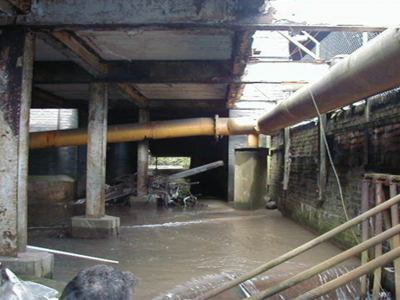
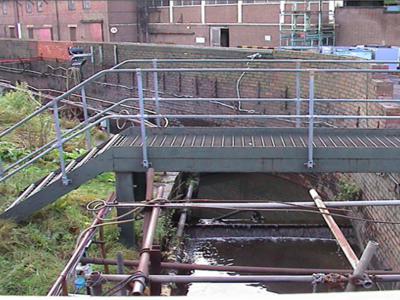
Somewhat forgotten, these watercourses flowed through and under the former factory, hidden from view in heavily engineered channels with limited value. In the next phase of works, these watercourses will be brought back to life, aiming to capture the true value of water and promote the opportunity to ‘live with water.’ Both watercourses will be naturalised throughout the site and will unlock significant opportunities for habitat creation, enhancement of water quality and flood mitigation on- and off-site.

In the initial phases of the regeneration of Longbridge, the River Rea was daylighted from it’s underground cavern and brought back into the spotlight, flowing through Austin Park in the new town centre; fast becoming an iconic element of Longbridge.

Looking forward, and aiming to mirror the previous success with the River Rea, we are working to overcome the preconception that watercourses constrain development with limited value. At Longbridge, we are leading from the front to harness the true value of water and restore the natural river corridors to provide enhanced biodiversity and amenity space for all.

Elliot Sellars, Development Director at St Modwen Developments Ltd., said ‘The River Rea and Callow Brook are real assets to Longbridge that have significantly benefited the regeneration of the town centre and will have even further positive impact as West Longbridge develops. Offering residents, businesses and visitors direct access to high quality watercourses continues to be a key driver across Longbridge.’

Alison Caldwell, Associate at PJA, said ‘It is exciting to work on a project which identifies the opportunities of water and is not afraid to embrace the challenges this may bring to development. I’m very proud to be working to restore the River Rea and Callow Brook, aiming to deliver true value of water to Longbridge.’

The water resource team at PJA work with a wide range of public and private organisations to develop flood risk and drainage strategies in challenging locations where development viability and water resource management can often be seen as conflicting factors.  However, by considering water management at the inception of a development we can identify where features could be placed to both manage water safety within a viable development, meet the requirements of the planning process and also create an attractive asset for the final end users to enjoy.

For further information on our water management services, please contact [email protected]

Sign up for more news from PJA here

We are proud to be part of the team that achieved a successful appeal decision for a mixed-use site on the edge of this market town in Herefordshire.

PJA was appointed by Bloor Homes to reassess the transport planning aspects of this proposed development site after the previous consultants failed to reach agreement with the local highway authority.

The land, to the north of the railway viaduct in Ledbury, was allocated in the Local Plan for the development of 625 homes plus three hectares of employment land.

With the consultants previously appointed by Bloor Homes unable to reach an agreement with the local highway authority on matters relating to access and off-site traffic impact, PJA were appointed to carry out a full review of the scheme and re-engage with the highway authority. PJA’s transport planning and highway engineering teams worked closely with the local highway authority to identify the areas of concern and develop suitable mitigation proposals.

Detailed proposals were prepared in relation to vehicle access, pedestrian and cycle routes, and off-site capacity and safety measures. All matters were agreed with the highway authority and consequently the application was presented to the planning committee with a glowing recommendation to approve the application.

Unfortunately, the application was refused by local Members at the committee, despite the Officer recommendation for approval.

An appeal against the decision was lodged by Bloor Homes and a subsequent Public Inquiry was held. Highways matters dominated the first of the two weeks of the inquiry with PJA’s Joint Managing Director, Nigel Millington, giving evidence and technical support provided by our transport planning and highway engineering teams.

Detailed technical evidence was debated on access for sustainable modes, the traffic impact of the proposals and the suitability of proposed mitigation measures.

Due to the level of local interest the appeal was recovered by the Secretary of State, who subsequently determined that the appeal should be allowed.

Both the Inspector and the Secretary of State supported PJA’s assessment of every aspect of the case.

An award of costs was also made against the Local Planning Authority and the Town Council due to their ‘unreasonable behaviour’.

The successful appeal will now allow 625 new homes (including affordable housing) to be built on the site whilst the accompanying 3ha of employment land has the potential to create hundreds of jobs for local people.

Image: Barton Willmore


For more information on our transport and engineering services, including our expert witness offering, please contact: [email protected]

Sign up for more news from PJA here

There are just two weeks left to submit comments on the Government’s Draft National Model Design Code, as well as draft revisions to the National Planning policy Framework.

Annabel Keegan, Associate in our placemaking team, highlights the key proposals affecting local authorities and developers.

National Model Design Code (NMDC)
Published on 30th January 2021 by the Ministry for Housing, Communities and Local Government (MHCLG), this code sets out new standards of beauty, quality and design for all new developments.

Building on the 2019 National Design Guide, it is intended to inform local design guides and codes or, in the absence of local guidance, act in their stead. It places local communities at the heart of plans to make sure that new developments reflect the history and unique character of their areas and are beautiful and well-designed.

The code places great weight on Manual for Streets and Manual for Streets 2, which continue to represent good practice on street design and which our own Phil Jones co-produced. Government has recently commissioned an updated version of Manual for Streets, which will replace both documents. Phil is a member of the CIHT Project Board for the update and we will keep clients informed on progress over the coming months.

Street trees are “a core part of [the government’s] vision for enhancing the quality of urban development”. NMDC provides guidance on incorporating trees into new development, while proposed revisions to the National Planning Policy Framework also require new streets to be tree-lined (more on the National Planning Policy Framework below).

Last month the MHCLG’s Office for Place also invited applications from local authorities to be one of the first ten authorities to pilot the NMDC. They will each receive a share of an initial £500,000 to fund the work.

Draft revisions to the National Planning Policy Framework (NPPF)
The NPPF has been revised to implement policy changes in response to the Building Better Building Beautiful Commission “Living with Beauty” report. The proposed changes set out in the updated NPPF consultation draft can be found here

Key revisions include:

  • positively [support] design quality as a key issue in consenting schemes
  • make it clearer that poor quality schemes should be refused
  • where appropriate [extend] references to ‘good design’ to ‘good design and beautiful places.


If you need more advice on how these proposals will affect your developments, then please get in touch. PJA not only helps shape national design policy, but is also behind some of the UK’s best design-led places which enhance local character, provide a sense of place and put people first.

Made up of some of the UK’s leading engineers, transport planners, urban designers and landscape architects, we work together to achieve the best results.


Contact: [email protected]

You can comment on the Government proposals until March 27 here

In today’s International Women’s Day finale we talk to Alison Caldwell, an Associate in our engineering team in our Birmingham office.

Alison shares her proudest career achievement: using her engineering skills to help the recovery effort in New York City, after it was hit by the horrific Hurricane Sandy in 2012.


What was your career path, how did you get to where you are today?

To be honest, being an engineer was not something that I set out to be.  As a child, I was interested in everything; pinning me down to a specific interest or getting me to focus on just one thing was never easy.  I enjoyed maths and sciences and I remember sitting in my GCSE geography class when we were learning about river forms and flooding, and how communities are protecting themselves and I thought to myself ‘that must be a cool job to have.’  After that it seemed pretty straight forward, I needed to find a way to combine maths and science with rivers and flooding and so I went off to university to study civil engineering, specifically focused on water.

Since university I have been really fortunate to have been given opportunities to work on exciting projects of all scales in the UK and worldwide, but more importantly I was fortunate to work with, and learn from, some very inspirational individuals in the engineering sector.  It has always been my goal to enjoy what I do, but more importantly, to try to ensure those around me enjoy what they do.


What do you think is your greatest achievement within your career to date?

In 2012, while I was working in New York City, Superstorm Sandy made land on the coast of New Jersey and New York leading to mass devastation from flooding.  It was a horrendous time to see the devastation caused, however out of that came a unique personal opportunity to support the recovery efforts through engineering.  I was very fortunate to be part of a team that worked hard to understand the vulnerabilities of coastal communities and to influence decision makers on the various means to enhance the resilience of these areas.  On a recent trip back to New York City I saw some of these resilience measures in place across the city and the surrounding boroughs and coastline and felt a genuine sense of achievement that I may have had some small part to play in protecting these communities.


What is the most important message you want to send out to young women thinking about their careers?

When I was told as a young girl that girls can’t do things, my automatic response was always ‘Why not?’ and to this day that is still my automatic response.  At 18, I had no idea what I wanted to do with my life but I decided that I wanted to do something that I enjoyed, something that challenged me, something that gave me opportunities to learn and ultimately something I could be proud of.  I feel that is exactly what engineering offers.  Over the last ten years, I can honestly say that however difficult things are in the moment, I can look back and say one of four things; ‘I enjoyed it,’ ‘it challenged me,’ ‘I learned something’ or ‘I’m proud of it.’

As you start your career, my advice is simple.  Every career path is different and specific to you.  Don’t try to fit the mould – there is no one else exactly like you.  Decide what your key drivers are and don’t compromise on these, define your own career to ensure it gives you everything you need.


For further information on our flood risk and water management services, please contact: [email protected]

On day 4 of our International Women’s Day celebrations, we talk to two members of our transport planning team: Associate Catriona Swanson in our Manchester office and Senior Consultant Jane Overton in our Birmingham office.

They share their career paths and achievements and urge more women to consider jobs in transport planning and active travel.


Catriona Swanson

What was your career path, how did you get to where you are today?

My undergraduate degree was in Geography and then I went on to do a Masters in Town Planning, specialising in regeneration. I joined Salford City Council’s planning and regeneration team in 2008 just before austerity kicked in and worked there for nearly 11 years. I was really lucky to work on a really wide range of projects from small public realm schemes through to commissioning masterplans and producing regeneration strategies.

After moving closer to my workplace in 2012 I started walking and cycling to work and developed an interest in active travel. I put myself forward to lead on walking and cycling schemes and gradually carved out a niche for myself, becoming the Council’s lead on walking and cycling. I managed to increase the quality and ambition quite dramatically over a short space of time, winning several awards. I also worked really hard to raise the level of political will and upskill the wider team.

In May 2019 I left Salford to join Arup where I established an active travel team in the North West and Yorkshire region, again helping to upskill colleagues and embed the principles of good design across different disciplines. I worked on a number of really interesting projects at Arup including proposals for major corridors and low traffic neighbourhoods.

At the start of February (2021) I joined PJA as an Associate. I’ve been a big fan of PJA since I commissioned them when I was at Salford City Council to produce a cycle network plan for the city. The quality of the work completely exceeded my expectations and I used the plan to underpin a lot of the really ambitious schemes I secured funding for. I’ve always thought of PJA as being one of (if not the) leading active travel consultancies so, when they opened a Manchester office, I jumped at the chance to join and help Chris Sibthorpe establish the office.


What do you think is your greatest achievement within your career to date?

I have been lucky enough to work on a lot of projects that I’ve been really proud of but nothing matches seeing your schemes actually built.

There are two schemes in Salford that I’m particularly proud of working on. Firstly, seeing the realisation of the regeneration strategy for Irlam Station including the refurbishment of the station house from a shell of a building used as a chicken coup to a beautiful café and community hub. Secondly, leading on the delivery of Salford’s traffic-free network which has so far won three awards including the National Transport Award for excellence in cycling and walking. The buzz of seeing the paths packed with people of all ages walking, running and cycling is second to none.


What is the most important message you want to send out to young women thinking about their careers?

That they should definitely consider a career in transport planning and particularly active travel. The profession is, unfortunately, still quite male dominated which inevitably means that the needs of women are not always considered. This is particularly the case in active travel where it is so important to understand issues around personal safety that affect women disproportionally.

It is really important that more women enter the profession so that we can address these issues and ensure we’re designing good places and transport that meets the needs of everyone.

As a woman working in a male-dominated field I generally feel treated as an equal and that my skills and experience are respected – and that’s definitely the case at PJA. However, I am frequently the only woman in meetings and have, at times in my career, felt that male colleagues were given preferential treatment and greater opportunities for career progression. However, I wouldn’t want this to put young women off joining the profession – there are great opportunities, and the work is incredibly interesting and rewarding.


[email protected]


Jane Overton

What was your career path, how did you get to where you are today?

When I was at school there wasn’t ever one subject I was particularly interested in more than others, so I found it really hard to pick GCSE and A Level choices. I decided to keep my options open and go for a range of subjects, which ultimately led me to studying for a Human Geography degree at Durham University.

In my search for graduate jobs, I initially applied for various roles in the retail sector, because this was the only work experience I had. After attending several job interviews, I realised that I wasn’t passionate enough about the job to make it a career. I then started looking for jobs that used Geographical Information Systems (GIS), as this was something I really enjoyed using and learning about throughout school/university.

This was then I came across transport planning. I’d never heard about the discipline of transport planning before, but in addition to the use of GIS, what drew me to the field was the broad skillset it encompasses and ability to have a positive impact on the lives of others. Five and a half years later, I’ve worked at two consultancy firms and wouldn’t look back on my decision to be a transport planner at all!


What do you think is your greatest achievement within your career to date?

I can’t pinpoint one thing, or project, that is my greatest achievement, instead I’d say it’s finding a career that I genuinely enjoy, where every day is different and knowing that the work that I do has the potential to make a tangible positive impact on people’s lives, the environment and wider society.


What is the most important message you want to send out to young women thinking about their careers?

Don’t worry about not knowing what career path you want to follow – there is something out there for everyone! If there is a particular skill you’re good at, or you have specific area of interest, do some research about what careers are available, and speak to others about your options. Work experience can be invaluable when you’re exploring different career paths, so I’d definitely recommend seeking this out whilst at school/college/university.

I think it’s also important to step out of your comfort zone when thinking about career choices – not only could this lead to a successful and enjoyable career, but also allow you to build resilience, gain new skills, broaden your perspective and boost your confidence!


[email protected]