What will it really take to eliminate deaths and serious injuries on our roads?
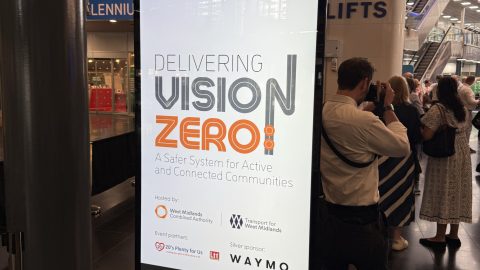
That question sat at the heart of the Delivering Vision Zero event at Millennium Point in Birmingham, where PJA’s Ryan Walters joined colleagues, transport professionals, policymakers and industry leaders to explore how we can create safer streets and healthier communities.
For Ryan, one message stood out above all others: achieving Vision Zero isn’t about a single intervention. It requires a whole-system approach that brings together lower traffic speeds, reduced traffic volumes, better compliance, people-centred street design and stronger support for victims and families after collisions.
A key focus of the day was the importance of putting communities at the heart of scheme design from the very beginning. The launch of the new Kids Streets initiative reflected this approach, championing children’s voices in shaping safer local environments. PJA is currently working with Transport for West Midlands (TfWM) on one of the pilot Kids Streets schemes in Highgate, Birmingham, helping to co-design ideas with the people who experience these streets every day.
The opening address from West Midlands Road Safety Commissioner Mat MacDonald set an inspirational tone for the event, highlighting the region’s commitment to safer streets and collaborative working. Sessions featuring Active Travel Commissioner Beccy Marston also explored how transport planning can better support healthier, safer and more accessible journeys.
Another thought-provoking discussion centred around “motonormativity”, the idea that society has become so accustomed to private car use that it is often viewed as the default or inevitable way to travel. Speakers explored how this mindset influences public perception and even the language used in media reporting, where collisions are frequently framed around vehicles rather than driver behaviour and responsibility. For example, news reports often say that a car was involved in a collision, rather than focusing on the actions of the driver, which can influence how we think about responsibility.
One particularly interesting study found that while many people personally valued being able to travel without a car, they believed that most other people would prioritise driving. The findings suggest that support for alternatives to car travel may be stronger than we often assume, highlighting the importance of challenging perceptions alongside communicating the benefits of transport schemes.
The event also provided valuable insight into emerging monitoring data from Wales and London, demonstrating measurable reductions in speeds and collisions following the introduction of 20mph schemes. These findings will help continue to inform the 20mph projects PJA is currently supporting across the UK, including previous work on the rollout of 20mph limits in Wales.
Reflecting on the day, our team’s biggest takeaway was clear: Vision Zero is about far more than reducing collisions. It is about designing places where people come first, communities help shape decisions, and everyone can travel more safely and confidently.
That thinking runs through much of the work PJA delivers. Whether developing active travel strategies, designing streets or supporting 20mph schemes, creating environments where people feel safe to walk, wheel and cycle is fundamental to achieving better outcomes for everyone.
Find out more about our services here
Sign up for more news from PJA here