The Black Country Museum (BCLM) in partnership with New Heritage Regeneration and Dudley Council is undergoing a significant development of the Museum’s 26-acre open-air site, to create a world class visitor attraction in Dudley.
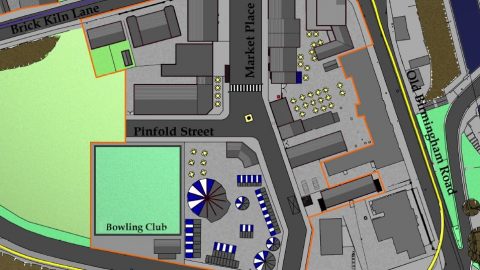
A key element of this new development is the area behind the well-known Old Birmingham Road, where the famous Black Country Museum Chip Shop and fairground are located. The area will be developed to replicate the 1950’s through to the 1970’s with its look and feel.
The two proposed main streets will be called Market Place and Pinfold Street, will be the heart of this development; providing space for several new amenities such as historically accurate shops, restaurants with living-working buildings also being developed.
Our involvement started with the discussion with the client about their expectations based on the architectural drawings, and our assessment of such.
The initial meeting highlighted areas of improvement and the possibilities of how the pavement surfacing can be applied, giving the appropriate feel to the surface. Appropriate kerb types and lighting features showing visitors the world of the past was also part of the design and as such generated discussion about long term effects and maintenance options.
The available technical documentation allowed the team to start the preliminary design in line with the current Specification of Building Regulations and Design Manual for Roads and Bridges (DMRB).
Although the area is not destined for Local authority adoption, utilising the latest standards brought enhanced safety to the site, long term savings for the museum and by doing this raised the value of the overall project.
The area sits on top of several mine shafts, still containing coal seams. Our initial drainage strategy of creating a pond proved a challenge as to keep it safe, the pond had to be shallow; therefore, taking up a large area of land for attenuation. Several gullies and manholes were in the project area, but in agreement with the client we have looked at options that avoid increasing stress on the current drainage system. We found that the best solution was a sustainable drainage system in the form of a buried storage crate with a restricted outfall rate to the nearby culvert. This provided adequate storage area with a small occupation of land and is virtually invisible to the visiting public.
The project had a short time span for completion (two months from start to finish.) With continuous liaison, efficient workflow, and professional engineering solutions the project was completed on time and budget.