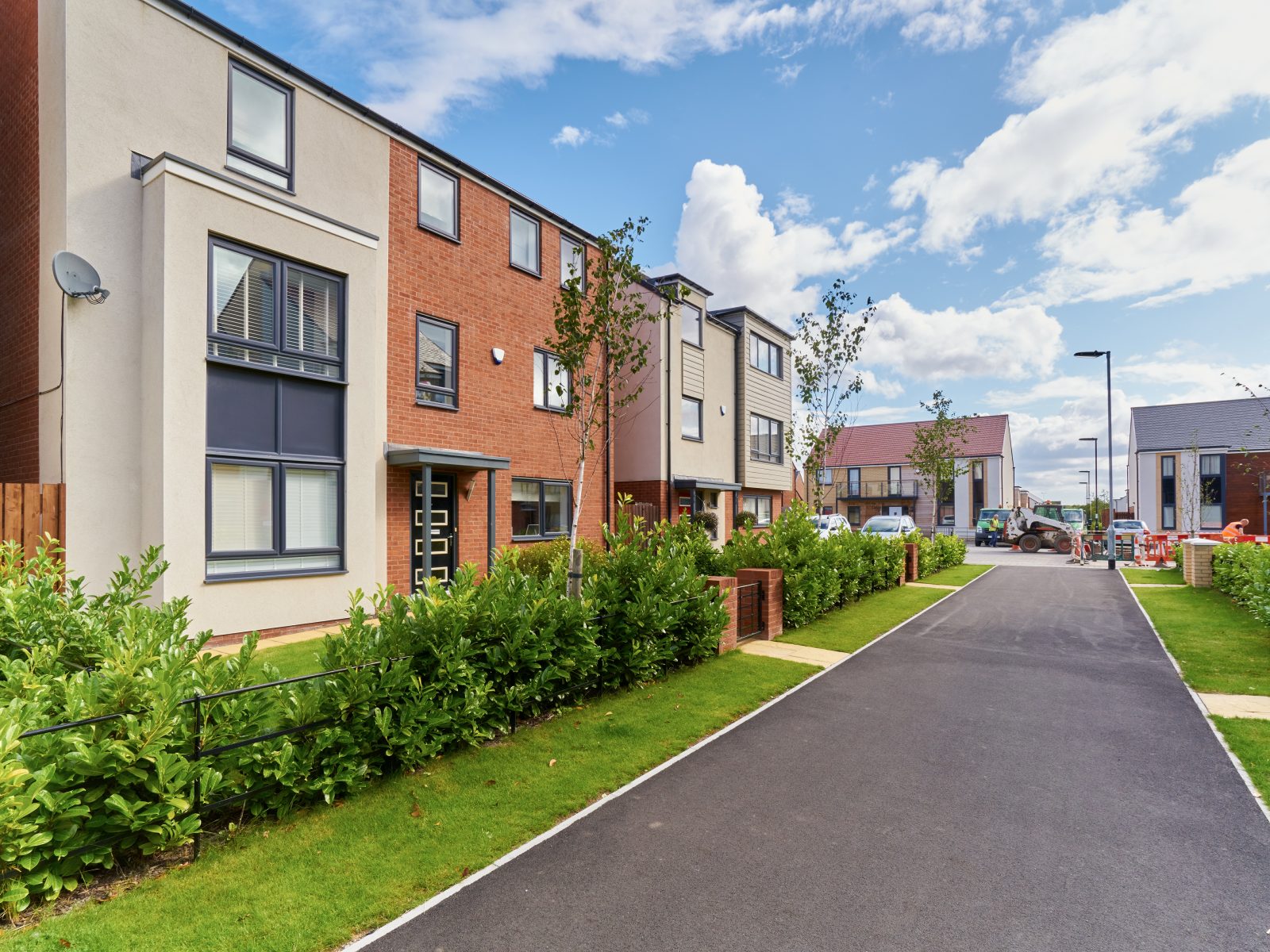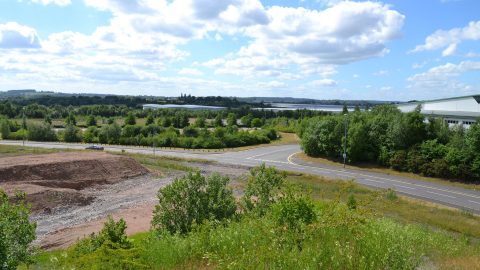
PJA staff have been actively involved in the regeneration of the former Hem Heath and Stafford and Fenton Collieries at Trentham, Stoke-on-Trent/North Staffordshire for many years.
Coal has been dug in Stoke-on-Trent since 1282 and, as with many of the surrounding areas, Trentham had been significantly impacted by the history of coal mining, with both positive and negative effects.
Known locally as the `Big A’ from its distinctive headgear, Hem Heath colliery was completely modernised in the 1950s-60s. In the early 1970s, it was announced that the Hem Heath and Florence Collieries were to be merged to form a giant mine complex with a combined output of 2.5 million tons per annum.
After a long period of uncertainty, the Colliery was deemed as `not required’ by British Coal and last produced in October 1992. It was kept on a care and maintenance basis whilst its future was decided.
British Coal initially agreed to lease the Colliery area and part of the tips to a private coal company and the remaining, mostly tipped land, about half the site, was sold to St. Modwen in 1996.
The private coal company was unable to reopen the Colliery and St. Modwen bid for and purchased all the remaining land at Hem Heath in 1999. The Colliery closure created about 400 acres of derelict land, St. Modwen took responsibility for 375 acres, the remainder developed by British Coal Enterprise.
Consistent with the colliery operations and the widespread deposition of colliery spoil from the mid twentieth century until the closure of the colliery, ground investigations proved much of the site to be underlain by Colliery Spoil locally to depths in excess of 25m bgl.
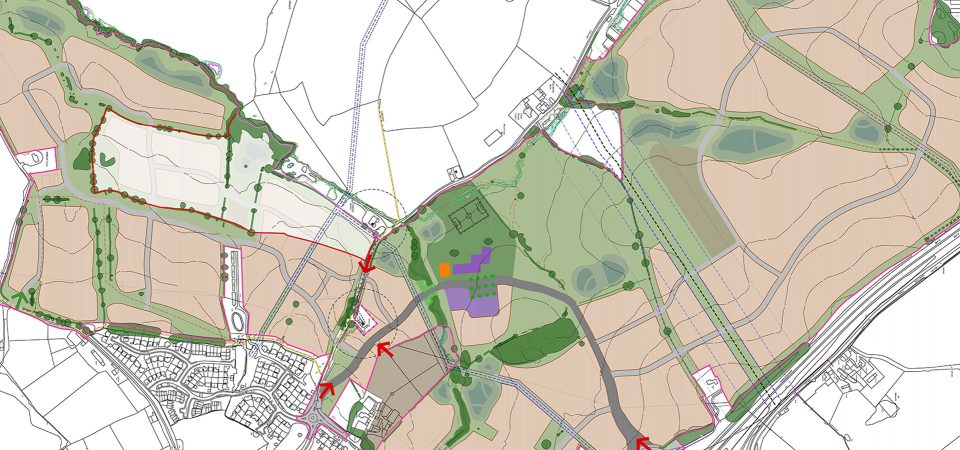
Since 1996, St. Modwen have worked to redevelop the site, carrying out bulk earthworks to create a series of plateaux suitable for development and to provide the necessary infrastructure to enable redevelopment. A key element of St. Modwen’s delivery was to understand the nature of the tipped material and this enabled its extensive reuse by excavation, sorting, replacement and compaction. Over 1 million tonnes of materials have been moved around the site to enable the redevelopment and to create a series of plateaux suitable for subsequent redevelopment.
The primary focus of the regeneration of the area was the development by St. Modwen of the bet365 (formerly Britannia) Stadium in 1997 and the associated primary infrastructure
In line with the history of this area, each plot brings its own technical challenges for redevelopment, including buried high walls, mine shafts, steep slopes and existing infrastructure and soft saturated soils. Woven into the overall design has been extensive use of Sustainable Urban Drainage, including extensive lakes, swales and ditches, the performance of which is being monitored and used to inform future designs.