How do we create streets that are safer, healthier and more people-focused? 

Speed is one of the most influential factors. 

The relationship between speed and road safety is well established: when collisions occur at lower speeds, people are far more likely to survive. And when vehicles are travelling more slowly, people have more time to react and collisions may be avoided altogether.

But beyond casualty reduction, speed also influences how streets feel and function, and whether people feel comfortable walking, wheeling, cycling, spending time outdoors or allowing children to travel independently. 

PJA’s Chairman Phil Jones reflects on Wales’ ambitious approach to tackling this challenge through the introduction of a national default 20mph speed limit. 

Introduced in September 2023, Wales became the first nation in the UK, and one of the first globally, to adopt such a wide-reaching approach. The policy represented more than a change to speed limits. It marked a shift in thinking about how we define safe streets. 

Wales’ bold step towards safer speeds 

Wales is a nation of around 3.2 million people, with a diverse transport network spanning rural communities, small towns and larger cities like Cardiff, Newport, and Swansea. 

In September 2023, the Welsh Government introduced a national default 20mph speed limit on roads with street lighting – the type of streets where people and vehicles most frequently share space. 

The legislative change itself was remarkably simple: a single amendment changed the interpretation of the default speed limit from 30mph to 20mph. 

Because street lighting already defines where default speed limits are applied, thousands of additional signs were not required. Instead, a public information campaign encouraged drivers to: “See streetlights, think 20.” 

The result was a rapid transformation. Overnight, over 90% of Wales’ former 30mph road network became 20mph. 

Changing the question: where is 30mph appropriate? 

One of the most significant aspects of Wales’ approach was the change in philosophy behind setting speed limits. 

Historically, introducing a 20mph limit often followed a process of: 

  1. Identifying a location where safety concerns existed.  
  2. Measuring existing traffic speeds.  
  3. Introducing engineering measures if speeds were too high.  
  4. Implementing a lower speed limit.  

Wales reversed this approach. The new starting point became 20mph, with 30mph treated as an exception where there was strong evidence it was appropriate. 

Guidance developed ahead of implementation drew on Article 11 of the UN Stockholm Declaration, which states that a maximum road travel speed of 30km/h should apply where vulnerable road users and vehicles mix frequently. 

This meant decisions should focus on the role of the street and the people using it, not simply existing traffic speeds or whether a road carried buses. 

Key considerations included: 

  • Whether pedestrians and cyclists regularly mix with traffic.  
  • The function of the street as a place.  
  • Housing density and local activity.  
  • The quality of walking and cycling infrastructure.  
  • Whether higher speeds could genuinely be accommodated safely.  

A nationwide change – and a public conversation 

The scale of Wales’ change was significant. Maps showing the speed limits before and after implementation demonstrate the dramatic shift, with large parts of both North and South Wales moving from predominantly 30mph to 20mph. 

However, such a major change was always likely to generate debate. Concerns were raised about the impact on journey times, particularly for some rural bus routes where multiple lower-speed sections could accumulate into longer journeys. 

There was also significant variation in how local authorities applied exceptions. Some areas retained more 30mph roads, while others allowed almost all to become 20mph by default. 

This generated intense public debate, including a petition to the Welsh Government which received almost half a million signatures against the change. 

Phil reflected that one of the biggest lessons from the process was the importance of engagement: 

“Many people felt it was rather imposed without enough consultation. However, I believe that support is now growing because people can see the advantages.” 

The experience demonstrates that technical solutions alone are not enough. Major changes to how streets operate require clear communication and meaningful involvement with communities. 

Refining the approach 

Following feedback, Wales updated its exceptions guidance in July 2024. The revised framework recognised that decisions needed to balance the benefits and disbenefits of changing speed limits on a case-by-case basis. 

The updated guidance reinforced the principle that: 

  • 20mph remains appropriate where people regularly mix with motor traffic.  
  • Places with higher pedestrian activity should prioritise safer speeds.  
  • Main roads may remain at 30mph where safe conditions exist, considering factors such as segregation of people walking cycling, road geometry, and street function.  

Interestingly, the response from local authorities varied. 

Some councils reviewed roads and returned a number of routes to 30mph, while others chose to retain their original 20mph approach after considering the benefits of maintaining lower speeds. 

Early evidence: safer streets at scale 

Two years of data following implementation showed positive results. 

Across roads affected by the change, casualty numbers have reduced by around 25% compared with the period before implementation. This reinforces the potential of wide-area speed reduction as a cost-effective road safety intervention. 

Rather than focusing solely on individual collision locations, Wales demonstrated how changing the default urban speed limit can influence behaviour across an entire country. 

From engineering-led solutions to place-led design 

A key opportunity now emerging is how safer speeds can be supported through design. 

Because Wales introduced the speed change across such a large area, it would not be practical or affordable to rely solely on traditional engineering interventions. 

Instead, attention is turning towards lower-cost, place-led approaches – interventions that reinforce the function of streets as places for people. 

Examples include: 

  • Removing unnecessary centre lines.  
  • Changing the visual character of roads, for example by 
  • Using planting, different materials and layout changes.  
  • Creating environments where appropriate speeds feel natural.  

Programmes such as Nudge30, low-cost interventions being developed by the city of Brussels, demonstrate how simple changes to the street environment can encourage safer behaviour without relying solely on enforcement. 

What can the world learn from Wales? 

Wales provides several important lessons for places considering similar approaches: 

  1. Default speeds can be a powerful tool. Wide-area 20mph limits can provide a cost-effective way to reduce casualties and improve street safety.
  2. The question should change. Instead of asking where 20mph is needed, consider where 30mph is safe. 
  3. Apply the mixing principle. Where people walking, wheeling, and cycling mix regularly with vehicles, 20mph speeds should be the starting point.
  4. Think beyond speed limits. Changing speeds creates an opportunity to rethink streets as places – not simply routes for moving vehicles. 

The road ahead

Wales’ 20mph transformation represents one of the most ambitious attempts anywhere in the world to rethink the relationship between speed, safety, and place. 

The experience shows that safer streets are not created through one intervention alone. They require a combination of policy, design, engagement, and a willingness to challenge long-standing assumptions about how streets should function. 

As communities worldwide look for ways to reduce road danger and create more liveable places, Wales offers a powerful lesson: sometimes the biggest change comes from changing the norm. 

Find out more about our services here

Sign up for more news from PJA here

Get in touch

For more information please contact:

Creating places that work for everyone begins with understanding the different ways people travel.

Recently, members of PJA took part in training delivered by the charity Wheels for Wellbeing, exploring the barriers disabled people face when travelling by cycle and how transport professionals can help remove them through inclusive design. 

Shannon Connolly, Senior Consultant at PJA, shares some of the key insights from the session and why they matter for our work. 

The importance of language

One of the first topics explored was the language we use when talking about cycling.  

bike or bicycle refers specifically to a standard two-wheel bicycle. The broader term cycle includes all types of cycles, including non-standard cycles such as tricycles, hand cycles and recumbent cycles. Referring to these as non-standard cycles rather than adapted or disabled bikes is important, as they are not exclusively used by disabled people and are not always adaptations of an existing bicycle.  

In fact, the history of cycling challenges some common assumptions. The first known cycle was a hand cycle, invented in 1655 by Stephan Farffler, who was disabled himself. In many ways, the familiar two-wheel bicycle is an adaptation of that original design.  

The training also highlighted the value of using the term walking, wheeling and cycling when discussing active travel. This helps distinguish between people travelling on foot and those using wheeled mobility aids, while recognising that cycling includes riders of both standard and non-standard cycles.  

Further information on the recommended language to use in relation to walking, wheeling and cycling can be found here

Understanding the barriers

The session explored the challenges disabled cyclists continue to face today, drawing on findings from Wheels for Wellbeing’s survey of disabled cyclists. 

Infrastructure was identified as the biggest barrier by 53% of respondents, followed by a lack of suitable parking and storage (35%). For many disabled people, a cycle is more than a way to exercise or travel sustainably – it can be an essential mobility aid, making accessible infrastructure fundamental to independent travel.  

The training also demonstrated how different cycle types have their own design requirements. For example, three-wheel cycles have very different handling and balance characteristics from a standard two-wheel bicycle, meaning infrastructure that feels comfortable for one user may present difficulties for another.  

Another striking finding from the survey was that 64% of respondents said they find cycling easier than walking. This reinforces the importance of designing cycling infrastructure that enables more people to travel safely, comfortably and independently.  

Further information on this survey, including a link to the full report, can be found here.

Designing for everyone 

The training also introduced the fifth edition of Wheels for Wellbeing’s Guide to Inclusive Cycling, which provides practical guidance across active travel rather than focusing solely on cycling infrastructure. 

Alongside advice on inclusive design, the guide introduces the concept of a pedestrian design vehicle to complement the cycle design vehicle used in LTN 1/20. This encourages designers to consider the space required by people using wheelchairs and other wheeled mobility aids when designing footways, helping create streets and public spaces that are genuinely inclusive.  

As transport planners and engineers, we have an opportunity to shape places that remove barriers rather than create them. Training such as this is a valuable reminder that inclusive design is not about designing for the average user – it is about recognising the diverse ways people move and ensuring our streets enable everyone to travel with confidence. 

Thank you to Wheels for Wellbeing for delivering such an insightful session and for continuing to champion inclusive cycling through research, guidance and advocacy. 

Find out more about our services here

Sign up for more news from PJA here

Get in touch

For more information please contact:

Creating urban environments that work for children is not a niche ambition – it is a litmus test for whether our towns and cities work for everyone.

When streets are safe, engaging and accessible for children, they tend to be healthier, more sociable and more resilient places overall. Yet for decades, the design of our streets has moved in the opposite direction. 

Annabel Keegan reflects on how we got here, what policy and practice already tell us, and crucially, what designers can do to reclaim streets as places for play, independence and everyday life.

A personal starting point: growing up with boundaries

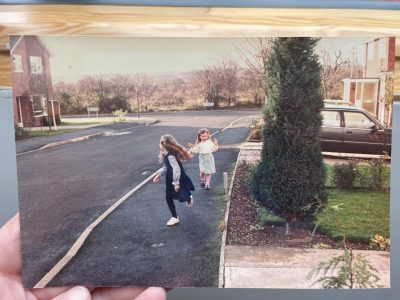
I grew up in the 1980s in Redditch, a new town south of Birmingham. My father, a civil engineer, had moved there in the early days of its development. I remember new play areas and purpose-built environments, but also strict limits. I was not allowed beyond the end of our street, even with friends. 

That experience sits in contrast with earlier generations. My father, at the same age, could cycle freely across his town. By my childhood, that freedom had already contracted. Today, many children are only allowed within sight of their homes. 

This shrinking “right to roam” is one of the clearest indicators of how our streets have changed, and not necessarily for the better. 

From fear to separation: the legacy of road safety messaging

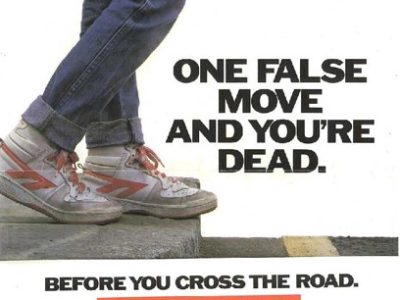
The road safety campaigns of the 1970s and 80s were stark and memorable. Messages like “one false move and you’re dead” were designed to shock. They worked, but they also reinforced a particular worldview: that streets are dangerous, and that the responsibility for safety lies heavily with the pedestrian, even the child. 

This thinking aligned with dominant planning approaches of the time. Influential reports concluded that pedestrian life and vehicle movement were fundamentally incompatible. The response was separation – of people from traffic, and often children from streets altogether. 

While this reduced certain risks, it also contributed to a broader cultural shift: streets became corridors for vehicles, not places for people.

The data behind the shift

The transformation of our streets is not just anecdotal. It is visible in long-term trends: 

  • Car ownership in the UK has risen dramatically over the past 50 years, with tens of millions more vehicles on the road today than in the 1970s.  
  • At the same time, levels of everyday cycling and independent mobility for children have declined.  
  • Public space has increasingly been allocated to movement and storage of vehicles.  

The result is a feedback loop: more cars lead to less safe-feeling streets, which leads to less walking, cycling and outdoor play, reinforcing car dependency further. 

Nothing new: revisiting long-standing ideas

Many of today’s “new” ideas in street design are, in fact, not new at all. 

The concept of limiting through-traffic in residential areas, for example, has roots going back decades. Earlier planning approaches identified the need to manage “rat runs” and balance environmental capacity. What we now call low-traffic neighbourhoods build on this foundation, adding a stronger emphasis on walking, cycling and quality of place. 

The difference today is not the principle, but the urgency.

A legal and ethical foundation

Designing for children is not just good practice – it is grounded in a strong ethical and policy framework. 

Internationally, the UN Convention on the Rights of the Child establishes a child’s right to play, rest and participate in cultural life. National and local policies reinforce this through guidance on healthy streets, walkable neighbourhoods and inclusive design. 

In theory, the framework is already in place. The challenge is translating it into consistent, everyday practice.

The limits of traditional play provision

In the UK, guidance on play has historically focused on designated spaces – playgrounds defined by standards and metrics. While these remain important, they can unintentionally narrow our thinking. 

When play is treated as something that happens only in fenced-off areas, it becomes disconnected from daily life. Streets, meanwhile, are left underused as social and playful spaces. 

A growing body of thinking challenges this model. It argues for: 

  • Play on the way – integrating play into everyday journeys  
  • Multi-functional spaces – where play, movement and social interaction overlap  
  • Visibility and inclusion – ensuring play is part of the public realm, not hidden away  

Principles of child-friendly streets

So what does a child-friendly street actually look like? While contexts vary, several core principles consistently emerge: 

  1. Safety
    Both physical and social safety matter. Streets must feel safe as well as be safe. 
  2. Accessibility
    Spaces should work for all ages and abilities, supporting independence from an early age. 
  3. Play and learning
    Opportunities for informal, spontaneous play should be embedded in the environment. 
  4. Comfort and sensory richness
    Shade, greenery, seating and varied textures all contribute to a more engaging experience. 
  5. Community connection
    Streets should support interaction – between neighbours, across generations, and within communities. 

These principles are interdependent. A safe street with nothing to do will remain empty; a playful street that feels unsafe will not be used. 

Designing streets that signal change

Design is not just about infrastructure – it is about behaviour. 

Subtle cues can transform how drivers respond to a street: 

  • Narrower carriageways encourage slower speeds  
  • Continuous footways signal pedestrian priority  
  • Visible activity, especially children playing, changes expectations  

Rather than relying solely on signage, well-designed streets communicate their purpose intuitively. 

Bringing play into everyday life

If children are to regain independence, play must return to where they live. 

This can take many forms: 

  • Playable features integrated into streetscape design  
  • Flexible spaces that support multiple uses throughout the day  
  • Temporary interventions, such as play streets, that allow communities to reclaim space  

The goal is not to replace playgrounds, but to complement them, expanding the landscape of play into the everyday. 

Learning from practice

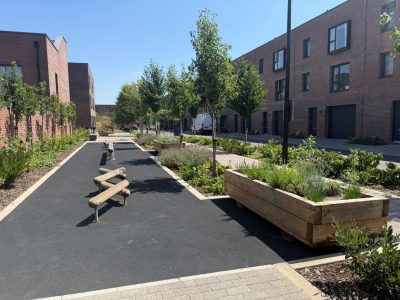
Across the UK and internationally, there are strong examples of child-friendly approaches in action, from traffic-calmed neighbourhoods to integrated green corridors and community-led play initiatives. 

What unites them is not a single design solution, but a shared philosophy: that streets are public spaces first, and movement corridors second. 

From guidance to action

We are not short of guidance. Frameworks such as Building for a Healthy Life emphasise the importance of street design, connectivity and public realm. Many of these tools already highlight the role of streets in shaping health and wellbeing. 

The challenge is consistency – embedding these principles across all stages of planning, design and delivery. 

Designing with children, not just for them

An often-overlooked aspect of child-friendly design is participation. Children experience streets differently from adults, and their insights can be invaluable. 

Engaging children meaningfully in design processes helps create spaces that reflect real needs, and builds a sense of ownership from an early age. 

A simple test

A useful way to bring all of this together is the “8-year-old test”: 

Would you feel comfortable letting an eight-year-old walk here alone? 

If the answer is yes, the street is likely to be safe, legible, inclusive and well-designed. If not, it highlights where improvements are needed. 

Reclaiming streets for everyone

Streets are among the most important and most underutilised public spaces we have. Over time, they have been reshaped around the needs of vehicles, often at the expense of children’s freedom and community life. 

Rebalancing this is not about removing movement, but about restoring function. By designing streets that support play, safety and connection, we create places that work better for everyone – not just children. 

In doing so, we move closer to a simple but powerful goal: cities where everyday life can unfold safely, sociably and independently, right outside the front door. 

Find out more about our services here

Sign up for more news from PJA here

Get in touch

For more information please contact:

PJA is pleased to announce its appointment by the Puffing Billy Railway Board (PBRB) to provide traffic and civil engineering advice for the Puffing Billy Railway Belgrave Precinct Key Area Plan (KAP). 

Supported by the Enabling Tourism Fund, the KAP will establish a strategic framework for future capital works at Puffing Billy Railway’s primary visitor hub, helping to meet growing visitor demand while preserving the heritage character of this iconic destination. 

The Belgrave Precinct presents a range of opportunities and challenges, including steep terrain, complex circulation requirements and interfaces with surrounding residential and commercial areas. PJA’s role focussed on delivering integrated traffic and civil engineering advice to support a safe, accessible and resilient precinct. 

Our traffic engineering team provided guidance on visitor circulation, passenger pick-up and drop-off arrangements, parking, accessibility and improved connections between the Metro Station, car parks and railway platforms.  

PJA’s civil engineering team provided high-level advice on site conditions, drainage, grading, earthworks and infrastructure requirements, helping to inform practical and deliverable precinct concepts. Working closely with the broader consultant team, we will support the development of solutions that balance accessibility, visitor experience, operational needs and environmental outcomes. 

We are proud to be contributing to the future planning of one of Victoria’s most recognised tourist attractions and look forward to supporting the delivery of a vibrant and sustainable precinct for visitors and the local community. 

Find out more about our services here

Sign up for more news from PJA here
Get in touch

For more information please contact:

What will it really take to eliminate deaths and serious injuries on our roads? 

That question sat at the heart of the Delivering Vision Zero event at Millennium Point in Birmingham, where PJA’s Ryan Walters joined colleagues, transport professionals, policymakers and industry leaders to explore how we can create safer streets and healthier communities. 

For Ryan, one message stood out above all others: achieving Vision Zero isn’t about a single intervention. It requires a whole-system approach that brings together lower traffic speeds, reduced traffic volumes, better compliance, people-centred street design and stronger support for victims and families after collisions. 

A key focus of the day was the importance of putting communities at the heart of scheme design from the very beginning. The launch of the new Kids Streets initiative reflected this approach, championing children’s voices in shaping safer local environments. PJA is currently working with Transport for West Midlands (TfWM) on one of the pilot Kids Streets schemes in Highgate, Birmingham, helping to co-design ideas with the people who experience these streets every day. 

The opening address from West Midlands Road Safety Commissioner Mat MacDonald set an inspirational tone for the event, highlighting the region’s commitment to safer streets and collaborative working. Sessions featuring Active Travel Commissioner Beccy Marston also explored how transport planning can better support healthier, safer and more accessible journeys. 

Another thought-provoking discussion centred around “motonormativity”, the idea that society has become so accustomed to private car use that it is often viewed as the default or inevitable way to travel. Speakers explored how this mindset influences public perception and even the language used in media reporting, where collisions are frequently framed around vehicles rather than driver behaviour and responsibility. For example, news reports often say that a car was involved in a collision, rather than focusing on the actions of the driver, which can influence how we think about responsibility. 

One particularly interesting study found that while many people personally valued being able to travel without a car, they believed that most other people would prioritise driving. The findings suggest that support for alternatives to car travel may be stronger than we often assume, highlighting the importance of challenging perceptions alongside communicating the benefits of transport schemes. 

The event also provided valuable insight into emerging monitoring data from Wales and London, demonstrating measurable reductions in speeds and collisions following the introduction of 20mph schemes. These findings will help continue to inform the 20mph projects PJA is currently supporting across the UK, including previous work on the rollout of 20mph limits in Wales. 

Reflecting on the day, our team’s biggest takeaway was clear: Vision Zero is about far more than reducing collisions. It is about designing places where people come first, communities help shape decisions, and everyone can travel more safely and confidently. 

That thinking runs through much of the work PJA delivers. Whether developing active travel strategies, designing streets or supporting 20mph schemes, creating environments where people feel safe to walk, wheel and cycle is fundamental to achieving better outcomes for everyone.

Find out more about our services here

Sign up for more news from PJA here
Get in touch

For more information please contact:

PJA Joint Managing Director Nigel Millington has been elected a Fellow of the Chartered Institution of Highways & Transportation (CIHT), recognising his significant contribution to the transport planning profession and wider industry. 

CIHT Fellowship is awarded to individuals who have demonstrated leadership, professional excellence and a commitment to advancing the highways and transportation sector. 

Nigel has worked in transport planning for nearly 30 years and has played a key role in delivering complex development and infrastructure projects across the UK. Throughout his career, he has remained committed to promoting sustainable transport solutions and supporting the next generation of professionals within the industry. 

Speaking about the Fellowship, Nigel said: 

“It’s a real honour to be recognised by the CIHT with Fellowship status. I’ve always been passionate about the positive role transport planning can play in shaping places and communities, and I’m proud to have spent my career working alongside talented colleagues and clients across the sector.” 

Congratulations to Nigel on this well-deserved recognition. 

Find out more about our services here

Sign up for more news from PJA here
Our wonderful team are our greatest asset. Not only experts in transport, engineering and placemaking but also committed to delivering better places for people through high-level-service client experiences.

We’re very proud to continue to celebrate the faces behind the fast-growing international consultancy that we are today in our monthly feature ‘PJA People’.

Next up in our series is Consultant, Vanessa Burbridge, based in our Bristol office:


Tell us what you do at PJA

I am a Consultant Transport Planner based in the Bristol office. I primarily prepare Transport Statements and Assessments, and the supporting drawing work for private sector clients.


What’s your career path so far?

I joined KTC as a Graduate Transport Planner in November 2021. KTC very kindly sponsored me through my master’s, which I did part-time alongside work between 2022 and 2025. KTC was then acquired by PJA in November 2025, and I joined PJA. The last 6 months have flown by.


What do you enjoy when you’re not working?

I recently moved into my first home, so at the moment most of my weekends are busy doing DIY projects. Apart from that, I am trying to get back into photography, which I spent a lot of time doing when I was younger. I even received a commended and highly commended award for two photos at the National Memorial Arboretum annual photography competition one year.


Are you a dog or cat person?

Definitely a cat person, I had two cats growing up. Unfortunately, one has died, but the other is still alive and is now 18 years old.


What are you currently reading or listening to?

I’m not much of a reader, but I would like to read The Hunger Games spin-off before the new movie comes out.


Claim to fame?

Not sure I have one, other than my drama teacher at school was an extra in the TV show Skins.


Vanessa Burbridge, Consultant

Vanessa joined PJA following the acquisition of Key Transport Consultants Ltd. (KTC) and is based in our Bristol office. She has 4 years’ experience, predominantly in private sector development planning, and has recently completed an MSc in Transport Engineering and Planning at UWE. She has skills in AutoCAD, Vehicle Tracking, GIS, and junction modelling.

Vanessa has worked on a wide range of planning applications, preparing Transport Assessments, Transport Statements, and Travel Plans covering a variety of uses, including residential, commercial, student accommodation, and industrial. She has worked on several interesting projects in the West of England, including a new dental school for Bristol University, The Galleries redevelopment, and Distillery, all in Bristol City Centre.

Get in touch with Vanessa: [email protected]


Find out more about our services here

Read more in our PJA People series here

Sign up for more news from PJA here

As businesses continue to rethink workplace culture, career development and employee experience, the advantages of smaller organisations are increasingly coming into focus.

Here, Shirel Stedman, Non-Executive Director at PJA, shares her thoughts on why SMEs can offer a uniquely rewarding working environment.

“Large companies are often viewed as the gold standard for career progression, global brand names, defined career structures, major projects and international opportunities. However, having spent much of my career in both large multinational organisations and smaller specialist consultancies, I have come to appreciate that smaller companies offer many advantages that are often underestimated.

“I joined PJA, a growing multidisciplinary SME consultancy, two years ago after spending more than 25 years within large global professional services firms. The contrast has been striking.

“One of the biggest differences has been the breadth and variety of projects. At PJA, teams are exposed to everything from strategic site visioning and large-scale development infrastructure to flood risk, environmental planning and climate resilience, often integrating nature-based solutions and multidisciplinary thinking from the earliest stages of projects. This holistic approach gives staff exposure to the full project lifecycle rather than only a small component of delivery.

“For junior professionals in particular, this significantly accelerates technical development, project management capability and stakeholder engagement skills. In larger organisations, gaining that level of responsibility and exposure can often take many years.

“The pace of a smaller company also creates a culture of continuous learning. People are encouraged to develop across multiple disciplines, solve problems collaboratively and take ownership earlier in their careers. Teams become more adaptable, commercially aware and technically rounded because they are constantly learning from one another and from direct project experience.

“Another key difference is visibility. In a smaller business, individuals are far more likely to work directly with senior leadership, contribute to strategic discussions and see how decisions are made. Relationships across teams also tend to feel more connected and collaborative, whether through project delivery, internal initiatives or simply day-to-day interaction.

“That is not to say large companies do not offer valuable opportunities – they absolutely do. But my observation is that smaller companies often provide broader experience, greater visibility, faster personal development and a stronger sense of contribution. For many people, particularly earlier in their careers, that can be both more rewarding and far more enjoyable.”

While there is no single “right” career path, Shirel’s experience highlights the important role smaller businesses can play in developing well-rounded, adaptable professionals and creating working environments where individuals feel genuinely connected to the work they do. 

Find out more about our current vacancies here 

Find out more about our services here

Sign up for more news from PJA here

Two and a half years ago, Wales became the first UK nation to introduce a default 20mph speed limit on restricted roads. It was bold, brave, and yes – controversial.

But while the headlines raged and the petitions flew, the reality on the ground tells a different story. People are safer, streets feel calmer, and families are finding the confidence to walk and cycle in their communities. Far from slowing life down, 20mph is helping it thrive. 

A decline in casualties

The July 2025 National Monitoring Report leaves little doubt about the impact: 

  • Average speeds are down by nearly 4mph. 
  • More than half of drivers now travel at or below 24mph (up from just one in five before the change). 
  • Casualties on 20mph and 30mph roads have dropped by more than a quarter – 630 fewer incidents in the first year. 
  • Overall casualties are down nearly 12%. 

Welsh Government data also confirms 100 fewer people were killed or seriously injured in 2024 compared to the previous year – a 19% drop in collisions.  

On the ground in Wales

For people living day to day with the new limit, the difference is tangible.  

“The data speaks for itself – the 20mph scheme is clearly having a hugely positive impact on society by preventing and reducing casualties, and even saving people money through lower insurance premiums,” says Holly Mullen, PJA Principal Consultant based in Wales. 

“My experience is also very positive. I recently started cycling with my two young sons on a cargo bike, and generally it feels safe cycling with them. Traffic speeds seem appropriate most of the time, and drivers are generally considerate. I don’t think I would have been as confident before the scheme went in. Most people I know think it’s been a great improvement, and I know others now considering cycling with kids who perhaps wouldn’t before.” 

Debate and decisions

The policy hasn’t been without controversy, but concerns that 20mph limits significantly hinder everyday travel are not strongly supported by evidence. A GoSafe study shows the new limit adds an average of just two minutes to typical journeys. 

Councils have always had the option to exempt main roads where the risk is lower, and some continue to use this discretion. But the vast majority of roads remain at 20mph because that’s where people live, walk, and cycle – and where the greatest safety benefits are being felt. 

A glimpse of the future

Globally, cities are showing what’s possible. Last summer, Helsinki celebrated a full year without a single traffic fatality, thanks to a long-term “Vision Zero” strategy where lower speed limits go hand in hand with safer design, enforcement and planning. 

Wales is on the same path: putting people first, creating safer streets, and proving that bold ideas really can save lives. 

Lessons and next steps

More than two years on, Wales’s 20mph speed limit is delivering: slower speeds, fewer casualties, and safer streets. The next phase will be about building on these gains by: 

  • Continuing to monitor and evaluate impacts. 
  • Strengthening public engagement to show the benefits. 
  • Embedding complementary measures such as Active Travel and safer crossings. 

This policy is not just about slower speeds – it is about creating safer, more liveable streets for all. 

Find out more about our services here

Sign up for more news from PJA here
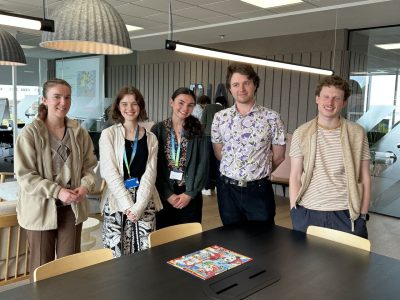
As PJA expands its presence in Australia, we are excited to introduce two new additions to our growing team – Denmark Yuzon and Zara Xie, both based in Melbourne.

We sat down with these new team members who bring knowledge and capacity to PJA’s growing Australian team to discuss their experiences, expertise, and ambitions. Here, they share their insights on joining the team and their fresh perspectives on the future of transport and engineering in the regions.


Denmark Yuzon, Senior Engineer, Melbourne

Denmark, welcome to PJA! What motivated you to join the team? 

PJA’s diverse project portfolio stood out to me, as it allows engineers to contribute across multiple disciplines and project types. The wide variety of projects not only supports professional growth but also encourages solutions that go beyond standard or habitual approaches.

Equally important to me is workplace culture. From my interactions and observations, PJA has a genuinely warm, collaborative, and welcoming culture where people support each other and value teamwork. That combination of technical opportunity and positive culture strongly aligned with what I was looking for, and ultimately motivated me to join the team.


You’ve delivered transport projects across Australia, New Zealand, Guam and the Philippines — how have these different environments shaped your approach to civil design and problem-solving? 

Delivering transport projects across countries has significantly shaped how I approach civil design and problem‑solving. Working in these different environments has broadened my understanding of how road design and infrastructure must respond to local conditions, whether its urban density, user behaviour, or levels of network maturity.

Exposure to diverse design standards, approval processes, and regulatory frameworks has strengthened my ability to understand what is required and adapt my approach accordingly. It has helped me become more efficient in navigating varying technical expectations while still maintaining safety, constructability, and compliance at the core of my designs.

Working across different cultures has also influenced how I think about design solutions. Cultural context often affects how infrastructure is used and perceived. Experiencing this first-hand has encouraged me to think more openly and explore alternative or innovative solutions where standard approaches may not be the most effective.


What aspects of the design process do you find most rewarding, and why?

The point where the geometry and the model truly come together. There’s a sense of satisfaction when the proposed contours are clean, smooth, precise and when the model reflects exactly how I envisioned my design would be.

I’m also motivated by the challenge of fitting new vertical and horizontal geometry into existing conditions. Achieving a solution where the proposed alignment works with constraints such as topography, tie‑ins, services, surrounding infrastructure and complies with design standards is especially rewarding. When a design balances compliance, functionality, and minimal disruption to existing conditions, it shows how effective the engineering behind the design is.


You’ve led multidisciplinary teams on major transport programs — what do you think makes collaboration successful on complex infrastructure projects? 

I believe successful collaboration on complex projects starts with strong coordination between all disciplines. Everyone needs to understand how their work connects to others, and regular communication is key to avoiding gaps or surprises. Just as important is having an open mindset and a culture that genuinely supports teamwork. On large projects, success is shared, if one part of the team struggles, it affects everyone, and when things go well, the whole team looks good.

I also think it’s important to recognise that there’s rarely only one right solution. Good collaboration allows different ideas to be explored and helps the team agree on the most practical and efficient way forward together.


Zara Xie, Civil Engineer, Melbourne 

Zara, it’s great to have you on board! What drew you to PJA?  

I was motivated to join the team because of the opportunity to contribute to meaningful work while continuing to grow professionally. The team’s focus on collaboration, innovation, and delivering high-quality results really stood out to me. I was particularly drawn to how my skills and experience align with the team’s goals, and I saw a chance to make a tangible impact while also learning from talented colleagues. Being part of an environment that values both performance and development was a strong factor in my decision.


You’ve worked across a wide range of sectors, from public domain to high-rise and aged care — what draws you to such diverse projects, and how does that variety influence your work?  

Each project type comes with its own set of challenges, stakeholders, and design considerations. That variety keeps the work engaging and pushes me to think more broadly and creatively. It also strengthens my ability to transfer knowledge between sectors. Working across different sectors makes me a more adaptable and well-rounded designer.


You’re passionate about development applications and detailed design — what do you enjoy most about this stage of a project?  

That’s where ideas are rigorously tested and refined into something buildable. It’s the point where design intent meets real-world constraints—planning controls, regulations, budgets, and construction requirements. I enjoy navigating that complexity and finding solutions that satisfy both compliance and design quality. There’s a real sense of achievement in resolving details, coordinating with consultants, and knowing that the work you produce directly shapes what will be constructed.


With your focus on technical problem-solving and attention to detail, what motivates you to consistently deliver high-quality outcomes? 

My motivation comes from a strong sense of responsibility to the project, the client, and the end users. I take pride in producing work that is not only technically sound but also thoughtful and well-resolved. Attention to detail is important to me because small decisions can have a significant impact on the overall success of a project. I also genuinely enjoy problem-solving—working through technical challenges, identifying potential issues early, and developing clear, efficient solutions. That combination of pride, curiosity, and accountability drives me to maintain a high standard in everything I do.


With Denmark’s expertise in transport infrastructure design and geometric modelling, and Zara’s broad experience across public and private sector developments with a strong focus on detailed design and water quality, PJA’s Australian team is further strengthened. Their technical capability, attention to detail, and commitment to high-quality, well-resolved outcomes are already adding value to our work. We are proud to welcome both Denmark and Zara as we continue to expand PJA’s presence in Australia, building a collaborative team committed to delivering excellence across diverse and complex projects. 

Melbourne Office

Level 19
15 William Street
Melbourne
VIC 3000
Australia

T: 0370 330 210
[email protected]


Find out more about our services here

Sign up for more news from PJA here