Active Travel England (ATE) is the Department for Transport’s new cycling and walking executive agency with a £5.5 million investment to be made in cycling and walking schemes.

ATE will be responsible for driving up the standards of cycling and walking infrastructure and managing the national active travel budget, awarding funding for projects that meet the new national standards set out in 2020. It will inspect finished schemes and ask for funds to be returned for any that have not been completed as promised or have not started or finished by the stipulated times.

ATE will also begin to inspect, and publish reports on, highway authorities for their performance on active travel, and identify particularly dangerous failings in their highways for cyclists and pedestrians.

It will be a statutory consultee on major planning applications to ensure that the largest new developments properly cater for pedestrians and cyclists. PJA’s Phil Jones is leading on this workstream.

As well as approving and inspecting schemes, ATE will help local authorities to train staff in spreading good practice in design, implementation and public engagement.

As part of the Consultant team, PJA will helping to establish processes and protocols, as well as carrying out inspections of planned designs referring to Local Transport Note 1/20 which we authored.

Chris Sibthorpe, PJA’s Active Travel Director said “We are delighted to be part of the consultancy team assisting DfT, local authorities and developers in meeting higher standards of infrastructure design for walking and cycling so that these become mainstream activities for short trips. With the climate change emergency and focus on health and wellbeing following the COVID pandemic, the need for thoughtfully designed streets to enable walking and cycling has never been greater”.

For more information, contact [email protected]


PJA were the lead author of LTN1/20, the new cycling infrastructure design guidance which was published alongside ‘Gear Change’, and co-authored the guidance on Local Cycling and Walking Infrastructure Plans. Made up of some of the UK’s leading transport planners, engineers and place makers we work together to create better places through great design.

Find out more about our services here

Sign up for more news from PJA here

Find out more

For more information, please contact:

There were an estimated 29 million domestic overnight leisure trips planned using a car as the primary mode of transport in 2021*.

As the trend for ‘staycations’ is looking like it’s here to stay into 2022 and beyond, Transport Planning Consultant, Julia Coonan, from our Cambridge office investigates potential solutions to manage the impact on UK tourist hot spots by increasing sustainable modes of travel in her commended entry to the Transport Planning Society Essay Competition:

“Last summer, I was excited to plan a cycle route through the village of Stow-on-the-Wold in the Cotswolds. Having never been before, I had high hopes of a nice café stop overlooking historic architecture in a peaceful village setting. I was therefore somewhat disappointed to discover on arrival that the village was choked with cars. The main market square was a very full car park and there was a constant slow-moving stream of cars circling the village looking for available parking spaces.

“It struck me that parts of the UK are evidently not coping well with the high volume of vehicle traffic in some tourist hotspot areas. But who can blame people from travelling by car when there is a real lack of alternative, sustainable travel modes available in many rural tourist areas?

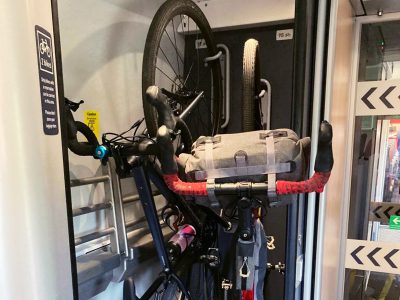
“Despite levels of leisure cycling having increased 40 to 60%, with some weekends peaking at a 300% increase on pre-pandemic levels, cycling on holiday can be riddled with challenges. Problems I personally experienced last summer included a lack of available and accessible cycle parking on trains, the convoluted method of booking your bike onto a train, inconsistent safe infrastructure for cycling and a lack of cycle parking at key tourist destinations such as beaches.

“Interested to explore more about the issues, I submitted a proposal with the title ‘The Great British Staycation: Improving Public Transport and Cycling Access to Popular Tourist Destinations’ and excitingly was chosen as one of the finalists selected to research and write a paper for the Transport Planning Society Bursary 2021.

“The support from The Transport Planning Society throughout the process was excellent and each finalist was paired with a mentor to help guide the research and writing of their paper. I was fortunate to be able to interview some really brilliant members of the industry for the research, which gave me more detailed insights into the issue and potential opportunities.

“The research demonstrated that it is definitely not going to be an easy task to encourage a mode-shift at a faster rate than the UK has been experiencing over the last few decades. Transport planners are faced with the dilemma of ‘how can we encourage people to use sustainable modes of travel without the appropriate infrastructure?’ and at the same time, ‘how can we justify the provision of the appropriate infrastructure when there is seemingly no demand at present?’

“There is no one-size-fits-all approach that will be suitable for all parts of the UK as different holiday destinations experience localised issues and constraints, and have unique demographics of visitors but all have the opportunity to capitalise on the general demand for UK staycations and the rise of leisure cycling.

“My paper concluded with a number of recommendations. We should capture more data and use this collaboratively to show the success of projects which will then justify future schemes. We can work with policy makers, train operators and other organisational bodies to improve the environment and ease for sustainable transport users and provide the infrastructure and facilities to accommodate those arriving at tourist hot spots and accommodation. Following the implementation of the above, we then need to Travel Plan; encouraging and informing people that alternative transport modes are available to further increase the uptake of sustainable modes of transport.

“Ideally over time, the choked-up car park that some of these hot spots have become can return to the tranquil, peaceful settings they are meant to be for all to enjoy.

“I presented my paper outlining my findings to members of the Transport Planning Society Board in January 2022 along with the other finalists. I am pleased to announce that we were all commended for producing high-quality research papers.

“Applications for the 2022 Transport Planning Society Essay Competition will open again later this summer and I would definitely recommend it to any young professional looking to broaden their knowledge beyond the usual scope of their work.”

Read the full essay here

For more information, contact [email protected]

Find out on our services here


Julia Coonan, Consultant

Julia is a Transport Planner with nearly 3 years’ experience in developing Transport Assessments and Travel Plans, all of which focus on delivering high-quality, sustainable and low car developments. Julia also has experience working on planning applications and masterplans for larger scale public transport projects, including contributing to business cases, public realm improvements and active travel planning.

[email protected]


* RAC, ‘RAC Forecasts Unprecedented Summer on the UK Roads with 16m Staycations’, 2020, https://www.rac.co.uk/drive/news/motoring-news/rac-forecasts-unprecedented-summer-on-the-uks-roads-with-16m-staycations/, (accessed 30/11/2021).

We pride ourselves on making great places for people and have, over many years, provided support to the UK and devolved governments on how best to create safe and attractive infrastructure.

We have produced documents such as guidance on producing Local Cycling and Walking Infrastructure Plans, the Wales Active Travel Design Guidance and Local Transport Note 1/20 – Cycle Infrastructure Design which was commended in the Transport Planning category of the CIHT Awards 2021.

Additionally, the work PJA have carried out with Welsh Government to set the agenda for default 20mph speed limits in urban areas will help create a safer road network and PJA have been applying these principles in places such as Faversham in Kent, where a town-wide 20mph limit was introduced, which led to a change in the County’s speed limit policy to enable more places to make the change.

Our chairman, Phil Jones, was instrumental in guiding the ‘Hierarchy of Road Users’ change to the highway code. The change will outline how responsibility rests with the road users who could potentially cause the most harm to others. For example, car drivers will be responsible for ensuring cyclists are safe, while cyclists will be responsible for looking out for pedestrians.

Phil said: “The new Highway Code won’t be a magic bullet, and as we set out in Turning the Corner, more changes are needed. But it does represent a significant change in the way in which our roads should be used, and that can only make it safer and more pleasant to walk and cycle.”

Stopping vehicles from using quiet roads as shortcuts whilst increasing space for more walking and cycling through Low Traffic Neighbourhoods (LTNs) are an increasingly popular. LTNs

Where traffic flows are high, some areas see a significant number of casualties, particularly involving cyclists and pedestrians. Increased traffic markings, signs and barriers are often put in place in an attempt to address the safety problems but generally this isn’t always successful and can lead to a worsening of the local environment and a marginalisation of pedestrians and cyclists.

Instead we look at creating more efficient space for buses and car drivers, reallocating road space to pedestrians and cyclists and providing appropriate places to cross which all go someway in creating a safer road. We introduce Low Traffic Neighbourhoods, stopping vehicles from using quiet roads as shortcuts whilst increasing space for more walking and cycling. This creates pleasant places to live whilst also creating safer conditions in our streets.

Our Kingsheath LTN project was featured on the BBC’s The One Show which showed the role they can play in making streets healthier and safer.

Safer roads aren’t only about increased enforcement, nor is it purely about the safety of drivers who make up only a part of those on the road. By slowing speeds, changing the emphasis on which road user bears the greatest responsibility and offering safer infrastructure for cyclists and walkers will all go some way in assisting to make a safer road network for all.

As transport planners, engineers and placemakers we’re proud to play a part in creating a safer road network designed with all users in mind.

Read more on our services here

Sign up for more news from PJA here


A huge welcome to the 27 new members of staff who joined us over the last year and huge congratulations to those who received recent promotions.

Our new faces have taken up roles right across the business in all service areas: transport, engineering and placemaking and takes the PJA headcount up to over 100.

We are so pleased to have you all on board and part of Team PJA.


Promotions

Nikki Slack, Associate

James Warbey, Principal Consultant

Jack Gray, Principal Consultant

Charlotte Smith, Associate

Nick Spear, Principal Geo Environmental Engineer

Chris Johnson, Infrastructure Director

Dan McCrudden, Associate Director

John McQueen, Associate Director


New Starters

Alison Caldwell – Associate Director

Alison is a Chartered Civil Engineer, actively championing holistic water management to ensure long term resilience of future development.  She brings over 10 years’ experience working on all elements of project delivery in both private and public sectors; providing technical advice to local authorities, developers, planners and others involved in the planning and design of the built environment at strategic, regional and local scales.

Alison has taken a lead role in delivery of multi-disciplinary projects, with extensive experience in flood risk and sustainable surface water management, drainage design, green-blue infrastructure, integrated water management, flood risk mitigation and flood modelling projects at both strategic and local scale in the UK and internationally.

[email protected]


Andrew Nixon – Associate Director

Andrew leads our Birmingham Civil Engineering Team, primarily focussing on Section 278 access junctions and primary highway infrastructure. He advises developers, designers, planners and local authorities on local and national projects.  

[email protected]


Benjamin Mentha – Senior Associate

Ben leads the Melbourne transport team and has over 12 years experience as a transport engineering, design and planning consultant in Victoria.

He specialises on development planning for private and government clients, with extensive experience across a wide range of land uses. He has particular expertise in the greenfield land market, working on major subdivisions, as well as assisting the preparation of PSPs, ICPs and rezoning applications.

He has provided expert evidence for planning appeals at VCAT, Planning Scheme Amendments and land acquisition compensation claims.

Ben is a passionate believer in good design and aims to provide advice in a wholistic ‘total design’ approach in collaboration with other planning and design consultants.

[email protected]


Brian Norman – GIS Manager

Brian is a senior data consultant with over 20 years’ experience in the capture, analysis and integration of spatial data within transport, water and environmental projects having worked for global engineering consultancies.

He has a successful track record as a technical manager with experience in the successful leadership and delivery of national data capture projects for public sector organisations, championing the use of location-based data to support the effective management of assets.

He has developed and led high performing teams, implemented efficient technical workflows and quality assurance procedures to maximise access to GIS systems and data, utilising new technology to analyse and share quality data across teams and organisations, improving collaboration and enabling more effective planning and decision making.

[email protected]


Catriona Swanson – Associate

Catriona is an Associate in our Manchester office. She has over 12 years’ experience of delivering active travel, sustainable transport, regeneration and placemaking schemes in both the public and private sectors. Catriona’s experience includes network planning and concept design as well as overseeing the detailed design and delivery of schemes. She is particularly passionate about inclusive design and creating Healthy Streets.

[email protected]


Charlotte Turner – Graduate Flood Risk & Drainage Engineer

Charlotte joined the PJA Graduate Development Programme after graduating from Coventry University with a BSc (Hons) in Geography where she gained knowledge surrounding Flood Risk Management and experience in GIS and Hydraulic Modelling. Using this, Charlotte’s dissertation investigated the use of Natural Flood Management in a local catchment to see whether the use of natural structures could reduce peak flood depths and extents.

[email protected]


Claire Harrison – Associate

Claire has over 17 years’ experience in the transport planning sector with a varied portfolio that includes urban extensions, commercial, retail, education and residential developments. She has a successful track record working for private sector clients specialising in Transport Assessments, Transport Statements, Travel Plans and supporting projects through the local planning process.

She has vast experience in the implementation of Residential and Site Wide Travel Plans across various sites in the UK as part of a Travel Plan Co-ordinator role. She is the first in the Country to be awarded the Modeshift STARS Bronze Accreditation for sustainable travel initiatives for a Travel Plan site in Ipswich.

[email protected]


Daniel Flello – Senior Engineer

Daniel is an engineer with 6 years’ experience working in the civil engineering industry. He specialises in drainage from viability assessments through to on plot design for both residential, commercial developments and major highways. In addition to this he has experience with residential highways and earthworks.

He has spent much of his career working alongside lead local flood authorities and helping to educate others on best practice.

Daniels is a Chartered member of the ICE (MICE) and is working towards becoming a Supervising Civil Engineer.

[email protected]


Emily Daffern – Graduate Consultant

Emily joined the PJA Graduate Development Programme in 2021 and is based in the Reading office. She graduated from Newcastle University with a BA (Hons) in Geography where she gained knowledge surrounding sustainable development and experience in data analysis. Using this, Emily’s dissertation investigated whether forms of sustainable energy will bring energy justice or further fuel poverty.

[email protected]

Emma O’Kane – Senior Accounts Assistant

Emma has over 17 years’ experience within the finance industry and assists with the preparation of accounts.

[email protected]


Gavin Coupe – Associate Director

Gavin is an Associate Director with over 18 years’ experience working across the UK and beyond. His primary area of expertise is as a Local and Microscopic Simulation modelling expert although he also has extensive experience in strategic and development planning, masterplanning, public realm & urban regeneration, and public transport led schemes.

Gavin understands how to deliver modelling work that supports and optimises designs for the betterment of our clients, and he leads PJA’s national modelling offering.

[email protected]


George Long – Engineer

George has three years experience as a Setting Out Engineer, working on site to implement highways, drainage, and earthworks projects. He has experience producing Traffic Management drawings and site phasing and logistics plans, as well as some elements of highway design through design and build projects.

[email protected]


Greg Dobbins – Associate Director

With over 18 years’ consultancy experience, Greg has worked in both the public and private sectors to develop residential, commercial and industrial sites of various shapes, sizes and difficulty.

Over the past 10 years, Greg has specialised in providing holistic development advice for large, strategic residential developments, focusing on the coordination of large multi-disciplinary delivery teams delivering successful planning applications.

[email protected]


Harriet Haldenby – Consultant

Harriet is an urban designer based in our Manchester Officer. She has 3 years’ experience working in planning and design, most recently working as part of a collaborative design team on health and travel-focussed projects.

Having been particularly focussed on the role of the community in design projects, Harriet has developed an interest in how the spaces and places we design interlink with the way we travel, and its impact on our quality of life.

[email protected]


John Myatt – Associate Director

John is an experienced transport planner who has led a wide range of public sector transport and development projects, including the development and management of local authority capital programmes and transport strategies. He has also worked closely with developers and other stakeholders to bring forward large and complex sustainable urban extensions, and been part of the team delivering the Birmingham 2022 Commonwealth Games.

Having worked in senior roles within local authority transport teams, John understands how to deliver projects in a public sector political environment, and has extensive experience of working with partners and stakeholders across the public and private sectors.

[email protected]


Julia Coonan – Transport Consultant

Julia is a Transport Planner with nearly 3 years’ experience in developing Transport Assessments and Travel Plans, all of which focus on delivering high-quality, sustainable and low car developments. Julia also has experience working on planning applications and masterplans for larger scale public transport projects, including contributing to business cases, public realm improvements and active travel planning.

[email protected]


Justine Seager – Graduate Consultant

Justine joined the Graduate Development Program in 2021, having initially started in the Transport Policy division at Surrey County Council where she was part of a team strategising the delivery of an EV chargepoint network. Prior to this, Justine gained an MA (Hons) in Economics from the University of Glasgow and then an MSc in Planning from the University of Manchester, winning the RTPI prize for her dissertation on walkable urban design and town centre regeneration. Following this she studied briefly towards a PhD in smart transport and Mobility-as-a-Service (MaaS) before leaving academia to pursue a career as a transport planner.

[email protected]


Kayleigh McGeoch – Geo Environmental Consultant

Kayleigh is a geo-environmental consultant with nearly 6 years of experience in geo-environmental consultancy and ground investigation and has worked on a wide range of geo-environmental and geotechnical projects across the UK.

[email protected]


Maximilian Li – Graduate Consultant

Maximilian joined PJA’s Graduate Development Programme shortly after completing his MSc Transport Planning degree at the University of Leeds in late 2021. Prior to this, he was a research assistant at the Chinese University of Hong Kong working on a planning study for a local District Council in Hong Kong, where he also gained his BSSc in Geography and Resource Management there. His previous works have been related to public transport – the undergrad thesis was on spatial mismatch, public transport satisfaction and well-being in Hong Kong, while the Master dissertation was on the impact of COVID-19 on public transport use worldwide.

[email protected]


Mike Salter – Director

Mike is a Director based in our Cambridge office.

He has more than 25 years’ experience in transport planning including development-related transport assessments, business case production, strategy development, modelling and traffic engineering. He has appeared as expert witness at a number of inquiries.

BSc (Hons) MSc (Dist)

[email protected]


Nathan Mace – Apprentice Technician

As Nathan begins his career as an apprentice, he is learning valuable skills in software such as CAD and Site3D. He is currently studying for a level 3 Civil Engineering Technician at Solihull College and aims to improve his skills and knowledge at PJA in the different aspects of road design and overall to become a good engineer.

[email protected]


Owen Brice – Technician

Owen started his career as an apprentice where he gained knowledge in software such CAD, Microdrainage and Site3D. He now uses these skills in his role as a technician, where he offers support to both the engineering and transport teams. His past experience has been largely within highways, but his skills are quickly expanding into residential works as well.

[email protected]


Phoebe Ryding – Senior Flood Risk & Drainage Engineer

Phoebe is a Senior Flood Risk and Drainage Engineer with over 4 years’ experience.

She has worked on a variety of private sector projects including the design of drainage strategies, comprising sustainable drainage (SuDS) and the production of flood risk assessments.

Alongside this she has undertaken work with local authorities reviewing planning applications for Lead Local Flood Authorities (LLFAs) and has also worked with SuDS Approval Bodies (SABs), reviewing SAB applications and working on internal council housing schemes to ensure they comply with the Statutory SuDS Standards.

[email protected]


Rebecca Jones – Principal Consultant

Rebecca is a highway engineer and transport planner based in our London office. She has over ten years’ experience in the sustainable transport industry, and has worked within the public, private and not-for-profit sectors.

Her technical expertise includes concept and detailed design of cycling and walking infrastructure, as well GIS mapping, network planning, data analysis and project management. She has extensive experience of community engagement and co-design, and has worked on projects both in London and across the UK.

[email protected]


Rob Howe – Associate

Rob is an Associate with 32 years of experience in development infrastructure and 3D modelling. He has a track record of the design and modelling of highways works, including simple and complex junction geometry along with the 3D design of complex surface modelling. He has delivered numerous retail and residential development layouts both for Section 278 and Section 38 works in 2D and 3D and has provided 3D modelling for the redevelopment of sites as diverse as colliery spoil heaps to former MOD munitions sites. Rob also has experience of a wide range of design and modelling software.

[email protected]


Ryan Walters – Consultant

Ryan is a consultant based in our Birmingham office. He graduated from University of Birmingham in 2019 with a First Class Honours Degree in Geography and has since gained two years’ experience. Most recently, Ryan led on the procurement of Birmingham’s first fleet of e-cargo bikes as well as assisting in the creation of the parameters for Birmingham e-scooter trial.

Ryan also has experience in corporate policy and delivering funding bids.

[email protected]


Shannon Connolly – Consultant

Shannon is a Transport Planning Consultant based in our Birmingham office. She graduated from Newcastle University in 2018 with a degree in Geography and Planning and has 2 years’ experience in the industry based mainly in transport development planning for both public and private sector clients. She has prepared Transport Assessments and Statements, Travel Plans, junction modelling and access design for a range of developments including residential, commercial, education and religious sites as well as regeneration schemes.

[email protected]


Suzanne Lang – Office Manager

Suzanne manages the day-to-day running of the Birmingham office, welcomes our visitors and is the first welcoming voice you will hear on the telephone.

[email protected]


To find out more about our services here

Sign up for more news from PJA here



A brand new year and our wonderful team are still our greatest asset! Not only experts in transport, engineering and placemaking but also committed to delivering better places for people through high-level-service client experiences.

We’re very proud to continue to celebrate the faces behind the fast-growing international consultancy that we are today in our monthly feature ‘PJA People’.

Next up in our series is Consultant, Ryan Walters, based in our Birmingham office:


Tell us what you do at PJA

I’m a consultant in the Birmingham transport planning team who joined PJA in September 2021. I’m predominantly involved with public sector work, assisting clients with stakeholder management and public consultation. I’ve also begun to get involved in development planning, preparing Transport Assessments and Access Appraisals.


What’s your career path so far?

I studied geography at University of Birmingham in 2016. I then completed a 2 year graduate programme at Birmingham City Council through the National Graduate Development Programme (NGDP) where I undertook 4, 6 month placements within Human Resources, Transport Planning, Corporate Policy and Public Health. This provided me with the experience of working in a political environment, working closely with councillors and members of the public throughout my 2 years. I then completed my graduate programme in August 2021 and joined PJA in September!


What do you enjoy when you’re not working?

I play football for a local club on Saturdays which keeps me busy most weekends! If I’m not playing football I’m usually going to Villa Park to watch Aston Villa (things are starting to look up!). Apart from football, I’m also a keen golf player when the weather starts to improve so hopefully it starts to get warmer and drier soon!


Are you a dog or cat person?

I have neither but it would have to be dogs, the smaller the better!


What are you currently reading or listening to?

I’ve just finished reading ‘Thursday Murder Club’ by Richard Osman which was a great read. I’m also a fan of Tim Weavers ‘David Raker’ series, following the many twists and turns of a private missing persons investigator.

I’m currently listening to my Spotify Wrapped Top Songs for 2021, which showed that the Red Hot Chilli Peppers were my favourite band which I would say is pretty accurate!


Claim to fame?

Whilst playing in a cup final, I scored a volley to win the cup for my team from about 30 yards out. Luckily someone got it on camera and posted it on social media where it got a bit of attention! Apart from that, no real claims to fame (yet!)


Ryan Walters, Consultant

Ryan is a consultant based in our Birmingham office. He graduated from University of Birmingham in 2019 with a First Class Honours Degree in Geography and has since gained two years’ experience. Most recently, Ryan led on the procurement of Birmingham’s first fleet of e-cargo bikes as well as assisting in the creation of the parameters for Birmingham e-scooter trial.

Ryan also has experience in corporate policy and delivering funding bids.

Get in touch with Ryan: [email protected]


To find out more about our transport services here

Read more in our PJA People series here

Sign up for more news from PJA here
Our wonderful team are our greatest asset. Not only experts in transport, engineering and placemaking but also committed to delivering better places for people through high-level-service client experiences.

We’re very proud to continue to celebrate the faces behind the fast-growing international consultancy that we are today in our monthly feature ‘PJA People’.

Next up in our series is Senior Consultant, Jane Overton, based in our Birmingham office:


Tell us what you do at PJA

I’m a Senior Consultant in the Birmingham Transport Planning Team. I predominantly work in development planning – providing transport advice to clients throughout the planning process and preparing Transport Assessments, Statements and Travel Plans for a range of land uses. Recently, I’ve been getting involved in more public sector work, which has included assisting in the preparation of an Outline Business Case for a Levelling Up Fund bid and some public realm improvement works in Birmingham.


What’s your career path so far?

I studied Geography at Durham University, and graduated in 2015. I took a graduate role with Atkins in Birmingham, before starting at PJA in March 2019. Throughout the first six years of my career, I’ve really enjoyed getting involved in STEM (Science, Technology, Engineering and Maths) activities, for example, carrying out workshops in local schools, attending career fairs and tutoring GCSE / A Level students in Geography and Maths.


What do you enjoy when you’re not working?

I play the flute in a local Concert Band and Flute Choir, and also sit on the committee for both groups, which takes up a lot of my free time. We will be particularly busy over Christmas playing carols in festive attire whilst collecting money for Macmillan, and then warming up in the pub afterwards!

I am also a keen baker – although people in the office would probably say I don’t bring in enough home-baked goods for them to try…


Are you a dog or cat person?

Unfortunately, I’m in the minority of people who aren’t a fan of cats or dogs, but I’ll happily watch videos of them doing funny things though!


What are you currently reading or listening to?

I’m currently reading ‘Invisible Women: Exposing Data Bias in a World Defined for Men’ by Caroline Criado Perez. As a woman in transport who uses a range of data on a daily basis, it’s really opened my eyes to potential sources of data bias although it may not seem it at first – who would’ve thought that clearing snow from Swedish streets could ignite a debate on gender equality!

I’m currently listening to the music from Polar Express and Home Alone to try and get my head around some tricky rhythms ready for our Concert Band Christmas concert.


Claim to fame?

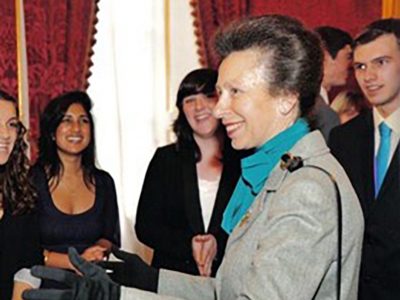
Whilst in sixth form, a group of us got nominated for a national award after creating a sensory garden in a care home. At the awards ceremony, we met Princess Anne and she asked me whether we grew brussels sprouts in the garden. Whilst she’s probably met millions of people, it’s the biggest claim to fame I have!


Jane Overton, Senior Consultant

Jane is a Senior Consultant, who joined the team in 2019. She has over 5 years’ experience working for a range of public and private sector clients primarily in development planning, but also in scheme appraisal, travel planning and transport modelling.

Jane’s key skills include junction modelling, accessibility analysis and travel demand forecasting to support the preparation of Transport Assessments and other technical documents for a range of developments including residential, education and employment land uses.

Get in touch with Jane: [email protected]


To find out more about our transport services here

Read more in our PJA People series here

Sign up for more news from PJA here
We asked Geo-Environmental Consultant Kayleigh McGeoch what led her to want to pursue this career, what a typical day looks like to her and how she’s found being in the team at PJA. Read what she had to say to give a real insight into being in the ground engineering and contaminated land industry:

When I was young I had a fascination with rocks and would keep picking them up and putting them in my pockets and growing up I loved collecting shells and interesting rocks (be they colourful or oddly shaped!). I have always loved learning about how the Earth was made, what created the geology that we stand on everyday and was able to visit a number of geological features as part of family holidays

I started out with a Bachelors degree in Geology at Royal Holloway, University of London, followed by a Masters degree in Volcanology at the University of Bristol. Both degrees offered me the opportunity to explore how geology and geological structures of an area can affect a number of factors taken into account within construction and engineering including groundwater presence, slope stability and mining history.

After finishing university, I decided that I wanted to move into a career that required me to use the knowledge I had gained during my degrees, which was when I found a geo-environmental engineer position. It allowed me the chance to observe ground conditions across a number of sites and gain a deeper understanding of the geology of the UK. After a few years of primarily geo-environmental consultancy and contracting, I wanted to expand my knowledge and explore the geotechnical side of the industry. Following a couple of years in a geologist position I decided that I wanted to focus more on the consultancy side than the contracting side of the industry and my years in contracting gave me a good head start in that direction. When the consultant opportunity at PJA arose, I immediately applied for it and when I started the role I immediately felt like a part of the team.

A typical working day varies from day to day. One day I could be on a site helping to set up a ground investigation or conducting a site walkover and the next I could be working in the office on a report or organising an upcoming ground investigation.

The main thing I enjoy about working in engineering is the huge variety of projects across the country, each of which are completely unique and vary from commercial and industrial developments to remediation projects.

I think that my biggest achievement to date was helping to run an on site mobile laboratory running chemical analyses on up to ten samples a day, both soil and water samples, and providing laboratory results to clients within a 24 hour turnaround. This allowed materials on the sites to be stockpiled on site and either reused or disposed of as waste based on the chemical results.

If anyone is contemplating a career in engineering, definitely consider whether the type of job you would like is either purely office based or whether you enjoy time outdoors as well (in all weathers!). If you are an outdoorsy person, like me, then engineering is an ideal career for both spending time at a desk and spending time at a variety of locations across the country.

Find out more about our ground engineering and contaminated land services

Are you interested in being part of our engineering team? View our current vacancies here

Sign up for more news from PJA here

Kayleigh McGeoch

Kayleigh is a geo-environmental consultant with nearly 6 years of experience in geo-environmental consultancy and ground investigation and has worked on a wide range of geo-environmental and geotechnical projects across the UK.

BSc(Hons) MSc

Contact Kayleigh: [email protected]


Find out more

For more information, please contact

In October 2021, the Chancellor of the Exchequer presented his Autumn Budget and Spending Review (SR21) to Parliament. In November 2021 leaders from around the world met at COP26 to discuss tackling climate change. With securing global net zero by mid-century, and an aim to keep it within 1.5 degrees, a top priority we ask: Is the budget enough to make an impact?

Sustrans’ challenge to the Government to create a “golden age of cycling” off the back of the pandemic captured the attention of many earlier in the year with widespread media coverage and follow up articles.  But with the aim to have 50% of all journeys in towns and cities cycled or walked by 2030, as set out in the Transport Decarbonisation Plan, support and funding from the highest level is necessary to make any real impact.    

The Key Elements
The key elements of the Autumn Budget and SR21 that are likely to have some impact on securing the UK’s net zero goals within transport are: 

  • £46 billion on railways and £21 billion to be spent on roads, plus a guarantee to spend £5.7 billion setting up London-style transport systems across city regions including Greater Manchester and the West Midlands. 
  • More than £5 billion to be spent on cycling and walking infrastructure  
  • The first 100 projects to benefit from a share of the £1.7 billion Levelling Up Fund were announced.  


City Regional Sustainable Transport Systems & Levelling Up Funding
Transport settlements totalling £5.7 billion have been agreed with Greater Manchester, West Midlands, West Yorkshire, South Yorkshire, Tees Valley, the West of England and Liverpool City Region over the next five years. The West Midlands and Greater Manchester have received the largest proportion of funding, totalling £1.05 billion and £1.07 billion, respectively. 

As part of the first bidding round of Levelling Up Funding, £1.7 billion has been allocated to 109 projects across the UK. These projects will upgrade local infrastructure, contributing to the Government’s levelling up agenda to reduce regional inequality. The remaining £3.1 billion will be distributed as part of further bidding rounds.  

£150 million has also been provided to 21 projects which seek to help communities retain assets that add value to the local social fabric of a place or play a central role in supporting the wellbeing of a community. 


Transport Connectivity
The SR21 pledges to improve the journeys people make every day and enhance connectivity between cities and regions to level up across all parts of the country. 

To support this, over £35 billion of rail investment is pledged over the next three years, including High Speed Two, rail enhancements and vital renewals to improve passenger journeys and connectivity across the country, focusing particularly on the Midlands and the North.  

This will bring communities across the country closer together and connect them to a wider range of opportunities through dramatically reducing journey times. 

£23 million of new funding will be delivered in anticipation of the final recommendations of Sir Peter Hendy’s Union Connectivity Review (UCR) to improve UK-wide connectivity. 

Over £500 million will be delivered to restore transport services lost as part of the ‘Beeching Cuts’ to improve local connectivity. £650,000 will be delivered to develop feasibility studies on 13 successful ‘Ideas Fund’ proposals for new lines and stations across England and Wales, reinstating passenger links as part of the ‘Restoring Your Railway Fund’. £7 million development funding from 2021-22 to 2024-25 will be provided to areas such as Somerset, Devon and Hampshire to reopen passenger services as part of this fund. 


Public Transport
The government will invest over £5 billion in buses, cycling and walking during this parliament, with bus investment totalling more than £3 billion. This includes a new dedicated commitment of £1.2 billion for bus transformation deals to deliver London-style services, fares and infrastructure improvements. 

£355 million of new funding will be pledged for zero emission buses and an allocation of £70 million Zero Emission Bus Regional Areas funding to deliver buses and related infrastructure will be provided to Warrington, Leicester, Milton Keynes and other regions. 


Conclusions
So is it enough? Will all of these planned investments make the real change that COP26 are aiming for? Can it make public transport and active travel the natural first choice for daily activities as Rt Hon Grant Shapps MP Secretary of State for Transport has set out? Can our existing towns, cities and villages cope with the changes needed? Can developers afford to implement the infrastructure that’s required for the change in new developments? 

The Budget and SR21 is a big leap forward for financial aid in this area, supporting recent positive changes in bus and active travel policy through Gear Change and Bus Back Better. Policy and investment are the two key elements necessary to force and support the change, but there is an element of scepticism in whether the financial support goes far enough to make shared transport and active travel a viable first choice in all areas. 

Concentrating on those cities outside of London to adopt a ‘London type transport system’ seems to be one of the main opportunities to move it in the right direction. Forcing people to use public transport or active travel by making it too difficult or too expensive for cars is one certain way of improving uptake, but it requires the requisite funding to deliver viable alternative options. For new developments, prioritising active travel and public transport by having those more easily accessible than private vehicles will also go some way in supporting the change. 

What we really need to implement and retain the change, is something we are already seeing. A new attitude to development that puts people at the heart of a place, and gives public transport and active travel real practical priority measures, to be easier, more convenient and cheaper than individual car travel.  

And what policy and funding starts is continued through consumer awareness. Buyer’s appetite to have prospective homes and workplaces with green links and greater accessibility will also drive the momentum to a shift in provision – and the more it’s available, the more it will be a simple expectation rather than an exception.  

PJA were the lead author of LTN1/20, the new cycling infrastructure design guidance which was published alongside ‘Gear Change’, and co-authored the guidance on Local Cycling and Walking Infrastructure Plans. Made up of some of the UK’s leading transport planners, engineers and place makers we work together to achieve a robust, evidence-led approach to creating better places and new developments.

Find out more about our transport planning services

For more information, contact John Myatt

Sign up for more news from PJA here


John Myatt, Associate Director

John is an experienced transport planner who has led a wide range of public sector transport and development projects, including the development and management of local authority capital programmes and transport strategies. He has also worked closely with developers and other stakeholders to bring forward large and complex sustainable urban extensions, and been part of the team delivering the Birmingham 2022 Commonwealth Games.

Having worked in senior roles within local authority transport teams, John understands how to deliver projects in a public sector political environment, and has extensive experience of working with partners and stakeholders across the public and private sectors.

Get in touch with John: [email protected] or 0121 387 7942


Find out more

For more information, please contact

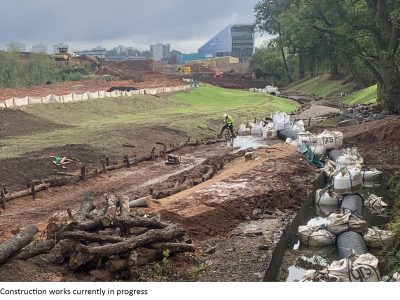
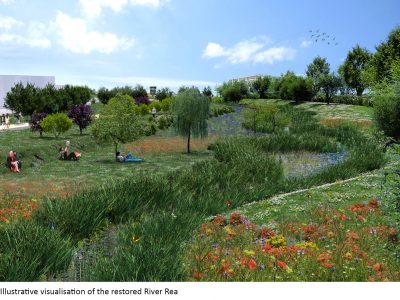
PJA are proud to be supporting St. Modwen Developments Ltd in their endeavours to breathe life back into the River Rea corridor as it passes through the former Longbridge West Works.

Together, we are restoring the river corridor, providing ecological enhancements and creating new habitats to provide a strong green-blue link through the site.

Our team of flood risk consultants and civil engineers have designed the restoration of the River Rea, and the Callow Brook, to ensure that online flood storage is provided to benefit existing and future communities, while providing a new amenity space for all.

Over the last year, PJA have worked in collaboration with the Environment Agency and Birmingham City Council to gain the necessary planning permissions, permits and consents to enable the construction of the new river corridor.

Elliot Sellars, Development Director at St. Modwen, said:

“St. Modwen is delighted to see the River Rea corridor being brought back to life as part of the wider West Longbridge development.

“West Longbridge will link Longbridge Town Centre to Rubery Lane via a riverside footway and cycleway providing much improved connectivity, huge biodiversity gains and a beautiful environment for both the existing community and the new residents and commercial occupiers at West Longbridge.”

Construction works are currently in progress, with estimated completion in early 2022.

We are excited and privileged to be changing the landscape on the doorstep of our head office and look forward to the many benefits these works will bring to the community.

For more information contact: [email protected] or find out more on our water resources services here

Sign up for more news from PJA here

Find out more about Longbridge here


Alison Caldwell, Associate Director
[email protected]

T: 0121 387 7912

Alison is a Chartered Civil Engineer, actively championing holistic water management to ensure long term resilience of future development. She brings over 10 years’ experience working on all elements of project delivery in both private and public sectors; providing technical advice to local authorities, developers, planners and others involved in the planning and design of the built environment at strategic, regional and local scales.

Alison has taken a lead role in delivery of multi-disciplinary projects, with extensive experience in flood risk and sustainable surface water management, drainage design, green-blue infrastructure, integrated water management, flood risk mitigation and flood modelling projects at both strategic and local scale in the UK and internationally.

CEng MICE MEng (hons)


On 28th September 2021 the Welsh Government released the updated Technical Advice Map (TAN) 15 which is the first update since 2004. The updated note also replaces Technical Advice Note 14, published in 1998 regarding coastal planning.

The new guidance, due to come into effect on Wednesday 1st December 2021, has now been delayed until 2023.  The update aims to move guidance from a more precautionary approach to a more risk-based approach to ensure flooding and coastal erosion are accorded appropriate consideration in plan making and development management, however, concerns from local authorities as to the implication of the new TAN-15 policy has prompted the Welsh Government to postpone the adoption of the update for two years.

However, some of the impacts of the updated TAN may make investment through development within Wales much more restrictive.

Basis

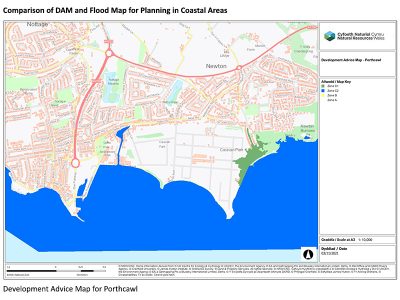
The Flood Map for Planning will become the starting point for an assessment of flood risk for any development aspirations, replacing the function of the current Development Advice Map (DAM).

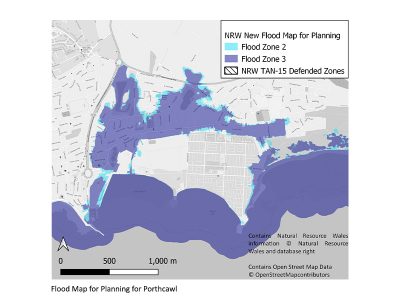
Within the Flood Map for Planning there are four new zones- Flood Zone 1, Flood Zone 2, Flood Zone 3 and a defended Zone. The crucial difference between the previous flood zone mapping in Wales and the current flood zone mapping in England is that climate change is included within the definition of the Welsh zone extents which can make significant differences, particularly within coastal areas, as shown in the images below.

The Defended Zone is defined as those areas that are served by defences with a standard level of protection of 1% AEP plus climate change fluvial risk or 0.5% AEP plus climate change tidal risk.

The Defended Zone is important for the acceptability of a development, as will be discussed below, but there is likely to be issues with the accuracy and representation of this zone in some areas, particularly where fluvial and tidal flood risk interacts.

There is also information on surface water and ordinary watercourse flood risk, coastal erosion, coastal defences and shoreline management plans within the Flood Map for Planning detailed mapping.

Suitability of development within different zones

The updated TAN lays out the suitability of all development vulnerability types within the new Flood Zones. Fundamentally, highly vulnerable development, which includes residential development, should not be proposed within Flood Zone 3 unless it is located within a Defended Zone. In terms of extent, Flood Zone 3 is considered to be similar to the previous Flood Zone 2, and the Flood Zone 2 within the English system.

The updated TAN 15 still includes the “Justification Test” and the “Acceptability of Flood Consequences” as per the previous issue, with the Justification Test largely reliant on a prospective sites’ inclusion within a Development Plan or providing strategic employment and a requirement for development to be proposed on previously developed land.

The Updated TAN can be accessed here

For more information on how this could impact your site, contact: [email protected] or find out more about our water resources services here

Sign up for more news from PJA here



Amy Evans, Principal Flood Risk and Drainage Engineer
[email protected]
T: 0121 387 7915

Amy is a Chartered Environmental Consultant, Hydraulic Modeller and Project Manager with over 12 years’ experience in the water and flood risk industry. Amy’s career focus has been on project and client management in the area of hydraulic modelling and mapping, development and flood risk and surface water management. She has managed a range of hydraulic modelling projects for private and public sector clients.