What does transport look like in a net zero world and, as professionals in the built environment, what are we doing to assist the change?

At the top of the COP26 list of goals is ‘Secure global net zero by mid-century and keep 1.5 degrees within reach’.

At the heart of the change that needs to happen is implementing net zero transport and placemaking solutions that minimise and eliminate operational carbon emissions from transport.

A shift to zero emissions within cars is already well underway but with road transport accounting for 10% of global emissions, and its emissions rising faster than those of any other sector¹ , change needs to happen quicker.

In the UK, there are over 300,000 pure electric cars on the roads and, as of the 1st October 2021, around 25,000 electric vehicle charging devices available².

With the lack of charging infrastructure as one of three main barriers for electric vehicle take up, new legislation has been devised to go some way in addressing the issue.

However, it’s not just a switch to electric vehicles that is needed. A balanced approach to a permanent change in travel habits for all may be just as impactful and as designers and implementers of development we have the opportunity to embed more sustainable urban structure to support this.

Supporting the change
Reduced travelling due to hybrid work patterns is now becoming established as the norm, but a shift to active travel and mass transport over individual transport is still a work in progress.
Collectively, transport integration of the home, such as adaptive parking strategies, green charging infrastructure, cycle storage and local delivery systems, influence how people choose to travel and the sustainability of their trips.

For new development this means embedding more sustainable urban structure and mixed land use to create better functioning neighbourhoods and districts. For existing places, this means optimising land use, retrofitting of walking and cycling infrastructure into local places and managing the transition to fully electric vehicle fleets and integration with public transport.

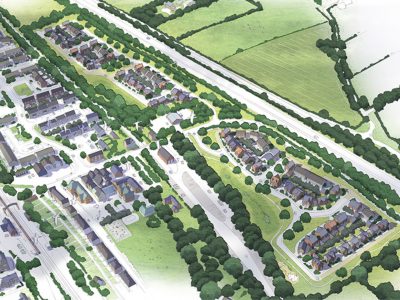
For our local neighbourhoods we need to be aware of land use mix and proximity, street network accessibility and integration with travel hubs. Focusing on liveable and low traffic neighbourhoods and strategies for shared mobility will create truly integrated travel systems that support people as well as vehicles.

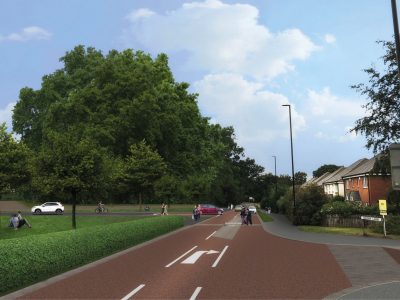
‘Green streets’ prioritised for sustainable modes of transport will need to be incorporated to create accessible local areas including conditions for better public transport and emerging AV shuttle technology, balancing this with the needs of those who drive private or shared electric vehicles.

For the harder to influence longer trips we focus on new thinking around travel/mobility hubs on rail and bus rapid transit routes including park and ride, and how active travel and vehicle electrification strategies can provide genuinely deliverable sustainable and net zero carbon options.

How will we know we’ve made a change?
Forecasting and analysing the movement and carbon emissions of planned strategies will become part of the process for developers to ensure they are meeting their set objectives.

PJA use tools to explore personal movement and create strong metrics on trip characteristics, journey length and mode and therefore the resulting carbon emissions.

The effectiveness and implementation speed of these strategies is still unfolding, but it’s vital to promote long lasting changes to the way development infrastructure is designed and implemented to play our part in the new net zero world.


PJA have developed a forward-thinking methodology for planning and implementing net zero carbon solutions in new development and in existing places. Our approach brings our strong understanding of development and place-based planning with strategies for minimising and eliminating operational carbon emissions.

For more information, or to discuss your project, get in touch: [email protected] or find out more on our services here

Sign up for more news from PJA here


  1. COP26, October 2021 ukcop26.org
  2. Official Statistics, Electric vehicle charging device statistics, October 2021 https://www.gov.uk/government/statistics/electric-vehicle-charging-device-statistics-october-2021/electric-vehicle-charging-device-statistics-october-2021


Our wonderful team are our greatest asset. Not only experts in transport, engineering and placemaking but also committed to delivering better places for people through high-level-service client experiences.

We’re very proud to continue to celebrate the faces behind the fast-growing international consultancy that we are today in our monthly feature ‘PJA People’.

Next up in our series is Associate, Claire Harrison, based in our Reading office:


Tell us what you do at PJA

I’m an Associate in the Transport Planning Team in the Reading Office. I coordinate the preparation of Transport Assessments, Transport Statements, Travel Plans and support projects through the local planning process. I’ve recently been appointed Project Director for all the Travel Plan Coordinator projects across the company, and I am pleased to report on the success of the recent Millbrook Park Travel Plan event, which I coordinated and attended.


What’s your career path so far?

I studied Human Geography at the University of Reading including an ERASMUS term at the Cycling City, Groningen, in The Netherlands. I was also fortunate to have my MSc Transport degree from Imperial College and UCL funded by my first employer. Since then, I have worked at various transport planning consultancy firms for private sector clients until I joined PJA in January 2021.


What do you enjoy when you’re not working?

I don’t have a lot of free time when looking after two school age daughters and accommodating their many sporting, musical and social activities but when I do I enjoy peace and quiet walking around the meadows alongside a river close to where I live. I often enjoy spotting swans and a heron there on my lunchtime walk. A delight to behold.


Are you a dog or cat person?

Neither to be honest. My eldest daughter is petrified of dogs so we won’t be getting a puppy any time soon. Although we did purchase a hot tub instead of a puppy during lockdown last year. That needs nearly as much daily care and maintenance as a pet but it’s a great way to relax and unwind.


What are you currently reading or listening to?

I enjoy listening to any music I can sing along and dance to… during the last decade this has often meant music from Disney Princess movies… Let It Go! Let It Go!….


Claim to fame?

I had my MSc dissertation work published in the Aeronautical Journal.


Claire Harrison, Associate

Claire has over 16 years experience in the transport planning sector with a varied portfolio that includes urban extensions, commercial, retail, education and residential developments. She has a successful track record working for private sector clients specialising in Transport Assessments, Transport Statements, Travel Plans and supporting projects through the local planning process.

She has vast experience in the implementation of residential and site wide Travel Plans across various sites in the UK as part of a Travel Plan Co-ordinator role. She is the first in the country to be awarded the Modeshift STARS Bronze Accreditation for sustainable travel initiatives for a Travel Plan site in Ipswich.

Get in touch with Claire: [email protected]


To find out more about our transport services here

Read more in our PJA People series here

Sign up for more news from PJA here

Find out more

For more information, please contact:

We’re looking at what the changes were and how they have been affecting the assessment of flood risk in England.

The National Planning Policy Framework (NPPF) relating to Flood Risk (paragraphs 159 to 173) was updated in July 2021 by the Ministry of Housing, Communities & Local Government. At the same time the Environment Agency released an update to climate change allowances and how these are to be applied when assessing flood risk.

NPPF: Flood Risk and Coastal Change

The changes state that Flood Risk Plans should now take into account all sources of flood risk, and should use opportunities provided by new development to improve green and other infrastructure to reduce the causes and impacts of flooding. The policy goes on to say that natural flood management techniques should be used as much as possible as part of an integrated approach to flood risk management.

By including the reference to ‘all sources of flood risk’ it is increasing the requirement to consider flood risk from sources other than fluvial (river) and surface water. This may mean that a more holistic understanding of flood risk is required when applying this policy, particular in terms of the Sequential and Exception Tests, providing increased weight behind the lesser scrutinised forms of flood risk like groundwater and artificial sources (e.g. reservoirs, canals and sewers).

The use and integration of natural management techniques and green infrastructure as part of a development layout is also being promoted and encouraged further within this update. This approach seems to align itself with the latest movement toward greener and sustainable solutions, and achieving Biodiversity Net Gain on new developments.

Our changing climate, and associated changes in rainfall patterns, is increasing the frequency of flooding in previously unaffected areas. This appears to place emphasis on integrated solutions and use of natural systems, in the form of green infrastructure, for new developments.

3 months on, we are seeing a new mindset emerge from businesses, particularly in the property sector, as they look to sustainably manage the consumption and recycling of water.

Nature-based solutions not only improve the stresses placed on our water environment but positively contribute to human wellbeing and create better places to be.

Naturally absorbing and holding water through green areas, planting and soils also leads to an element of natural cleansing improving water quality whilst financially, nature-based solutions also bring advantages due to a reduction in initial capital expenditure and lower on-going operations expense.

NPPF: Climate Change

The Environment Agency has significantly changed their approach in the way climate change allowances are applied to peak river flow.

Climate change allowances were previously applied on a River Basin District basis. These ten River Basin Districts have now been divided into 92 smaller Catchment Management areas, each with its own set of climate change allowance values.

The updated guidance seeks to simplify how climate change should be applied by type of development, stating that:

  • Central Allowance should be applied for most cases, including the assessment of offsite impacts and for floodplain compensation.
  • Higher Central Allowance should be applied to essential infrastructure developments.
  • Upper End Allowance should be applied to Nationally Significant Infrastructure Projects (NSIPs) new settlements or significant urban extensions. Applying the Upper End allowance should be treated as a ‘sensitivity test’ and will help assess how sensitive development proposals are to changes in the climate for different future scenarios. This will help to ensure proposed infrastructure and significant development can be adapted to large-scale climate change over its lifetime.
  • H++ Allowance now only applies to sea level rise and NOT peak river flows.

Surface water (rainfall) and tidal allowances have remained the same since 2016, however these are also expected to be updated in the near future.

Environmental Planning Guidance also states that peak river flow allowances should be applied to developments and allocations where the strategic flood risk assessment shows an increased risk of flooding in the future. This includes locations that are currently in Flood Zone 1 but might be within Flood Zone 2 or 3 in the future.

In simple terms, the new allowances consider the river basin, specific river and geographic location within the catchment when determining climate change requirements.

This could mean that two sites on the same watercourses, in relatively close proximity, could require different climate change allowances to be applied. To assist in identifying allowances for climate change impacts, a new GIS tool ‘Climate change allowances for peak river flow in England’ (arcgis.com) has been launched.

Three months on and there is still no guidance on how to apply the climate change allowance if a site sits between two Catchment Management Areas; however it could be presumed that the higher climate change value is applied as a precautionary approach.

NPPF also suggests that the central climate change allowance is also applied across all flood zones, including Flood Zone 1, for all uses (except Essential Infrastructure).

Climate change continues to be a hot topic for developers, with a need for more scrutiny and in depth assessment on what allowances apply to what watercourses. This approach is certainly giving a more accurate measure watercourse to watercourse, however the knock-on financial implications and delays for developers are having to incorporated.

To discuss the updates to national flood risk policy and climate change allowances further or for advice on the implications of these changes to your site, please contact: [email protected]

Find out more about our water resource and flood risk services here

Sign up for more news from PJA here


Andrea Nelmes, Principal Flood Risk & Drainage Engineer

Andrea is a chartered Principal Flood Risk & Drainage Engineer with over 16 years’ of experience in the water and land development industry. A technical specialist in flood risk, river restoration, drainage strategies including wastewater modelling and SuDS design. She has worked with and advised LLFAs and the EA on Surface Water Flood Risk and Water Resource Management which has provided her with extensive knowledge of the regulatory framework governing the water industry, enabling her to provide responsive, pragmatic advice to clients on a range of multi-disciplinary projects across the UK.

BSc (Hons) CEnv


Find out more

For more information, please contact:

Our Birmingham office has had a busy summer of planning approvals! From homes to emergency departments, read our top 6 of the summer:


Appleby-in-Westmoreland

Having previously supported the site through the Local Plan process, PJA supported Heyford Developments for an outline planning application for up to 100 dwellings in Appleby-in-Westmoreland, Cumbria. PJA prepared a Transport Assessment and Travel Plan for the scheme, which set out a review of the transport impacts by all modes and identified pedestrian improvements connecting the site with local amenities including a primary school and train station. PJA also designed two new vehicular access points in 3D, achieving the required visibility to ensure safe and suitable access. The scheme was granted planning permission in June 2021.


Keresley

PJA supported Lioncourt Homes in securing planning permission for up to 550 residential dwellings in Keresley, Coventry. The scheme forms part of the Keresley Sustainable Urban Extension, for up to 3,100 dwellings in the north of the city. PJA worked closely with Coventry City Council and National Highways to agree a package of improvements to the highway network, including contributions towards the Keresley Link Road. A sustainable mitigation package was also agreed, which included local and strategic upgrades to Coventry’s cycle network, and an extension to an existing bus route to service the site. PJA produced the Transport Assessment and Travel Plan for the scheme, along with highway design works and visualisations to assist with the stakeholder consultation process. PJA are very proud to be part of the team that secured a resolution to grant planning permission, and continue to provide support as the S106 is agreed.


Brymbo, Wrexham

PJA supported Brymbo Developments Ltd, in the redevelopment of the former Brymbo Steelworks – delivering up to 300 new homes and a new village centre including a primary school, new retail, health centre and pub/restaurant. Working closely with a multi-disciplinary team PJA prepared all Transport Planning reports including post application reporting and consultation with the Welsh Government to resolve potential impacts around the strategic road network. PJA are proud to be part of the team to help secure a resolution to grant planning permission.


Thickthorn

PJA supported Barwood Land with a hybrid application for up to 550 dwellings, employment, local centre and primary school on a site in Kenilworth. PJA undertook detailed discussions with National Highways (formerly Highways England) and Warwickshire County Council to agree the access strategy and modelling. A Travel Plan and Transport Assessment were prepared to accompany the application. These set out a comprehensive review of the site, detailed access strategy covering all users, assessment of local and strategic network impacts and mitigation of these. The site access points were designed in detail with fully compliant pedestrian and cycle infrastructure in line with LTN 1/20 which tie into WCC’s future off-site cycle network aspirations. The principles of pedestrian and cycle infrastructure were also set for the new spine road passing through the site connecting to wider Kenilworth.


Former Meggitt Factory, Coventry

PJA supported joint applicants, Black Elk Estates, Taylor Wimpey, Persimmon Homes and Holbrook Lane Investments in the submission of a full application for mixed-use development on the site of the former Meggitt Aircraft Braking Systems factory. The development includes 499 new homes and 254,000 sq ft of warehousing units. The inputs involved significant discussions and liaison with Coventry City Council (CCC), Transport for West Midlands and National Highways (formerly Highways England).

Highways and transport inputs included detailed scoping discussions to develop a comprehensive Transport Assessment and Travel Plan. These involved consideration of active travel and public transport strategies, travel demand, parking, modelling and off-site highway mitigation. The commission also included design of a new spine road through the site incorporating high quality active travel links. Furthermore, we negotiated the relevant S106 position with CCC and prepared briefing papers to support highway authority officers’ discussions with committee members.


Russells Hall Hospital Emergency Department

PJA supported the Dudley Group NHS Foundation Trust in securing approval for an expansion to the Russells Hall Hospital Emergency Department. Working closely with the consultant team, PJA helped reconfigure the ambulance parking and circulation routes. PJA prepared a Transport Statement to accompany a planning application, which included justification for the loss of parking based upon the increased efficiency and reduced waiting times that would be enabled by the new Emergency Department.


Find out more on our transport services here

Sign up for more news from PJA here

Find out more

For more information, please contact:

Our wonderful team are our greatest asset. Not only experts in transport, engineering and placemaking but also committed to delivering better places for people through high-level-service client experiences.

We’re very proud to continue to celebrate the faces behind the fast-growing international consultancy that we are today in our monthly feature ‘PJA People’.

Next up in our series is Consultant, Julio Manchon Campillo, based in our London office:


Tell us what you do at PJA

I work as an Urban Designer for the Placemaking team in London. I’m mostly involved in urban strategies, public realm and streetscape schemes for public sector clients across the UK.


What’s your career path so far?

I graduated as a Civil Engineer from the Politecnica University in Madrid, and then studied an urban design masters at the University of Edinburgh. After that, I worked in Madrid for a bit and moved to London in 2018.


What do you enjoy when you’re not working?

I have been cycling around London a lot over the past year and a half. Very fun experience – especially when the city was less busy!


Are you a dog or cat person?

Most people in the London team seem to prefer cats… but I think I’m more of a dog person.


What are you currently reading or listening to?

I’m reading ‘The Language of cities’ by Deyan Sudjic that I’m enjoying quite a lot.

And lately I have been listening to Nala Sinephro’s ‘Space 1.8’ – cool record!


Claim to fame?

Got to meet some of the ‘Galacticos’. Doesn’t get better for a football fan, really…


Julio Manchon Campillo​, Consultant

Julio is an Urban Designer, based in our London office, with 3 years’ consultancy experience in masterplanning and transport planning projects.

After completing the MSc Urban Strategies and Design at the University of Edinburgh, Julio developed an interest and expertise in relation to urbanism and the links between transport and mobility and urban design.

Get in touch with Julio: [email protected]


To find out more about our placemaking services here

Read more in our PJA People series here

Sign up for more news from PJA here

Find out more

For more information, please contact:

Ahead of the UK hosting the Climate Summit, COP26 in November 2021, it has been announced that the provision of Electric Vehicle (EV) charging units in all new residential and office developments is anticipated to become mandatory in England under new legislation.

The proposal forms part of the government’s aim to improve the availability of electric vehicle charging points ahead of the UK’s ban on new petrol and diesel vehicles in 2030.


Why is it important to increase EV charging provision?

The UK has committed to reducing greenhouse gas emissions by 28% by 2035 and moving to Net Zero by 2050. Transport accounts for 37% of greenhouse gas emissions, by improving provisions for the use of EVs, this will play a large role in reducing greenhouse gas emissions produced from petrol and diesel vehicles.

There is currently a lack of EV charging points available in the UK and it forecast that at least 240,000-280,000 additional public charge points will be needed by 2030 (more than 10 times the current number).

Developers providing EV charging points at key locations where vehicle owners park their cars for long periods of time (at home and at work) will help to bridge the gap in current EV charging provision that is deterring consumers from purchasing EVs.


When is the legislation due to come into force?

The proposals to change building regulations were originally outlined in a public consultation in July 2019.

An announcement was made on the 9th September 2021 (World EV Day) by the Department for Transport that outlined the government’s proposals for EV charging infrastructure.

As part of the announcement, the UK government aims to lay legislation later this year. It is anticipated that the new legalisation will come into force in 2022.


What does this mean for Developers?

New residential and office developments will now be required to provide EV charging points in England.

It is anticipated that every new home will require an EV charging point and infrastructure will be required for every five car parking spaces associated with new office development.

It is also anticipated that all non-residential developments are required to install EV charging points.

The legislation does not apply to developments in Wales, Scotland or Northern Ireland however, it is anticipated that similar legislation for these areas is to come forward in due course.


Requirements for EV Chargers – Smart Charging

All new private EV chargers are to be ‘smart’, in that by default, they charge vehicles during off-peak hours, when demand is low, or reduce the rate of electricity flow during peak hours, in order to reduce strain on the electricity grid.

The aim to ensure that all new home and workplace charge points have smart capability by the end of 2021 was included within the Department for Transport’s ‘Decarbonising Transport: a better, greener Britain’ document, published in July 2021.


Will Funding be Available?
It is not yet known whether funding will be made available for new developments, however schemes have been introduced to support existing property owners, known as the Workplace Charging Scheme and Electric Vehicle Homecharge Scheme.

Further information regarding the change of legislation is likely to be published by the Government by the end of this year.


Find out more on our services and how we can support your development here

Sign up for more news from PJA here


We are incredibly proud to have reached the milestone of having 100 people in the PJA team. Watch the video to see our story so far:


Find out more on our services here

Sign up for more news from PJA here


The public sector equality duty created by the Equality Act 2010 places legal duties on local authorities to provide equal access to services and opportunities to all those with
protected characteristics. However, the term ‘inclusive design’ tends to conjure up an image of someone who is disabled rather than someone with other protected characteristics: a pregnant woman, an older person, a child.

Such non-disabled protected groups make up a large proportion of society. Children, especially, have seen their freedoms dramatically eroded over the past half century as a direct result of adult’s ‘freedom’ to drive.

Watch PJA’s Adrian Lord and Metis Consultants’ Lucy Marstrand-Taussig discuss ways to deliver walking and cycling infrastructure that is suitable for all in line with LTN 1/20 at Cycle Active City Conference 2021.


View the the full programme of speakers and workshops from this years Cycle Active City Conference here and all sessions (including plenaries) Cycle Active City playlist here

Find out more

For more information please contact

Our wonderful team are our greatest asset. Not only experts in transport, engineering and placemaking but also committed to delivering better places for people through high-level-service client experiences.

We’re very proud to continue to celebrate the faces behind the fast-growing international consultancy that we are today in our monthly feature ‘PJA People’.

Next up in our series is Transport Planning Associate Eliot King, based in our Bristol office:


Tell us what you do at PJA

I’m a transport planner based in PJA’s Bristol office. Much of my time is spent working on development planning applications for a real mix of clients and developments from renewable energy schemes to large mixed use developments containing residential and commercial uses.


What’s your career path so far?

I studied geography at Leicester University and was more drawn to the human, social science side than the physical side. In my final year I started looking around for job opportunities in the planning field. My first role was based in Swindon during which I undertook a part-time masters course in Transport Planning at UWE in Bristol, graduating in 2012. I moved to Hydrock in Bristol in 2013 and joined PJA in 2019.


What do you enjoy when you’re not working?

Anything outdoors generally – walking, cycling, camping. With a young family now though a lot more time is spent at the local parks or knocking our garden into shape which is a bit of a long term project.


Are you a dog or cat person?

I don’t have either, but I would probably say cat if I had to choose.


What are you currently reading or listening to?

I’ve just finished David Jason’s autobiography.


Claim to fame?

I was fortunate to go to St James’ Palace to receive my Gold Duke of Edinburgh’s Award. I had a conversation with the Duke about the Norfolk Broads where I’d done some conservation work as part of my award.


Eliot King, Associate

Eliot has over 10 years’ transport development planning experience comprising the successful delivery of detailed transport technical reports in support of site promotion, planning applications and supporting travel plans through planning and into implementation and monitoring. Eliot has experience working for both private and public sector clients and includes undertaking research projects analysing the profile of development trips, assessing town centre car parking provision and schemes identifying opportunities for public realm improvements.

Get in touch with Eliot: [email protected]


To find out more about our transport services here

Read more in our PJA People series here

Sign up for more news from PJA here