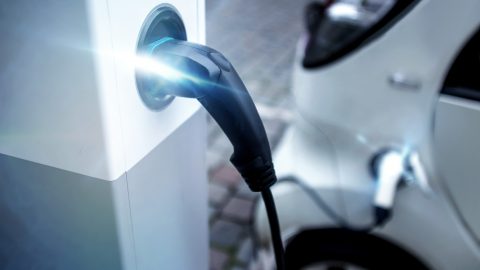
Ahead of the UK hosting the Climate Summit, COP26 in November 2021, it has been announced that the provision of Electric Vehicle (EV) charging units in all new residential and office developments is anticipated to become mandatory in England under new legislation.
The proposal forms part of the government’s aim to improve the availability of electric vehicle charging points ahead of the UK’s ban on new petrol and diesel vehicles in 2030.
Why is it important to increase EV charging provision?
The UK has committed to reducing greenhouse gas emissions by 28% by 2035 and moving to Net Zero by 2050. Transport accounts for 37% of greenhouse gas emissions, by improving provisions for the use of EVs, this will play a large role in reducing greenhouse gas emissions produced from petrol and diesel vehicles.
There is currently a lack of EV charging points available in the UK and it forecast that at least 240,000-280,000 additional public charge points will be needed by 2030 (more than 10 times the current number).
Developers providing EV charging points at key locations where vehicle owners park their cars for long periods of time (at home and at work) will help to bridge the gap in current EV charging provision that is deterring consumers from purchasing EVs.
When is the legislation due to come into force?
The proposals to change building regulations were originally outlined in a public consultation in July 2019.
An announcement was made on the 9th September 2021 (World EV Day) by the Department for Transport that outlined the government’s proposals for EV charging infrastructure.
As part of the announcement, the UK government aims to lay legislation later this year. It is anticipated that the new legalisation will come into force in 2022.
What does this mean for Developers?
New residential and office developments will now be required to provide EV charging points in England.
It is anticipated that every new home will require an EV charging point and infrastructure will be required for every five car parking spaces associated with new office development.
It is also anticipated that all non-residential developments are required to install EV charging points.
The legislation does not apply to developments in Wales, Scotland or Northern Ireland however, it is anticipated that similar legislation for these areas is to come forward in due course.
Requirements for EV Chargers – Smart Charging
All new private EV chargers are to be ‘smart’, in that by default, they charge vehicles during off-peak hours, when demand is low, or reduce the rate of electricity flow during peak hours, in order to reduce strain on the electricity grid.
The aim to ensure that all new home and workplace charge points have smart capability by the end of 2021 was included within the Department for Transport’s ‘Decarbonising Transport: a better, greener Britain’ document, published in July 2021.
Will Funding be Available?
It is not yet known whether funding will be made available for new developments, however schemes have been introduced to support existing property owners, known as the Workplace Charging Scheme and Electric Vehicle Homecharge Scheme.
Further information regarding the change of legislation is likely to be published by the Government by the end of this year.
Find out more on our services and how we can support your development here
Sign up for more news from PJA here