Thanks to all our ‘Gear Change’ webinar attendees – over 400 in total.

The session covered the highlights of the exciting Gear Change vision with a focus on the new Local Transport Note (LTN) 1/20 Cycle Infrastructure Design and key changes to the Highway Code.

Implementation of the proposals was discussed, as well as good examples of cycle infrastructure across the UK.

A recording of the webinar can be viewed here:

PJA’s Phil Jones and Adrian Lord were key advisers on the £2bn cycling and walking revolution launched today by Prime Minister Boris Johnson.

The active travel experts advised the Department of Transport (DfT) on how to design the thousands of miles of higher standard, protected cycle routes set to be built in towns and cities, which will be monitored by a new inspectorate called Active Travel England.

Phil also helped to author the strengthening of the Highway Code to better safeguard pedestrians and cyclists and improve legal protections for these vulnerable road users.

The ambitious Gear Change plans have been launched by No.10 today to boost cycling and walking in a bid to tackle health and environmental challenges, while building on the growing number of people taking up active travel during the pandemic.

Phil Jones, PJA’s chairman, said: “The announcement of the cycling and walking revolution is very exciting news and we’re pleased to be playing our part.

“Safer road conditions will encourage more people to cycle and walk, in turn reducing congestion, traffic noise and pollution while creating more liveable and friendly neighbourhoods.

“New clear design standards will help bring consistency across the national road network. This will assist local authorities and highways engineers when designing roads and junctions, including in new developments.

Phil and Adrian made their recommendations for protected cycle routes and other types of high quality infrastructure in Local Transport Note 1/20 Cycling Infrastructure which has been issued by the DfT today.

Phil voluntarily helped to draft the content for the Highway Code review for the Walking and Cycling Alliance of campaign groups with Roger Geffen MBE, director of policy at Cycling UK and Joe Irvin, former chief executive of Living Streets.

The review includes a rule that left-turning drivers must stop and give way to cyclists moving straight ahead at all junctions. It also includes another key concept developed by Phil, the Hierarchy of Road Users, which states road users in vehicles that can do the most harm in any situation have the most responsibility to take care – thereby making roads safer for people with disabilities, cyclists and pedestrians.


For more information please contact [email protected]

Our Chairman Phil Jones has helped make history after Welsh Parliament passed a resolution to introduce a national 20 mph default speed limit.

In a world first, Welsh Ministers have voted in favour of proceeding towards landmark legislation in response to the final report from the Welsh 20mph Task Force Group, which was chaired by Phil.

The new speed limit will apply to restricted roads – those with street lights at least every 200 yards – and is expected to become law by April 2023.

Speaking in support of the motion, Lee Waters, the Deputy Minister for Economy and Transport, said: “The figures are stark and the figures are clear. The risk of being killed is almost five times higher in collisions between a car and a pedestrian at 30 compared to the same type of collisions at 20 – five times higher.

“The investment will reap rewards. Lives saved, costly accidents prevented, mental and physical health improved and the more intangible but equally valuable community fabric strengthened.”

Mr Waters added: I am hugely grateful to Phil Jones for leading this substantial piece of work over the last year, systematically identifying the barriers to implementing this significant change and drawing on the experience of the police, local authorities, public health experts and the key stakeholders to devise ways through.”

The Welsh Government will now launch 20 mph pilot areas to help them develop the guidance and tools needed for Wales as a whole.

The Welsh 20mph Task Force Group’s report included findings from international research showing that a 20mph limit on most urban roads and streets will result in fewer collisions and casualties, including a reduction in child deaths. It also found that the speed limit will lead to more walking and cycling, improvements in air quality and lower noise levels. In future it will be quicker and cheaper to roll out 20mph limits over wide areas as local authorities will only need identify the far fewer sections of road where a higher speed is justified. Recommendations on implementing and enforcing the new speed limit, as well as engineering, marketing and evaluating the success of the legislation are also included.

Phil said: “I am naturally delighted at the Welsh Parliament’s decision to introduce this fundamental change. As with previous ground-breaking initiatives such as the Active Travel Act and the Organ Donor Register, Wales has made history by becoming the first country to introduce a 20mph default speed limit for urban areas. We know that governments around the world will be closely watching as the legislation is introduced.

“A 20mph speed limit will mean safer streets and will also encourage more walking and cycling for everyday journeys – which is especially important during the Covid-19 pandemic where people are being discouraged from using public transport. Cars travelling at slower speed will also create a more pleasant environment for residents, bringing long term community benefits too.

“I would like to thank the Task Force Group members, which included representatives of local government and transport providers as well as passionate campaigners such as Rod King MBE, founder of 20’s Plenty for Us, and academic experts such as Adrian Davis for helping pave the way for this national law change.”

The campaign for 20mph default limit was supported by several Welsh organisations and NGOs including the Institute for Welsh Affairs, Public Health Wales, Sustrans Cymru, Royal College of Paediatrics and Child Health, Living Streets Cymru and BRAKE.

The report from the Welsh 20mph Task Force Group can be read here.

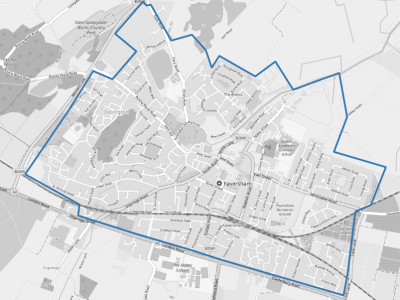
Faversham in Kent is set to become the first town in the UK subject to a town-wide 20mph speed limit following a recent decision by the local highway authority, Kent County Council (KCC), informed by feasibility studies by PJA.  

Faversham is a small harbour town a short way inland from the Thames Estuary.  Because the town is almost a natural cul-de-sac, its streetscape character is much more traditional, with the contiguous urban area being untouched by major road improvements that other towns in Kent received in the second half of the 20th century.  The compact nature of the town means there is significant scope for local journeys to be made on foot or by cycle, however local people have expressed concerns about a road network that doesn’t adequately cater for these modes.  Local people have therefore recognised the importance of a more balanced street network, and a town-wide 20mph limit is seen as important component of that.   

PJA was first appointed by the Town Council’s “20’s Plenty Working Group” to set the context of a town-wide limit in 2016.  Our initial assessment concluded that many of the town’s streets exhibited the typical characteristics of streets where 20mph limits could be introduced consistent with best practice from other places with extensive 20mph schemes.  We also suggested that there was scope for low-cost design measures to be introduced to create a road environment that is consistent with a 20mph limit, a key factor in compliance and enforcement, on those roads where higher speeds might be encountered. 

This investigation helped continue local momentum, which led to KCC identifying streets that it felt met the conditions for a 20mph speed limit as set out in the Department for Transport’s (DfT) 2013 Circular “Setting Local Speed Limits”.  KCC then collected speed and flow data on streets where it felt more study was needed.   

Armed with PJA’s initial assessment and KCC’s subsequent work, Faversham Town Council then commissioned PJA in 2018 to undertake a more detailed feasibility study.  PJA were able to make use of MasterMap speed data provided to Faversham Town Council by Ordnance Survey Ltd, which uses mobile phone and GPS device tracking to provide speed data on entire lengths of roads.  This contrasts with KCC’s Automatic Traffic Counter (ATC) surveys which take a specific snapshot at a single point on a road.  Because of the need to site ATCs away from places that may result in faulty data, like junctions and crossings, ATC sites end up reporting the upper range of speed data on any given link. 

The MasterMap data showed that average speeds throughout the town were below the 24mph threshold set by the DfT Circular in all but a couple of streets where the proposed limit was being considered.  PJA’s 2018 study was therefore able to recommend that the town-wide 20mph should go ahead based on DfT guidance.  Our study proposed a boundary that reflected the technical context, and KCC’s and others local stakeholders’ views.  This work also led to KCC implementing a change to its 20mph Policy, meaning our methodology also supports other communities in Kent wishing to adopt a 20mph speed limit by following the same principles.   

The town-wide 20mph limit boundary recommended by PJA in 2018 was adopted by KCC who implemented it during Summer 2020 as part of an Experimental Traffic Order. PJA undertook design work for the necessary signage and road markings required and have since been involved in developing complementary measures to further support road safety in the town

PJA would like to acknowledge the assistance of Ordnance Survey, who provided the MasterMap speed data as a free trial sample.  The use of this data was instrumental in providing a much more comprehensive picture of traffic speeds across the town that would be possible using ATCs, even if placed on every single street. 

For more information, please contact [email protected]

Sign up for more news from PJA here


We are delighted to have opened an office in Manchester city centre, appointing transport planning expert Chris Sibthorpe as director.

The new North West office responds to a surge in enquiries for advice on adapting streets to facilitate more cycling and walking, which has boomed during Covid-19 as people socially distance. The Government has launched a £2bn package to fund the changes to active travel infrastructure, which includes widening pavements, introducing new cycle lanes and safer junctions.

Well-respected Chris joins from Mott McDonald, where he led the Manchester transport planning team and has experience of working on projects across the North West, as well as an understanding of the region’s transport challenges.

He most recently worked on a project to promote active travel at Heathrow Airport as well as projects with Transport for Greater Manchester’s strategy and policy teams. He was also the project director for Greater Manchester’s Streets for All Orbital project which redesigned streets to make them more people friendly.

Chris will lead both the new PJA office and the company’s active travel division.

Nigel Millington, joint managing director at PJA, said: “We have been at the forefront of active travel delivery in the UK for many years through advising public and private sector clients as well as Government bodies including British Cycling, the Active Travel Consortium and the Cycle Proofing Working Group. We also edited the key Manual for Streets 1 and 2 publications and the Welsh Government’s Active Travel Design Guidelines and developed Local Cycling and Walking Infrastructure Plans.

“We have been looking to expand in the North West as part of our growth strategy, and with the recent rush in client demand this is the right time. While Covid-19 has posed challenges to some areas of our market, we have a positive attitude moving forwards and are fully committed to delivering for our clients.

“Chris’ passion for active travel across a range of settings as well as his knowledge and contacts in the region makes him the ideal candidate to take the helm. We look forward to him growing our presence and expanding our team of consultants.”

Chris added: “Local authorities and developers are keen for a Green restart to the economy and to not replace one health issue with another in the form of a return to damaging levels of air pollution and lost productivity associated with unchecked traffic growth. Increasing the proportion of people using active travel modes is going to be key to achieving this, building on the momentum for travel behaviour change arising from the pandemic. I am very much looking forward to advising clients on the temporary and permanent changes that can be made, as well as offering PJA’s wider expertise in transport planning, placemaking and engineering.

“PJA is well respected and leads the conversation in our industry on active travel so joining the organisation was a no-brainer for me. It shares my passion for developing well thought out schemes and takes a design-led approach, ensuring that its solutions enhance local character and provide a sense of place. The company delivers good quality products for its clients and I’m thrilled to be joining the team and growing PJA’s service offering in the north.”

The address of PJA’s Manchester office is:

Suite 307,
76 King Street,
Manchester
M2 4NH

For more information, please contact: [email protected]


Chris Sibthorpe, Director

Chris has over 20 years’ experience in development planning, sustainable transport and transport strategy development.

Chris specialises in the provision of walking and cycling advice for both public and private sector clients and has also appeared as an expert witness at examinations and appeals.


To find out more about our active travel services here

Sign up for more news from PJA here
Find out more

For more information, please contact

Thank you for watching our COVID-19 Video Series. In this video, our consultant, Jane Overton has few suggestions on how we can reduce the impact of COVID-19 on our school trips.

Full list of the videos in this series:

PJA is excited to be working alongside Active Travel Consultancy @justridethebike, @cityofLondon and @pedalmeapp to fast track an e-cargo bike pilot scheme for Facilities Management companies.

Traffic restrictions to make more space for active travel makes cargo bikes quicker and cheaper than using vans.

For more information, please contact Phil Jones.

Thank you for watching our COVID-19 Video Series. In this video, our Associate Director, Matt McFeat talks about the implications of the pandemic on our High Streets as we slowly move out of lockdown and into the next phase of continued social distancing.

Full list of the videos in this series:

Thank you for watching our COVID-19 Video Series. How will COVID-19 lead to a step change in travel behaviour in the longer term? Watch the second part of the Traffic Flows and Data video by Chris Stack.

Full list of the videos in this series:

Thank you for watching our COVID-19 Video Series. In this video our Associate, Steve Bates discusses how COVID-19 has impacted on Traffic Flows and Data collection during this pandemic.

Full list of the videos in this series: