At PJA, we’ve long argued that where we build matters as much as what we build. Our latest analysis reinforces this: developments located in well-connected places – with good access by walking, cycling and public transport – generate significantly fewer vehicle trips than those that rely on the car for almost every journey.

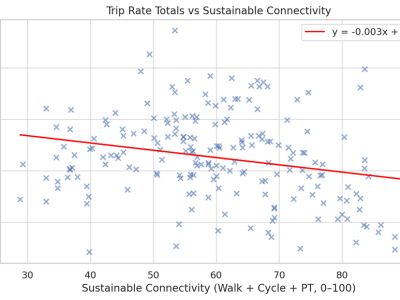
Using data from nearly 200 housing-related sites in the national TRICS database, we compared real-world vehicle trip rates against the Department for Transport’s new Transport Connectivity Metric. The findings provide strong evidence that improving connectivity can directly influence how people travel, and ultimately how much traffic a new development produces.

Connectivity really does matter

The analysis shows a clear pattern: the better connected a site, the lower its vehicle trip generation. Sites with strong access to jobs, schools and shops by walking, cycling or public transport consistently produced fewer peak-hour car trips. It’s a simple but powerful conclusion – good connectivity changes behaviour.

The type of housing also plays a role

Flatted developments in accessible locations show the lowest car trip rates, reflecting a natural alignment between density and sustainable travel. Detached or suburban family housing, even in well-connected areas, tends to generate more car travel – though still less where active and public transport options are strong. For developers, this reinforces the importance of matching housing form to the level of connectivity a site can realistically offer.

Size isn’t the main driver

Interestingly, the number of dwellings on a site had little bearing on trip rates. Smaller schemes in highly connected places performed just as efficiently as large ones. This finding challenges the perception that only large developments can justify sustainable transport investment. Context – not scale – determines transport performance.

Designing for connectivity, not congestion

The latest National Planning Policy Framework (NPPF) encourages planning that “realises opportunities from existing or proposed transport infrastructure, and promotes walking, cycling and public transport use” (Paragraph 110). Crucially, connectivity isn’t fixed. It can be improved through design, investment and phasing. Developers can therefore model how enhanced connections – such as a new bus route or safer walking link – would reduce car trips over time. This allows for more optimistic, vision-led scenario testing, consistent with the NPPF’s “Decide and Provide” approach.

What this means for developers

  • Evidence for decision-making: Connectivity metrics provide measurable evidence that can justify lower forecast traffic generation where access by sustainable modes is strong.
  • Stronger engagement with local authorities: Demonstrating how improved connections reduce car trips aligns with both planning policy and local transport goals.
  • Support for sustainable growth: Designing connectivity improvements into early masterplanning ensures that new places are future-ready, supporting the transition to healthier, low-carbon travel.

Conclusion

Connectivity isn’t just a planning buzzword – it’s a measurable factor that shapes how people travel and how much traffic a development generates. For developers, this means investing in connectivity can deliver tangible returns: smoother planning discussions, clearer sustainability benefits, and communities that work better for everyone.

In short, connectivity is now a core development asset – one that can be designed, improved and used to create genuinely low-traffic neighbourhoods.

Find out more about our services here

Sign up for more news from PJA here
As part of our celebration of National Engineering Day, we’re spotlighting Lucy Keegans-Wood, Associate Director and Geotechnical Engineer based in our Birmingham office, to explore her journey into geotechnical engineering and her thoughts on how we can encourage more young people into engineering.

What first drew you to engineering?
Engineering was introduced to me at a young age by my dad, who worked in building services and was a true jack-of-all-trades. I spent countless hours in the garage with him, building cars, machining clock parts, and learning how things worked. I even had my own set of overalls! I became fascinated by the soil he dug out while building an extension on our house — that curiosity led me to study GCSE and A Level Geology at school and later at university. After completing my BSc in Resource and Applied Geology, I discovered the MSc in Foundation Engineering — the perfect blend of geology and engineering. That was the turning point, and I’ve never looked back.


What do you enjoy most about working at PJA?

I really value the close-knit, collaborative environment at PJA. As a parent working part-time, the flexibility here has been invaluable. PJA understands the challenges of balancing professional and personal responsibilities, and that support makes a real difference.


What are you most proud of in your career so far?
I’ve had the privilege of working on a wide range of projects over the years, and alongside some truly brilliant colleagues and clients. What I’m most proud of now is stepping into a leadership role. It’s incredibly rewarding to support and train colleagues, helping them grow in confidence and develop the same enthusiasm and pride in their work that I’ve always felt.

I also really value the opportunity to collaborate across the wider business, and to play a part in making sure we consistently deliver high-quality work for our clients. That sense of shared purpose and commitment means a lot to me.

But more than anything, it’s the moments when I see our designs come to life that stay with me. Driving past a site and being able to say to my children, “Mummy worked on that,” is something really special. It’s those moments that remind me why I love what I do.


How can we encourage more young people into engineering and tackle the skills shortage?

Awareness is key. More hands-on experiences, like having the opportunity to attend careers fairs, undertake work placements or participate in open days can help bridge that gap. I was lucky to attend a “Take Your Daughter to Work Day” with my dad, which opened my eyes to the possibilities. It’s also important to highlight the variety within engineering — from mechanical and electrical to geotechnical and environmental. There’s something for every interest.


About Lucy

Lucy is a Chartered Geologist and Registered Ground Engineering Professional with over 20 years’ experience in geotechnical and geo-environmental engineering. Her expertise spans earthworks, foundations, retaining structures and infrastructure design, with a portfolio that includes commercial, residential and major highway schemes across the UK.

[email protected]

Find out more

For more information please contact:

Our wonderful team are our greatest asset. Not only experts in transport, engineering and placemaking but also committed to delivering better places for people through high-level-service client experiences.

We’re very proud to continue to celebrate the faces behind the fast-growing international consultancy that we are today in our monthly feature ‘PJA People’.

Next up in our series is Senior Accounts Assistant, Adrian Rose, based in our Birmingham office:


Tell us what you do at PJA

I’m a Senior Finance Assistant, which means my day-to-day role involves processing invoices, credit card transactions and purchase orders.


What’s your career path so far?

Since leaving school I’ve had many jobs: butcher, double glazing sales, phone sales and debt collection. I settled into a finance career around 8 years ago.


What do you enjoy when you’re not working?

I’ve recently started to enjoy baking which is great as you get a snack when you’re finished. I also enjoy visiting National Trust properties with my kids Frank & Edie. When I’m not with them, I like to enjoy visiting the independent bars and breweries of Birmingham, particularly Attic in Stirchley and The Wellington in the City Centre.


Are you a dog or cat person?

Definitely a cat person!


What are you currently reading or listening to?

I’m not currently reading anything but I have most recently enjoyed the Dark Tower Series by Stephen King. I’ve been listening to the album Mr. Wonderful by Action Bronson. I also enjoy the football adjacent podcasts Athletico Mince & Top Flight Time Machine.


Claim to fame?

I don’t have many claims to fame, however I did once see Bradley Walsh in Redditch and he was looking miserable.


Adrian Rose, Senior Accounts Assistant

Adrian is an experienced Credit Controller and Senior Finance Assistant with experience working in multidisciplinary engineering consulting firms. He supports our Finance team with our accounting systems and protocols to ensure they run smoothly.

Get in touch with Adrian: [email protected]


Find out more about our services here

Read more in our PJA People series here

Sign up for more news from PJA here

PJA’s Placemaking team is pleased to announce the launch of a new service offering: Building with Nature assessments, helping create better places for people and wildlife. 

The Building with Nature framework is the UK’s first green infrastructure (GI) benchmark for the UK built-environment sector.   

Our assessment service helps clients understand how their schemes measure up against the framework’s 12 Standards built around the themes of Core, Wellbeing, Water, and Wildlife, and where improvements can be made to achieve accreditation. 

Whether you’re working on a residential masterplan, commercial site or public realm scheme, our assessors can guide you through the process, from early concept design through to final submission. The Building with Nature Standards show what good looks like at each stage of the development process.  

We offer: 

  • Gap analysis and design review against Building with Nature standards 
  • Support with evidence gathering and submission preparation 
  • Accreditation pathway advice tailored to your project type and stage 
  • Collaboration with design teams to strengthen proposals and outcomes 

This service is ideal for organisations or placemakers looking to demonstrate leadership in the design and delivery of high-quality GI, either to meet planning policy requirements, or simply deliver better places for people and wildlife. 

To find out more or discuss a potential project please contact: 

[email protected] or catherine.p[email protected]  

Find out more about our services here

Sign up for more news from PJA here
This Reptile Awareness Day, we’re shining a light on one of the UK’s most iconic yet misunderstood reptiles—the adder (Vipera berus). As the only native venomous snake in Britain, the adder plays a vital role in our ecosystems, but its future is increasingly uncertain. 

A Species in Decline 

Adder populations have been declining for decades due to habitat loss, fragmentation, human disturbance, and persecution. Small, isolated populations are particularly vulnerable, with some experts predicting local extinctions by 2032 if current trends continue. Despite being protected under the Wildlife and Countryside Act 1981, adders still face threats from poor land management, and fragmentation.  

Amphibian and Reptile Conservation (ARC) Trust highlights that while adders are widespread across Britain, they are now rare in many regions, especially central England. Their secretive nature and camouflage make them hard to spot, but their presence is a sign of a healthy, functioning habitat.  

Why Adders Matter 

Adders are not just ecologically important—they’re culturally significant too. They help control rodent populations and contribute to biodiversity. Their decline signals broader environmental issues, including the degradation of heathlands, moorlands, and woodland edges—habitats that support a wide range of species. 

Contrary to popular belief, adder bites are extremely rare and almost never fatal. Bites might occur when the snake is provoked or accidentally stepped on. Education and awareness are key to reducing fear and promoting coexistence.  

Moving Beyond Translocation 

Historically, development projects have relied on translocation—moving reptiles from one site to another—as a mitigation strategy. However, research shows that translocation often fails to support long-term conservation. Populations may struggle to establish due to unsuitable habitat or genetic bottlenecks. 

Conservation efforts should focus on improving habitat quality and connectivity, especially in areas where adders still persist.  

Conservation in Action 

Key conservation strategies include: 

  • Habitat connectivity: Linking fragmented habitats to allow safe movement and breeding. 
  • Hibernation site protection: Identifying and safeguarding overwintering areas. 
  • Public education: Dispelling myths and promoting respectful coexistence. 
  • Citizen science: Encouraging reptile recording through education and public engagement and involvement 

A Shared Responsibility 

Adder conservation is not just the responsibility of ecologists—it’s a shared goal for land managers, planners, and the public. By designing landscapes that support reptiles and other wildlife, we can create spaces that are richer, more resilient, and better for everyone. 

This Reptile Awareness Day, let’s celebrate the adder not as a threat, but as a symbol of our natural heritage—and a reminder of the urgent need to protect it. 

Find out more about our services here

Sign up for more news from PJA here

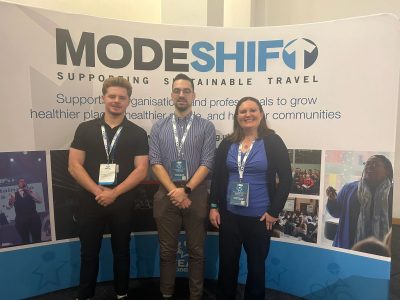
We’re delighted to share that PJA, alongside Buckinghamshire Council and Buckinghamshire Business First, has been named a finalist for Business Engagement Project of the Year at the Team Modeshift National Travel Awards 2025.

The nomination recognises our collaborative work on the Buckinghamshire Voluntary Business Travel Planning Scheme, part of Buckinghamshire Council’s wider Travel Planning and Eco Driving Programme for Businesses. The initiative supports local organisations in encouraging more sustainable travel choices, from active travel and public transport to car sharing, helping to reduce the number of single-occupancy car journeys in company operations and employee commutes.

Through the scheme, 50 small to medium-sized enterprises are receiving tailored support from PJA to develop travel plans that promote healthier, more sustainable ways of getting to and from work. The project gives employers the knowledge, tools and motivation they need to engage with staff, champion existing schemes, and make it easier and cheaper for employees to reduce their environmental impact.

Claire Harrison, PJA’s Travel Planning Lead, said:

“I’m over the moon that our travel planning work has been shortlisted for this award. This recognition highlights the positive impact of projects that inspire healthier, more sustainable ways of travelling for work and beyond.”

Claire added that the scheme’s impact continues to grow:

“We’ve now engaged with over 50 businesses across Buckinghamshire, with 13 achieving Approved and three achieving Good level Modeshift accreditation.”

Congratulations to all the finalists, and best of luck at the Awards Dinner!

If you’d like to learn more about our travel planning services, get in touch with Claire Harrison at [email protected]

Find out more about our services here

Sign up for more news from PJA here
Our wonderful team are our greatest asset. Not only experts in transport, engineering and placemaking but also committed to delivering better places for people through high-level-service client experiences.

We’re very proud to continue to celebrate the faces behind the fast-growing international consultancy that we are today in our monthly feature ‘PJA People’.

Next up in our series is Bid Manager, Emma Warrington, based in our Manchester office:


Tell us what you do at PJA

As Bid Manager I oversee the end-to-end process of preparing and submitting bids and proposals to win work. A big part of this is ensuring deadlines are met, submissions are compliant and clarifications monitored.


What’s your career path so far?

When I graduated, I went to work at Nestlé as a temp in the logistics and supply chain function.  After six months they offered me a full time position as a “Display Development Assistant” which basically meant working out where all the Nestlé, Cadbury and Mars products went on shelving displays in retail.  Following that, I went to work as a Customer Services Assistant at Best Western in their sister purchasing company, Beacon. Shortly after I moved into their procurement team and worked my way up from being a Purchasing Assistant to Senior Buyer.

17 years later I was made redundant and went to work as a Tender/Contract Manager for a kitchen furniture manufacturing company just outside of Leeds. I did this for 4 years, then an opportunity came up to go and work at SYSTRA as Assistant Bid Manager, where I was promoted to Bid Manager. I stayed there for three years and then joined PJA in January 2025.


What do you enjoy when you’re not working?

Going for walks in the countryside and days out visiting places.


Are you a dog or cat person?

100% a cat person – I have two.


What are you currently reading or listening to?

I am not a big reader – but whilst I was recently away on holiday I read Raising Hare by Chloe Dalton. It is a beautiful story (with a lot of history and facts about hares) about a city dwelling professional who moves to the countryside and finds a newly born hare, endangered and alone, and she gives it a chance at survival. It is the story of their journey together and the bond they create.


Claim to fame?

Back in the 1980’s my mother’s cleaner’s brother was the lead singer of Black Lace (Agadoo!). I also won a National Tongue Twister competition, and my Tongue Twister was then published in a book of Tongue Twisters!


Emma Warrington, Bid Manager

Emma is a commercially aware individual who has a proven valued contribution in bid and contract management, and her bidding experience spans eight years in both the construction and consultancy industries. Her role at PJA is to support in the delivery of winning bid submissions, which requires tenacity and a strong attention to detail.

Get in touch with Emma: [email protected]


Find out more about our services here

Read more in our PJA People series here

Sign up for more news from PJA here
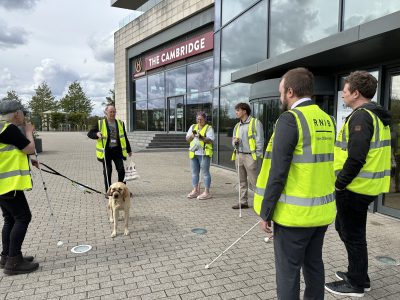
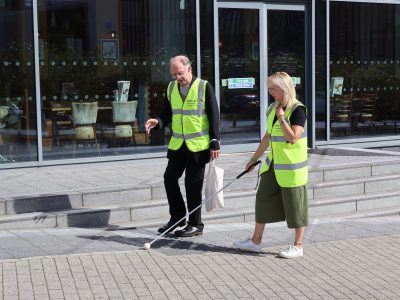
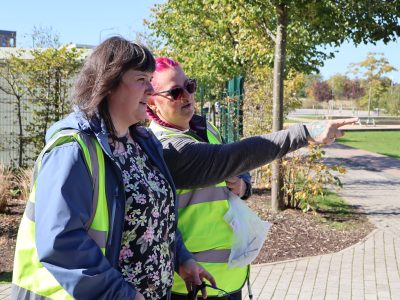
Our Birmingham team joined the RNIB in a guided walk workshop, exploring what it’s like to navigate the built environment with sight loss.  

Our team encountered the everyday barriers that blind and partially sighted people face, challenging them to rethink how we approach placemaking and infrastructure design.  

It was a powerful reminder of why inclusive design matters, and of our responsibility to create environments that are intuitive, accessible, and safe for everyone.  

When we reduce barriers, we don’t just support those with disabilities. We also improve experiences for children, parents, older adults – in fact, for everyone who interacts with public spaces.  

Designing better places is part of PJA’s vision, and accessibility will always be at the heart of the projects we deliver.  

A huge thank you to RNIB for leading such an insightful workshop and giving us first-hand perspective on how blind and partially sighted people experience our streets and spaces.  

Find out more about our services here

Sign up for more news from PJA here
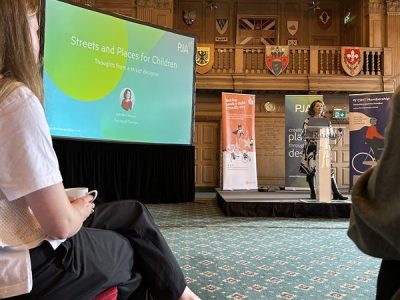
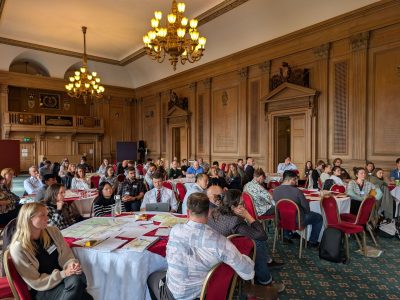
This week, more than 80 professionals from across the transport, planning and placemaking sectors came together at Leeds Civic Hall for the Yorkshire & the Humber CIHT EDI Conference 2025: Streets and Places for Children. 

The day focused on a simple but powerful question: what would our streets look like if they were designed through the lens of a child? 

Key themes and insights 

Speakers from Child Friendly Leeds, Leeds City Council, Active Travel England and PJA highlighted the need to embed children’s voices in the design process. It was clear that creating child-friendly places is not just about safety – it’s about freedom, play, and belonging. 

Some of the lessons that stood out: 

  • Play is essential, not optional. Children need stimulating, safe opportunities for play close to home. “Play sufficiency” should be treated as a core principle in placemaking. 
  • Nature matters. Children consistently favour green, nature-based play spaces, which also improve health and wellbeing. 
  • Community and connection. Streets that support play on the way (safe routes to walk, wheel and cycle) can build independence and help children (and adults) feel more connected to their neighbours. 
  • Rethinking risk. Opportunities for adventurous, independent play are vital for building resilience and confidence. Overly risk-averse street design can limit these experiences. 

Listening to children 

The conference built on work carried out with over 500 Year 5 pupils across Leeds, who shared their experiences of travelling to and from school and their ideas for more child-friendly streets. 

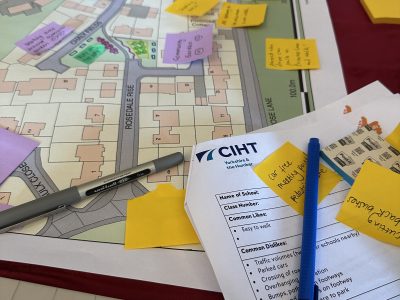
In the afternoon ‘Design Hackathon’, delegates worked in groups to translate these ideas into tangible street concepts, ranging from playful crossings and green corridors to safer, more engaging school streets. Importantly, the next step is to return these ideas to the children themselves, giving them the chance to ‘mark our work’. 

Looking ahead 

The energy and enthusiasm in the room underlined a clear appetite to do things differently. Child-friendly street design is about more than infrastructure, it’s about giving young people a voice, enabling independence, and reimagining how communities use space. 

As one speaker put it: “Children live in families, families create communities, communities make cities.” If we truly want inclusive and thriving cities, then designing for children must be at the heart of the process. 

Find out more about our services here

Sign up for more news from PJA here
Our wonderful team are our greatest asset. Not only experts in transport, engineering and placemaking but also committed to delivering better places for people through high-level-service client experiences.

We’re very proud to continue to celebrate the faces behind the fast-growing international consultancy that we are today in our monthly feature ‘PJA People’.

Next up in our series is Senior Engineer, Josse McKenney, based in our London office:


Tell us what you do at PJA

I work on creating places that feel accessible, welcoming, and put people first. I’m focused on providing people with ways to move around their local and wider areas without a car, allowing them to get out and enjoy the great outdoors.


What’s your career path so far?

After graduating from McGill University in Canada, I joined Mayer Brown as a Transport Planner. I then moved to Sustrans as an Engineer, where I got the feeling of what it’s like to work on designing and building routes that people use every day.

From town centre improvements to new walking and cycling routes, I’m excited to continue on similar projects at PJA, hopefully improving people’s lives on both their commutes and leisure trips.


What do you enjoy when you’re not working?

I’m a keen cyclist, and it’s my main mode of transport, as I find it’s often a more enjoyable and quicker way to get around the city than taking the tube. I even get a little competitive, taking part in ultra-distance cycling and cyclocross races. When I’m not on two wheels, I like being outside as much as possible, whether I’m camping, hiking, skiing, canoeing, or trying a new activity.


Are you a dog or cat person?

I’ve always loved both, but I grew up with cats and currently have a cat. One day I hope to have a dog, but it feels like something for when I have more time on my hands and have a bit more space for them to roam.


What are you currently reading or listening to?

I am currently re-reading the Harry Potter series, and I’m on Goblet of Fire. I’m enjoying feeling like a kid again and living my wizarding hopes and dreams vicariously through Harry!


Claim to fame?

I have been on the podium of two Muddy Hell fancy dress cyclocross races and the Pan Celtic Race short route, but I haven’t quite managed a win (yet!)


Josse McKenney, Senior Engineer

Josse is a highways engineer with over seven years’ experience delivering active travel and placemaking projects across the UK. He has worked on a diverse range of schemes including greenways, LCWIP routes, school streets, and town centre improvements—developing designs from early concept through to detailed design and construction. His work focuses on creating inclusive, accessible environments that prioritise walking and cycling.

Before joining PJA, Josse worked as an engineer, contributing to projects in both urban and rural settings. He supported successful funding bids, developed strategic route assessments, and delivered training on LTN 1/20 cycling infrastructure design.

Get in touch with Josse: [email protected]


Find out more about our services here

Read more in our PJA People series here

Sign up for more news from PJA here