Creating urban environments that work for children is not a niche ambition – it is a litmus test for whether our towns and cities work for everyone.
When streets are safe, engaging and accessible for children, they tend to be healthier, more sociable and more resilient places overall. Yet for decades, the design of our streets has moved in the opposite direction.
Annabel Keegan reflects on how we got here, what policy and practice already tell us, and crucially, what designers can do to reclaim streets as places for play, independence and everyday life.
A personal starting point: growing up with boundaries
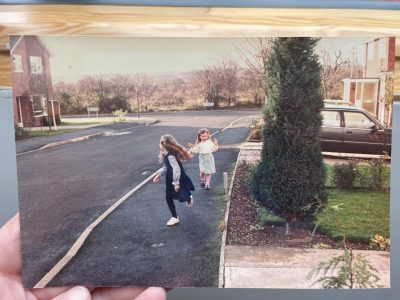
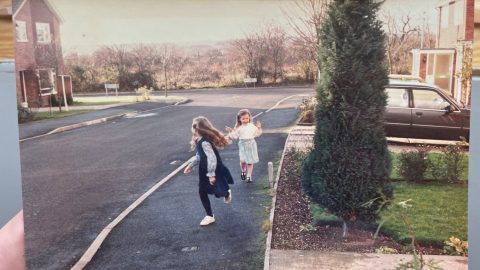
I grew up in the 1980s in Redditch, a new town south of Birmingham. My father, a civil engineer, had moved there in the early days of its development. I remember new play areas and purpose-built environments, but also strict limits. I was not allowed beyond the end of our street, even with friends.
That experience sits in contrast with earlier generations. My father, at the same age, could cycle freely across his town. By my childhood, that freedom had already contracted. Today, many children are only allowed within sight of their homes.
This shrinking “right to roam” is one of the clearest indicators of how our streets have changed, and not necessarily for the better.
From fear to separation: the legacy of road safety messaging
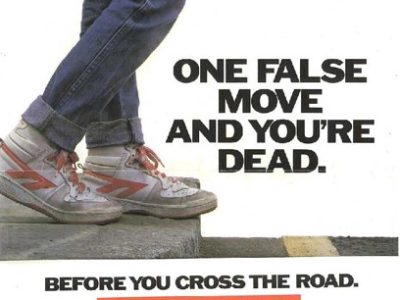
The road safety campaigns of the 1970s and 80s were stark and memorable. Messages like “one false move and you’re dead” were designed to shock. They worked, but they also reinforced a particular worldview: that streets are dangerous, and that the responsibility for safety lies heavily with the pedestrian, even the child.
This thinking aligned with dominant planning approaches of the time. Influential reports concluded that pedestrian life and vehicle movement were fundamentally incompatible. The response was separation – of people from traffic, and often children from streets altogether.
While this reduced certain risks, it also contributed to a broader cultural shift: streets became corridors for vehicles, not places for people.
The data behind the shift
The transformation of our streets is not just anecdotal. It is visible in long-term trends:
- Car ownership in the UK has risen dramatically over the past 50 years, with tens of millions more vehicles on the road today than in the 1970s.
- At the same time, levels of everyday cycling and independent mobility for children have declined.
- Public space has increasingly been allocated to movement and storage of vehicles.
The result is a feedback loop: more cars lead to less safe-feeling streets, which leads to less walking, cycling and outdoor play, reinforcing car dependency further.
Nothing new: revisiting long-standing ideas
Many of today’s “new” ideas in street design are, in fact, not new at all.
The concept of limiting through-traffic in residential areas, for example, has roots going back decades. Earlier planning approaches identified the need to manage “rat runs” and balance environmental capacity. What we now call low-traffic neighbourhoods build on this foundation, adding a stronger emphasis on walking, cycling and quality of place.
The difference today is not the principle, but the urgency.
A legal and ethical foundation
Designing for children is not just good practice – it is grounded in a strong ethical and policy framework.
Internationally, the UN Convention on the Rights of the Child establishes a child’s right to play, rest and participate in cultural life. National and local policies reinforce this through guidance on healthy streets, walkable neighbourhoods and inclusive design.
In theory, the framework is already in place. The challenge is translating it into consistent, everyday practice.
The limits of traditional play provision
In the UK, guidance on play has historically focused on designated spaces – playgrounds defined by standards and metrics. While these remain important, they can unintentionally narrow our thinking.
When play is treated as something that happens only in fenced-off areas, it becomes disconnected from daily life. Streets, meanwhile, are left underused as social and playful spaces.
A growing body of thinking challenges this model. It argues for:
- Play on the way – integrating play into everyday journeys
- Multi-functional spaces – where play, movement and social interaction overlap
- Visibility and inclusion – ensuring play is part of the public realm, not hidden away
Principles of child-friendly streets
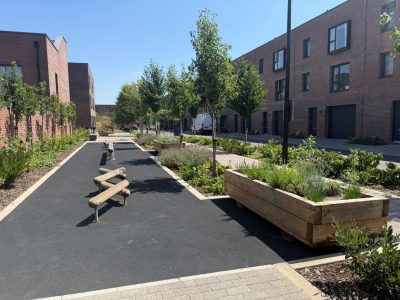
So what does a child-friendly street actually look like? While contexts vary, several core principles consistently emerge:
- Safety
Both physical and social safety matter. Streets must feel safe as well as be safe. - Accessibility
Spaces should work for all ages and abilities, supporting independence from an early age. - Play and learning
Opportunities for informal, spontaneous play should be embedded in the environment. - Comfort and sensory richness
Shade, greenery, seating and varied textures all contribute to a more engaging experience. - Community connection
Streets should support interaction – between neighbours, across generations, and within communities.
These principles are interdependent. A safe street with nothing to do will remain empty; a playful street that feels unsafe will not be used.
Designing streets that signal change
Design is not just about infrastructure – it is about behaviour.
Subtle cues can transform how drivers respond to a street:
- Narrower carriageways encourage slower speeds
- Continuous footways signal pedestrian priority
- Visible activity, especially children playing, changes expectations
Rather than relying solely on signage, well-designed streets communicate their purpose intuitively.
Bringing play into everyday life
If children are to regain independence, play must return to where they live.
This can take many forms:
- Playable features integrated into streetscape design
- Flexible spaces that support multiple uses throughout the day
- Temporary interventions, such as play streets, that allow communities to reclaim space
The goal is not to replace playgrounds, but to complement them, expanding the landscape of play into the everyday.
Learning from practice
Across the UK and internationally, there are strong examples of child-friendly approaches in action, from traffic-calmed neighbourhoods to integrated green corridors and community-led play initiatives.
What unites them is not a single design solution, but a shared philosophy: that streets are public spaces first, and movement corridors second.
From guidance to action
We are not short of guidance. Frameworks such as Building for a Healthy Life emphasise the importance of street design, connectivity and public realm. Many of these tools already highlight the role of streets in shaping health and wellbeing.
The challenge is consistency – embedding these principles across all stages of planning, design and delivery.
Designing with children, not just for them
An often-overlooked aspect of child-friendly design is participation. Children experience streets differently from adults, and their insights can be invaluable.
Engaging children meaningfully in design processes helps create spaces that reflect real needs, and builds a sense of ownership from an early age.
A simple test
A useful way to bring all of this together is the “8-year-old test”:
Would you feel comfortable letting an eight-year-old walk here alone?
If the answer is yes, the street is likely to be safe, legible, inclusive and well-designed. If not, it highlights where improvements are needed.
Reclaiming streets for everyone
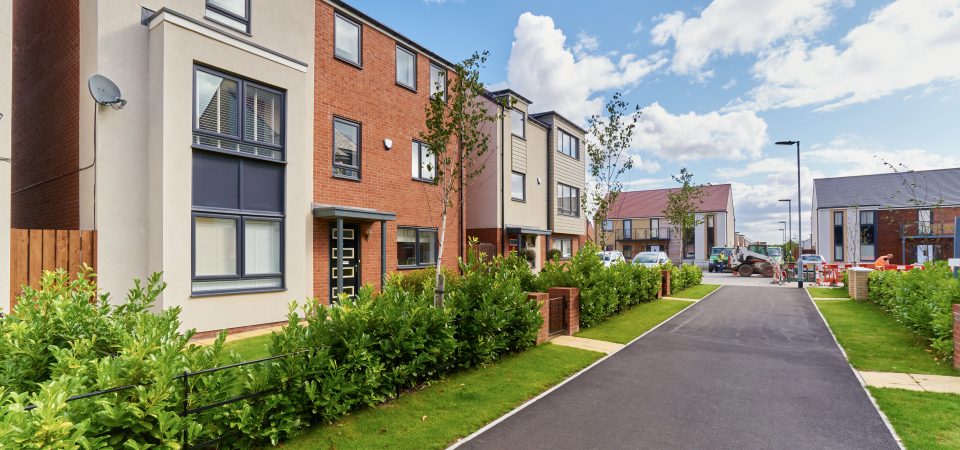
Streets are among the most important and most underutilised public spaces we have. Over time, they have been reshaped around the needs of vehicles, often at the expense of children’s freedom and community life.
Rebalancing this is not about removing movement, but about restoring function. By designing streets that support play, safety and connection, we create places that work better for everyone – not just children.
In doing so, we move closer to a simple but powerful goal: cities where everyday life can unfold safely, sociably and independently, right outside the front door.
Find out more about our services here
Sign up for more news from PJA here