There were an estimated 29 million domestic overnight leisure trips planned using a car as the primary mode of transport in 2021*.
As the trend for ‘staycations’ is looking like it’s here to stay into 2022 and beyond, Transport Planning Consultant, Julia Coonan, from our Cambridge office investigates potential solutions to manage the impact on UK tourist hot spots by increasing sustainable modes of travel in her commended entry to the Transport Planning Society Essay Competition:
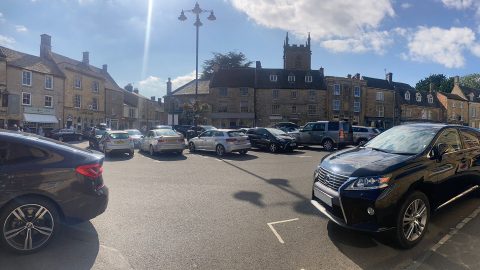
“Last summer, I was excited to plan a cycle route through the village of Stow-on-the-Wold in the Cotswolds. Having never been before, I had high hopes of a nice café stop overlooking historic architecture in a peaceful village setting. I was therefore somewhat disappointed to discover on arrival that the village was choked with cars. The main market square was a very full car park and there was a constant slow-moving stream of cars circling the village looking for available parking spaces.
“It struck me that parts of the UK are evidently not coping well with the high volume of vehicle traffic in some tourist hotspot areas. But who can blame people from travelling by car when there is a real lack of alternative, sustainable travel modes available in many rural tourist areas?
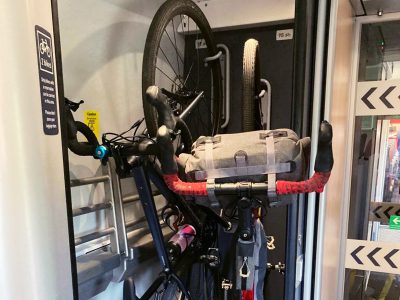
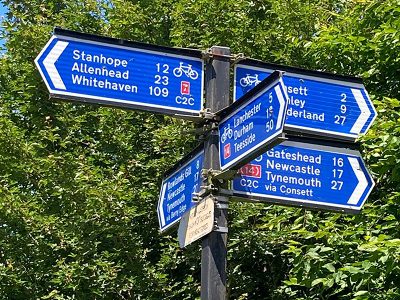
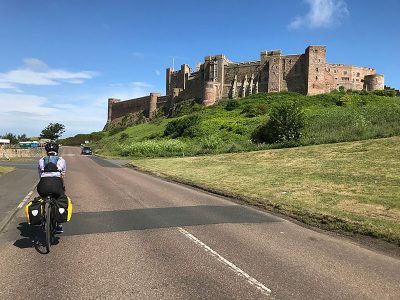
“Despite levels of leisure cycling having increased 40 to 60%, with some weekends peaking at a 300% increase on pre-pandemic levels, cycling on holiday can be riddled with challenges. Problems I personally experienced last summer included a lack of available and accessible cycle parking on trains, the convoluted method of booking your bike onto a train, inconsistent safe infrastructure for cycling and a lack of cycle parking at key tourist destinations such as beaches.
“Interested to explore more about the issues, I submitted a proposal with the title ‘The Great British Staycation: Improving Public Transport and Cycling Access to Popular Tourist Destinations’ and excitingly was chosen as one of the finalists selected to research and write a paper for the Transport Planning Society Bursary 2021.
“The support from The Transport Planning Society throughout the process was excellent and each finalist was paired with a mentor to help guide the research and writing of their paper. I was fortunate to be able to interview some really brilliant members of the industry for the research, which gave me more detailed insights into the issue and potential opportunities.
“The research demonstrated that it is definitely not going to be an easy task to encourage a mode-shift at a faster rate than the UK has been experiencing over the last few decades. Transport planners are faced with the dilemma of ‘how can we encourage people to use sustainable modes of travel without the appropriate infrastructure?’ and at the same time, ‘how can we justify the provision of the appropriate infrastructure when there is seemingly no demand at present?’
“There is no one-size-fits-all approach that will be suitable for all parts of the UK as different holiday destinations experience localised issues and constraints, and have unique demographics of visitors but all have the opportunity to capitalise on the general demand for UK staycations and the rise of leisure cycling.
“My paper concluded with a number of recommendations. We should capture more data and use this collaboratively to show the success of projects which will then justify future schemes. We can work with policy makers, train operators and other organisational bodies to improve the environment and ease for sustainable transport users and provide the infrastructure and facilities to accommodate those arriving at tourist hot spots and accommodation. Following the implementation of the above, we then need to Travel Plan; encouraging and informing people that alternative transport modes are available to further increase the uptake of sustainable modes of transport.
“Ideally over time, the choked-up car park that some of these hot spots have become can return to the tranquil, peaceful settings they are meant to be for all to enjoy.
“I presented my paper outlining my findings to members of the Transport Planning Society Board in January 2022 along with the other finalists. I am pleased to announce that we were all commended for producing high-quality research papers.
“Applications for the 2022 Transport Planning Society Essay Competition will open again later this summer and I would definitely recommend it to any young professional looking to broaden their knowledge beyond the usual scope of their work.”
Read the full essay here
For more information, contact [email protected]
Find out on our services here
Julia Coonan, Consultant
Julia is a Transport Planner with nearly 3 years’ experience in developing Transport Assessments and Travel Plans, all of which focus on delivering high-quality, sustainable and low car developments. Julia also has experience working on planning applications and masterplans for larger scale public transport projects, including contributing to business cases, public realm improvements and active travel planning.
* RAC, ‘RAC Forecasts Unprecedented Summer on the UK Roads with 16m Staycations’, 2020, https://www.rac.co.uk/drive/news/motoring-news/rac-forecasts-unprecedented-summer-on-the-uks-roads-with-16m-staycations/, (accessed 30/11/2021).