“What’s going on in the ground is fundamental to designing places” explains Mike Poland, Director of Ground and Groundwater Engineering based at PJA’s Birmingham headquarters.
“We pride ourselves and understanding the interface between the sub-surface environment and a wide range of design interfaces, from placemaking to engineering. The geotechnical aspects of our work consider the way the ground behaves when modified or put under stress. This requires the assessment of the properties of soil, rock and groundwater to predict how, for example, the ground will support a new foundation or how a newly formed slope may behave.
On the geoenvironmental side we look at pollution within the ground and groundwater environment from historic processes and the risks posed to humans and the wider environment. By assessing the ground, in its broadest sense, we can anticipate risk and abnormal costs at an early stage and mitigate where appropriate.”
The chartered geologist heads up PJA’s ground team and is the first port of call for developers wanting to find out about the development potential of their scheme. In addition to ground and groundwater assessments, Mike works with the wider PJA team to advise on access, highways, flooding attenuation, drainage, green corridors and heritage.
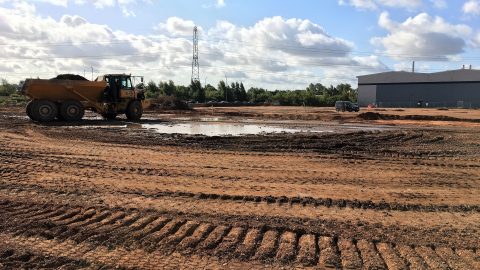
His portfolio of projects range from large multidisciplinary strategic developments to landfill sites and greenfield and brownfield land assessment across the UK. For example, the Coed Darcy project involves the reclamation, remediation and re-engineering of the former oil refinery in Llandarcy, Wales, for residential purposes. Similarly, his team are leading the approach to sensitive reclamation and land re-modelling at a proposed mix used development adjacent to the World Heritage Site at the former Ironbridge Power Station.
On all projects sustainability is increasingly important element in contributing to the whole circular economy of a project. Important in this respect is advising on how waste materials generated on sites can be recycled for beneficial reuse and reduce carbon footprint. An early understanding of the materials balance across a site can have a significant impact on the development of the masterplan and ultimately the viability of a scheme. For example, on many greenfield developments incorporating the known excess of topsoil at an early stage provides sustainable benefits, encourages innovative thinking and influences the overall feasibility of a project.
“It’s really important from initial design through to construction that developers show they have sustainable solutions to the technical and environmental risks of their land, and that’s what we help with. We think holistically about projects from the very start, and work across disciplines looking at how we can enhance the design process.
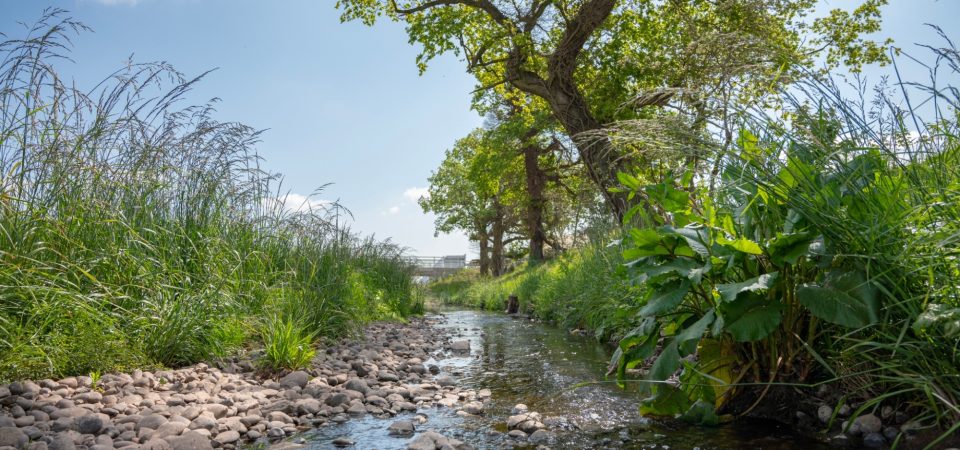
“We often work closely with ecologists and landscape specialists to understand how we can enhance biodiversity. Understanding how materials behave can lead to the creation of important micro-habitats. For example, re-shaping of slopes in rock can, if carefully managed, evolve from simple engineering features, which are fenced and stabilised, to important aesthetic elements within a development which provide diverse habitat for reptiles and specialist flora’’.
Mike and his team welcome the clarity new guidance and legislation could bring to the design process, for example, the new Environment Act. This also poses challenges to engineers and developers alike and makes early-stage planning and design ever more important. Water quality, drainage balance, the protection of sensitive environments and water ‘neutrality’ feature highly:
“More so than ever design professionals need to have an integrated approach to land development and PJA’s Ground and Groundwater team are central to this drive and are passionate about increasing biodiversity, restoring natural habitats, reducing waste and making better use of resources’’.
“These are big changes but they are much needed because sustainability and biodiversity enhancement is so important. However, ultimately the outcome for landowners and developers will be better quality, attractive developments.”
Mike grew up in Nottingham and says his love for the outdoors stems from the many visits to the Peak District. After leaving school he had jobs in a hospital laboratory, in a paper merchant and behind a bar before enrolling for a degree in geology at Oxford Polytechnic. This was followed by a master’s degree in geology at Durham University.
His first job was for Exploration Associates as a site investigation contractor, where he started to learn the ‘basics’ on sites across the UK and abroad. This was followed by posts at Carillion, BAE Systems and Atkins before joining PJA in 2017.
For a ground investigator, Mike says that one of the biggest thrills is when the ground is revealed for the first time and new discoveries are found. Although he has less time to spend ‘digging holes’ these days, the passion for the investigation of the ground remains.
Get in touch with Mike: [email protected]
Mike Poland, Land Development Director
Mike has 25 years’ experience in the regeneration of brownfield land, and is the technical director for the overall land development team. Mike works in business development, acts as a project director and provides project technical support.
BSc (Hons) MSc CGeol FGS
Find out more about our services here
Sign up for more news from PJA here