Building better places for people that reduce greenhouse gas emissions is central to addressing the climate emergency. Here at PJA we are guiding our clients on how to create new places with the least amount of impact on the environment. But how are we doing that?
We believe placemaking is the holistic design of places, streets and spaces which are connected, meet climate and biodiversity needs and are characterful, healthy and inclusive for users. In response, we have developed the concept of ‘Biostreets’. These showcase how everyday infrastructure, can play a part in combating climate and biodiversity needs whilst harnessing best practice and innovation.
Biostreets are an essential part of our vision to ‘create better places through great design’. With our integrated approach to transport, engineering and placemaking, we have developed six initial scenarios that showcase our Biostreet thinking, read a snippet of our approach for each one below:
Neighbourhood Retrofit
A retrofit to an existing area responds to the changing needs of a local community and their desire for more active travel and green spaces and streets through landscape planting. We also consider the ongoing community care and stewardship for maintenance.
Main Streets
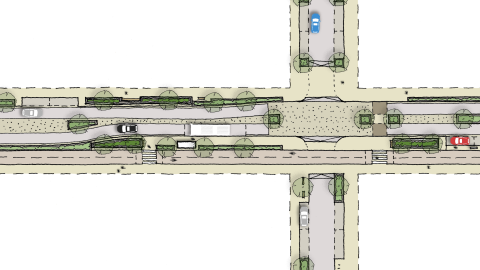
This highlights a more progressive design for new development spine streets or high street retrofit. Our vision is about maximising active travel through segregated cycleways and higher degrees of walkability Importantly a systems approach to cross sectional design is introduced to allow a wide variety of interchangeable cross sections, aimed at dealing with width and context constraints. Landscape planting and on-street SuDS support the design.
Greenways
Greenways aim to show how high-performance cycleways over bio-enriched open land can better integrate outlying settlements and offer real modal choice especially with the advent of ebikes.
Surface Car Parks
This typology shows how everyday tarmac car parks can be incrementally transformed into places serving a wider variety of uses such as new built form, public space and mobility hubs. Whilst a smaller retained car park is transitioned to incorporate landscape planting, raingardens, solar PV and the use of low carbon and recycled material, all considering maintenance needs.
Mobility Hubs
Mobility hubs aim to reduce the need for independent car travel and increase the opportunity for more climate friendly travel. Here we showcase our scalable and modular approach to the design of Mobility Hubs and highlight a range of facilities suitable for different locational and catchment needs.
SuDS Networks
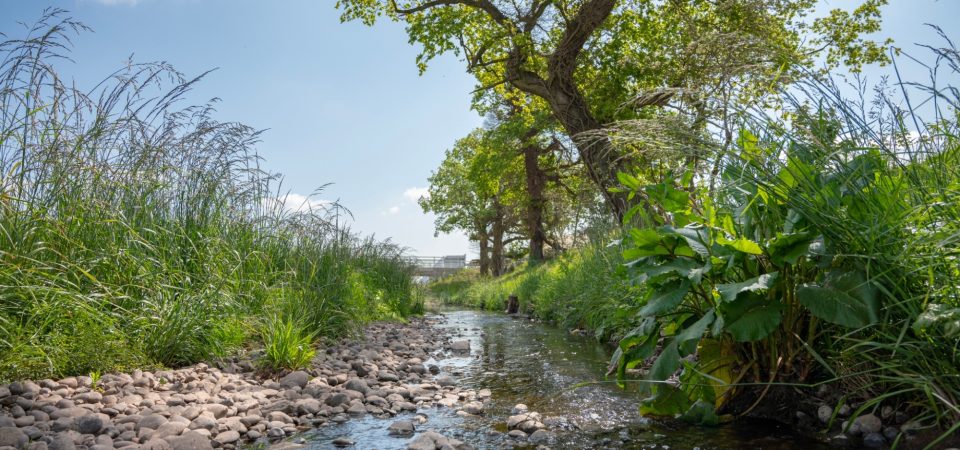
SuDS Networks draws on our inter-disciplinary skills to highlight the benefits of SuDS hierarchal systems from plot, to street to parcel to neighbourhood. Our principles highlight how biodiversity net gain can be realised whilst achieving functional storm water attenuation needs and meeting wider placemaking agendas. Finally, we showcase our wet ponds with aquatic and waterside planting.
We have is an inter-disciplinary team of movement planners, street engineers, urban designers, landscape architects, infrastructure engineers and graphic designers that provide a uniquely integrated approach to placemaking from concept through to technical design and delivery.
Contact Jon Tricker, our Placemaking Director to discuss your requirements:
E: [email protected] or T: 07917 436 933