With Water Saving Week upon us, Andrea Nelmes, Principal Flood Risk & Drainage Engineer in our Birmingham office, considers the importance of key global water issues, including the impacts of climate change, and how using nature-based solutions can be an opportunity to forward-thinking businesses.
The world continues to urbanise at a rapid rate, placing an incredible pressure on water supplies, drainage networks and sanitation, with water demand projected to increase by 55% by 2050†. To avoid a global crisis, countries need to act now to avoid reaching a ‘Day Zero’ drought as almost experienced by Cape Town in 2018. A situation that was considered to be caused by climate change‡.
Conversely, several months after ‘Day Zero’, areas across the UK experienced disastrous winter flooding as record breaking rainfall from Storm Christoph fell on already saturated ground and river levels remained exceptionally high, resulting in hundreds of homes being flooded and thousands of families being evacuated.
These extremes in weather patterns, the impacts on our water environment and the frequency at which these events are occurring is alarming. These issues are hard hitting and often the nation state isn’t the most agile in taking action on such complex, multi-dimensional, long term issues.
Clean sustainable water supply and quality and resilience to floods and droughts are key to healthy developments. But often Government, local authorities, landowners and water companies only think in terms of grey infrastructure when it comes to management, which includes major engineering and build projects such as reservoirs to hold water or tunnels to move flood water away from the surface.
Fortunately, there are reasons for optimism. We are seeing a new mindset emerge from businesses, particularly in the property sector, as they look to sustainably manage the consumption and recycling of water.
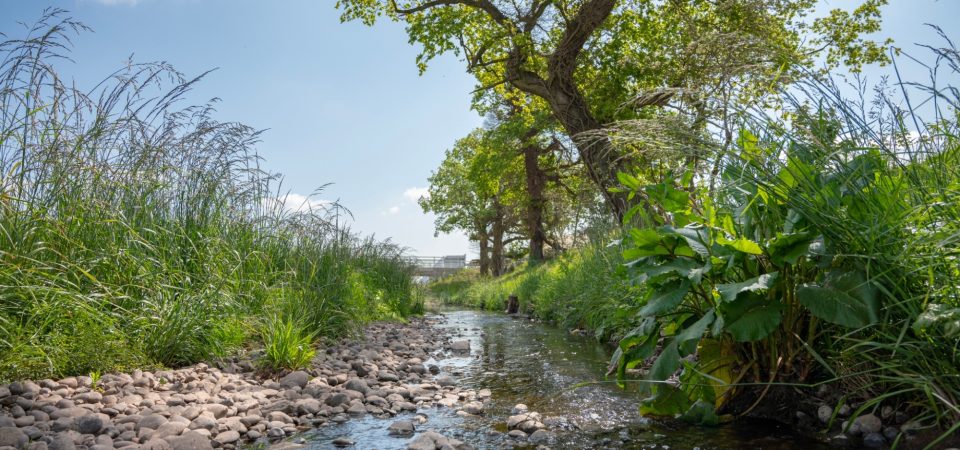
Forward-thinking nature-based solutions offer more opportunities than grey infrastructure as they not only improve the stresses placed on our water environment but positively contribute to human health and wellbeing. Naturally absorbing and holding water through green areas, planting and soils also leads to better natural cleansing and improves water quality. Nature-based solutions also bring financial advantages due to a reduction in initial capital expenditure and lower on-going operations expense.
Nature-based solutions in Gloucestershire
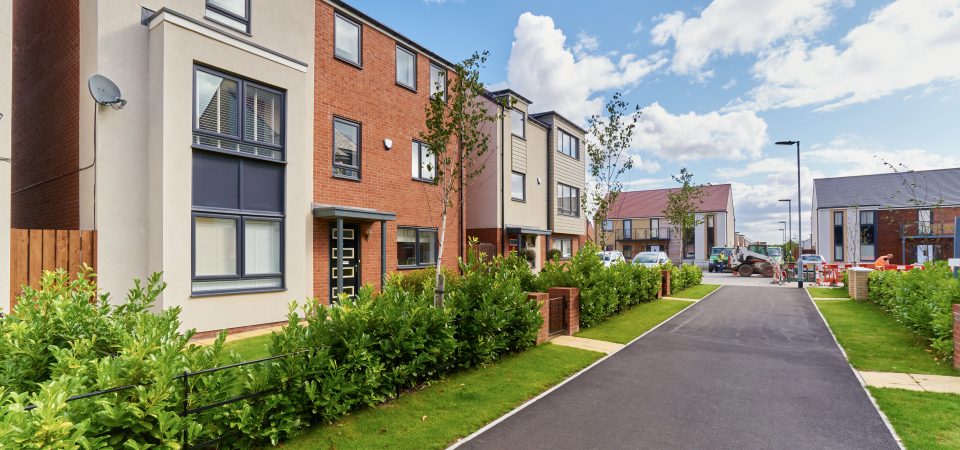
PJA has been advising engineers on a Garden Village development in Gloucestershire for the delivery of 3000 homes.
This project requires a collaborative ethic between the design team, landowner, local authority, developer and other stakeholders to achieve a ‘Building with Nature’ accreditation and leave a lasting legacy that demonstrates an exemplary quality of green and blue infrastructure.
The accreditation puts nature at the heart of the development by setting out a framework of standards enabling developers to engender a much more holistic approach to water use and its management, to ensure that the natural water cycle is maintained.
To support this process, our Water Cycle Strategy for the development has included:
- Engagement with the Environment Agency and Bristol Water to develop overall water consumption targets for both residential and non-residential areas of the development, whilst taking into account the current availability of water demands in the area, the future predicted availability of water and the potential impacts of climate change.
- Actions to minimise the predicted use of water on the development; and maintain this in future ownership and maintenance of any shared facilities. This includes the consideration of a rainwater harvesting system fitted with smart control metres (such systems empty rainwater storage tanks to optimise storage capacity ahead of a predicted rainfall event) to reduce potable water use. This system also diverts stormwater away from areas of flood risk by optimising the supply-demand balance and capturing, storing and treating surface water runoff. Not just at a housing scale, but providing irrigation systems for the local farm stead, hotel landscaping and school sports pitches.
- Design options to reduce the water demand in landscaping, any other predicted water use and on-site collection/storage opportunities – which informed the design and placement of green infrastructure features.
- A SuDScape to ‘hydrate’ the development and landscape to enhance habitat resilience whilst providing multi-functionality and the benefits of amenity, mental wellbeing, biodiversity and local distinctiveness.
Time is of the essence when planning for a climate-resilient future. This is the moment to rethink the old way of managing water for a future when there will be less water available. With a collaborative, pragmatic approach we can achieve the change we need. It’s time to roll our sleeves up.
For more details on our sustainable water management services, contact: [email protected]
Sign up for more news from PJA here
References:
† Our Latest Cities Alive: Water for People Publication (September 2018)
‡ Stanford News November 9, 2020