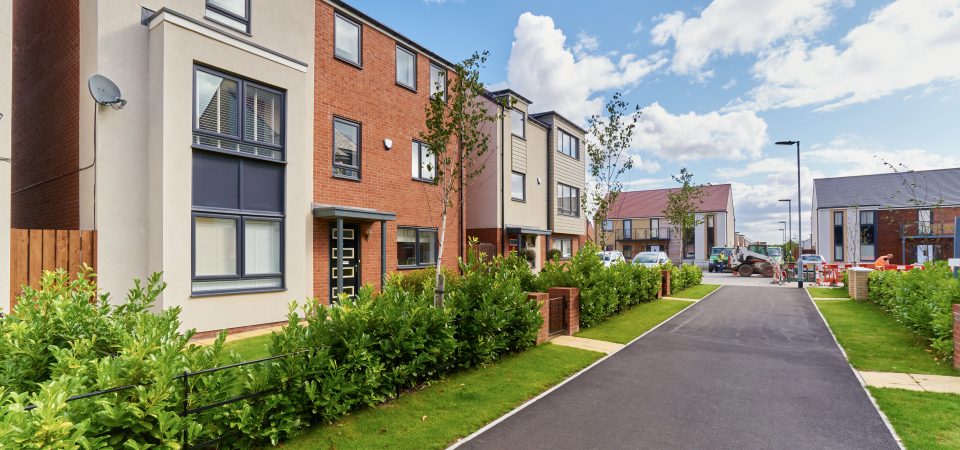
Streets are an important part of our public realm. By balancing the needs of pedestrians, cyclists and motorists, a human-oriented approach in street design can provide great opportunities for placemaking in our communities.
Achieving slower speeds on urban streets, where vulnerable road users and vehicles mix, is integral to this goal. There’s overwhelming evidence that lower speeds result in fewer collisions and a reduced severity of injuries as well as improvements in air quality and improved noise levels. Balancing the needs of road users is also good for people’s mental and physical health offering the opportunity for higher levels of social connectivity and interaction.
It’s well documented that PJA are at the forefront of promoting lower speed limits on urban streets and creating spaces designed with all road users in mind. Our chairman Phil Jones led the historic Welsh 20mph speed limit change, and PJA has been instrumental in the designation of UK’s first town-wide 20mph speed limit in the English town of Faversham.
But the demand for our expertise on liveable streets also goes beyond the UK with speaking tours in Australia and Hong Kong, and numerous virtual conferences and webinars with particular interest in street design in the post-Covid world, area-wide reduced speed limits and active travel.
Phil Jones recently joined PJA’s transport and placemaking consultant Justin Yim at one such event, jointly organised by the Community for Road Safety and CUHK School of Architecture in Hong Kong, as part of the UN Global Road Safety Week. The virtual conference aimed to highlight the benefits of reduced speed limits on roads, modern street design concepts and the associated public health benefits. With around 100 deaths on roads in Hong Kong each year the appetite to put people first in street design is increasing. The recognition that lower speeds feed into the opportunity to design spaces more freely is gaining momentum and the advantages of no longer needing over complicated railings and street signs being appreciated.
Justin, who’s based in our London office, was born and raised in Hong Kong and is an active advocate for the concept of liveable streets in Hong Kong.
He says: “Despite a very high public transport mode share in Hong Kong, our surface streets are still designed with a car-oriented mindset. Through a better balance between the ‘movement’ and ‘place’ function on Hong Kong’s streets, we can create more liveable places in our neighbourhoods which everybody can enjoy. A low speed, low traffic street environment is the key to better social cohesion.”
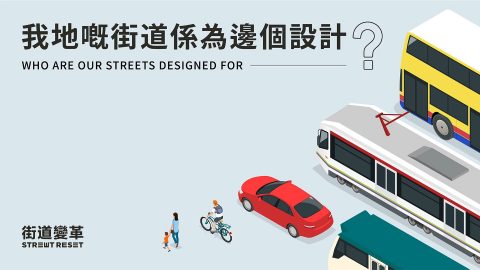
Despite the evidence that supports the introduction of lower speed limits in urban areas in Hong Kong there are still some concerns with road users over how it could affect journey times and traffic congestion. In early 2020, Justin founded an organisation named Street Reset, with the aim of proliferating the idea of human-oriented street design in Hong Kong.
Justin says: “Street Reset is a social media-based collective dedicated to disseminating good practices in human-oriented street design and sustainable transport. Using social media, we hope to raise the awareness amongst Hong Kong’s public about the potential to transform our streets, so that people walking and cycling are treated more fairly.”
With some work still to do in persuading the road users of Hong Kong of the benefits of lowering the speed limit and introducing more people focused spaces, Street Reset hopes to be the beginning of a quiet revolution to spread the positive message of human approached street design.
PJA has co-authored numerous government documents promoting good placemaking, active travel infrastructure and low speed environments. Made up of some of the UK’s leading transport planners, engineers and place makers we work together to achieve a robust, evidence-led approach to development.
For more information please contact: [email protected]
Sign up for more news from PJA here