What does transport look like in a net zero world and, as professionals in the built environment, what are we doing to assist the change?
At the top of the COP26 list of goals is ‘Secure global net zero by mid-century and keep 1.5 degrees within reach’.
At the heart of the change that needs to happen is implementing net zero transport and placemaking solutions that minimise and eliminate operational carbon emissions from transport.
A shift to zero emissions within cars is already well underway but with road transport accounting for 10% of global emissions, and its emissions rising faster than those of any other sector¹ , change needs to happen quicker.
In the UK, there are over 300,000 pure electric cars on the roads and, as of the 1st October 2021, around 25,000 electric vehicle charging devices available².
With the lack of charging infrastructure as one of three main barriers for electric vehicle take up, new legislation has been devised to go some way in addressing the issue.
However, it’s not just a switch to electric vehicles that is needed. A balanced approach to a permanent change in travel habits for all may be just as impactful and as designers and implementers of development we have the opportunity to embed more sustainable urban structure to support this.
Supporting the change
Reduced travelling due to hybrid work patterns is now becoming established as the norm, but a shift to active travel and mass transport over individual transport is still a work in progress.
Collectively, transport integration of the home, such as adaptive parking strategies, green charging infrastructure, cycle storage and local delivery systems, influence how people choose to travel and the sustainability of their trips.
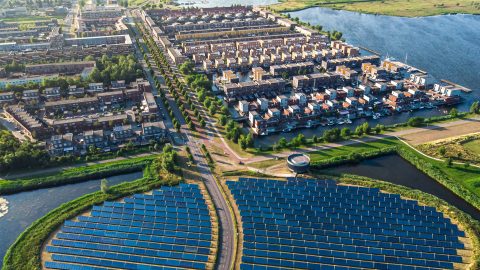
For new development this means embedding more sustainable urban structure and mixed land use to create better functioning neighbourhoods and districts. For existing places, this means optimising land use, retrofitting of walking and cycling infrastructure into local places and managing the transition to fully electric vehicle fleets and integration with public transport.
For our local neighbourhoods we need to be aware of land use mix and proximity, street network accessibility and integration with travel hubs. Focusing on liveable and low traffic neighbourhoods and strategies for shared mobility will create truly integrated travel systems that support people as well as vehicles.
‘Green streets’ prioritised for sustainable modes of transport will need to be incorporated to create accessible local areas including conditions for better public transport and emerging AV shuttle technology, balancing this with the needs of those who drive private or shared electric vehicles.
For the harder to influence longer trips we focus on new thinking around travel/mobility hubs on rail and bus rapid transit routes including park and ride, and how active travel and vehicle electrification strategies can provide genuinely deliverable sustainable and net zero carbon options.
How will we know we’ve made a change?
Forecasting and analysing the movement and carbon emissions of planned strategies will become part of the process for developers to ensure they are meeting their set objectives.
PJA use tools to explore personal movement and create strong metrics on trip characteristics, journey length and mode and therefore the resulting carbon emissions.
The effectiveness and implementation speed of these strategies is still unfolding, but it’s vital to promote long lasting changes to the way development infrastructure is designed and implemented to play our part in the new net zero world.
PJA have developed a forward-thinking methodology for planning and implementing net zero carbon solutions in new development and in existing places. Our approach brings our strong understanding of development and place-based planning with strategies for minimising and eliminating operational carbon emissions.
For more information, or to discuss your project, get in touch: [email protected] or find out more on our services here
Sign up for more news from PJA here
- COP26, October 2021 ukcop26.org
- Official Statistics, Electric vehicle charging device statistics, October 2021 https://www.gov.uk/government/statistics/electric-vehicle-charging-device-statistics-october-2021/electric-vehicle-charging-device-statistics-october-2021